THE ADVENTURE COLLECTIVE® · Independent discovery and booking for outdoor travel

When Marrakech slips into night the Medina rewires itself: spices perfume the air, minarets silhouette the sky, and hidden courtyards glow. This two‑hour guided evening walk leads you from Jemaa el‑Fnaa’s theatrics into quieter lanes, blending history with practical tips for exploring after dark.
When Marrakech slips into night the Medina rewires itself: spices perfume the air, minarets silhouette the sky, and hidden courtyards glow. This two‑hour guided evening walk leads you from Jemaa el‑Fnaa’s theatrics into quieter lanes, blending history with practical tips for exploring after dark.
The sun dips behind the ochre city walls and Marrakech exhales — alleys cool, lamps glow, and the square begins to pulse. On an evening walking tour you step into that change: heady spice scents rise from market stalls, minaret silhouettes puncture the sky, and the city’s labyrinth invites a slower pace.
Verified experiences and guided adventures in the surrounding area.
Operated by guide tour marrakesh · Marrakech, Marrakech-Safi
The sun dips behind the ochre city walls and Marrakech exhales — alleys cool, lamps glow, and the square begins to pulse. On an evening walking tour you step into that change: heady spice scents rise from market stalls, minaret silhouettes puncture the sky, and the city’s labyrinth invites a slower pace.
Jemaa el-Fnaa has been the social heart of Marrakech since the 11th century, where Berber, Arab and Andalusian currents cross. The Koutoubia minaret, a 12th‑century Almohad landmark, keeps silent watch while riads and hammams reveal traditional Moroccan carpentry and zellij tilework. The city’s soil — the red clay and rammed-earth (pisé) that give Marrakech its nickname — shapes the palette of buildings and the heat memory of narrow lanes.
A guided evening stroll moves from bustling squares to quieter courtyards: vendors closing their spice bundles, storytellers clearing their circle, and rooftop cafés lighting for night views. You’ll pass historical hammams and iconic market corners, learning local customs and how Marrakech’s urban fabric was woven over centuries.
Practical guidance: plan for two hours, start after dusk to avoid daytime heat, and expect uneven cobbles and sudden scooter traffic. Dress respectfully (light layers that cover shoulders), carry small change for snacks and tips, and bring a charged phone — alleys can be disorienting after dark. The tour is low‑intensity but sensory-rich; comfortable shoes, hydration, and a sense of curiosity make the evening flow. With a local guide, the Red City opens its quieter, electric side — intimate, storied and best seen when the day lets go.
easy.
2 hours.
Suitable for most fitness levels; requires steady walking on uneven surfaces for up to two hours.
Yes—participants note stroller access is possible on many routes, though some alleys have steps or narrow stretches; contact the operator about specific mobility needs.
The tour includes bottled water; food and rooftop drinks are typically extra—carry cash for street food and tips.
Local guides commonly speak English and often French; check the booking page for confirmed language options.
Full refunds are available with cancellation at least 24 hours before the scheduled departure; the operator may cancel for bad weather or low bookings.
Jemaa el‑Fnaa has functioned as Marrakech’s central marketplace since the 11th century; the nearby Koutoubia minaret is a 12th‑century Almohad landmark that influenced later Maghrebi architecture.
Respect local customs, avoid single‑use plastics, and support small artisans to help sustain Medina livelihoods and reduce tourist strain on narrow streets.
guide tour marrakesh operates guided outdoor trips and adventures with an emphasis on safety, stewardship, and memorable experiences.
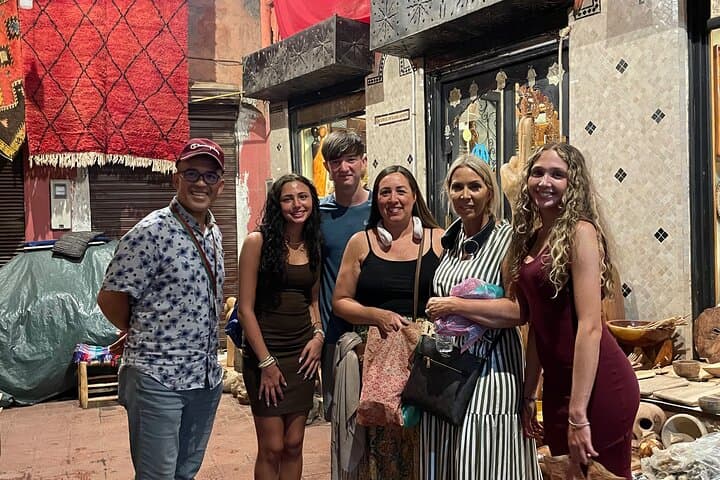
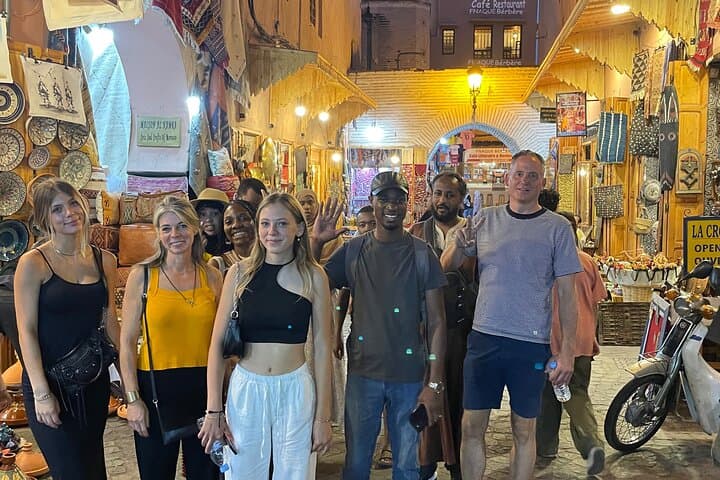
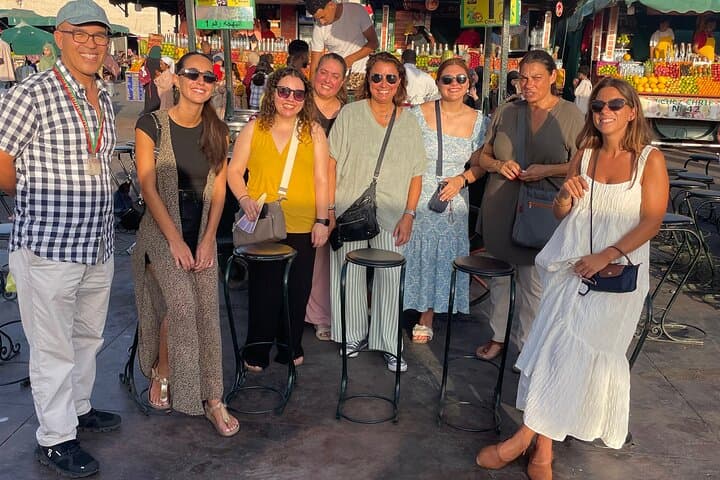
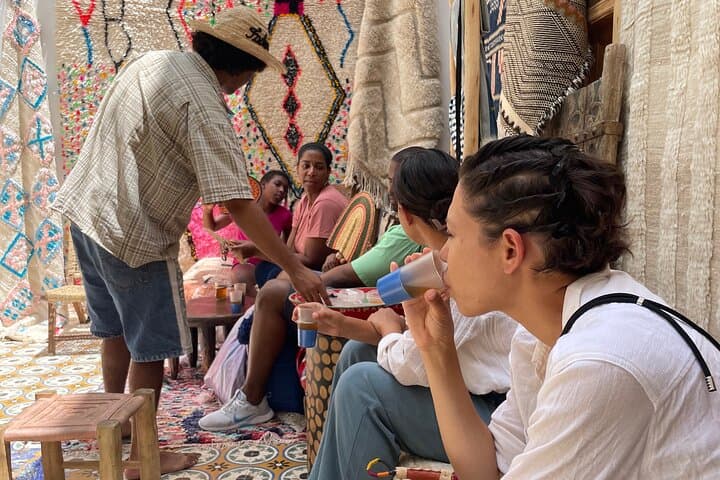
The sun dips behind the ochre city walls and Marrakech exhales — alleys cool, lamps glow, and the square begins to pulse. On an evening walking tour you step into that change: heady spice scents rise from market stalls, minaret silhouettes puncture the sky, and the city’s labyrinth invites a slower pace.
The sun dips behind the ochre city walls and Marrakech exhales — alleys cool, lamps glow, and the square begins to pulse. On an evening walking tour you step into that change: heady spice scents rise from market stalls, minaret silhouettes puncture the sky, and the city’s labyrinth invites a slower pace.
Jemaa el-Fnaa has been the social heart of Marrakech since the 11th century, where Berber, Arab and Andalusian currents cross. The Koutoubia minaret, a 12th‑century Almohad landmark, keeps silent watch while riads and hammams reveal traditional Moroccan carpentry and zellij tilework. The city’s soil — the red clay and rammed-earth (pisé) that give Marrakech its nickname — shapes the palette of buildings and the heat memory of narrow lanes.
A guided evening stroll moves from bustling squares to quieter courtyards: vendors closing their spice bundles, storytellers clearing their circle, and rooftop cafés lighting for night views. You’ll pass historical hammams and iconic market corners, learning local customs and how Marrakech’s urban fabric was woven over centuries.
Practical guidance: plan for two hours, start after dusk to avoid daytime heat, and expect uneven cobbles and sudden scooter traffic. Dress respectfully (light layers that cover shoulders), carry small change for snacks and tips, and bring a charged phone — alleys can be disorienting after dark. The tour is low‑intensity but sensory-rich; comfortable shoes, hydration, and a sense of curiosity make the evening flow. With a local guide, the Red City opens its quieter, electric side — intimate, storied and best seen when the day lets go.