THE ADVENTURE COLLECTIVE® · Independent discovery and booking for outdoor travel

Climb Mount Toubkal in two days from Marrakech with an overnight in the Neltner Hut. Expect steep ascents, rocky scree, and sweeping High Atlas views on a guided, logistics-included trek.
Climb Mount Toubkal in two days from Marrakech with an overnight in the Neltner Hut. Expect steep ascents, rocky scree, and sweeping High Atlas views on a guided, logistics-included trek.
Morning light slices across red ochre kasbahs as the minibus winds out of Marrakech toward Imlil; the Atlas looms, its stone shoulders already catching sun. You step out at 1,740 m, boots on a path that climbs through terraced fields, walnut groves and finally into the raw, stony geometry of high-altitude terrain.
Verified experiences and guided adventures in the surrounding area.
Operated by Visit Toubkal -Day Tours · Imlil, Marrakech-Safi
Morning light slices across red ochre kasbahs as the minibus winds out of Marrakech toward Imlil; the Atlas looms, its stone shoulders already catching sun. You step out at 1,740 m, boots on a path that climbs through terraced fields, walnut groves and finally into the raw, stony geometry of high-altitude terrain.
Toubkal, at 4,167 m, is the highest point in the Atlas and North Africa — a volcanic-influenced massif carved by glacial action and millennia of seasonal streams. Local Berber villages dot the approach, their culture steeped in shepherding and dry-farming; expect polite greetings and the smell of brewing mint tea in village squares. The track shifts from dirt to scree as you rise: day one gains roughly 1,470 m to the Neltner (Nelter) Hut at ~3,210 m over 8–10 km, with rocky switchbacks and panoramic views that make the effort tangible.
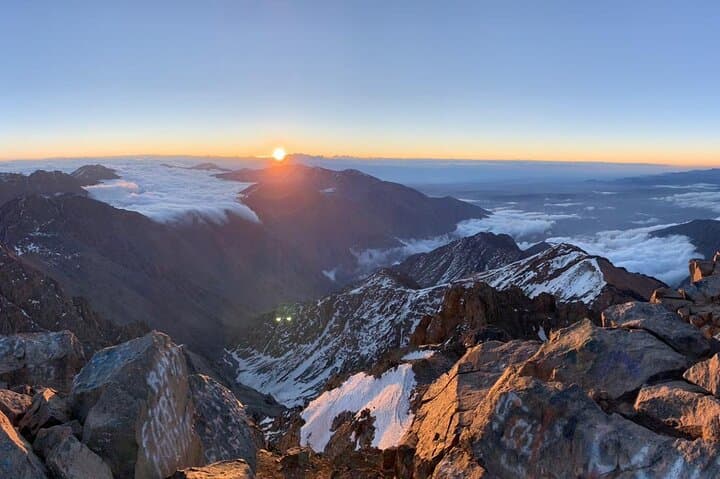
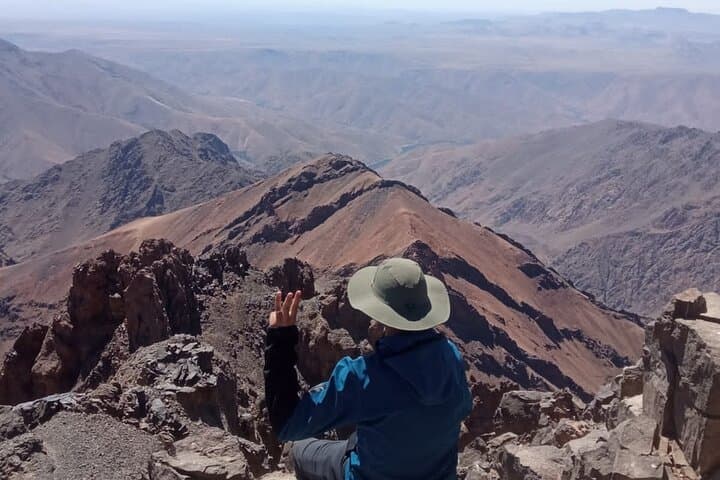
Day two begins pre-dawn. The summit push adds about 950 m vertical and usually takes 4–6 hours round-trip from the refuge, depending on pace and conditions. On clear days, the ridge rewards you with views across the High Atlas to the Sahara’s edge.
Practically: travel includes private transport, a mountain guide, refuge accommodation and meals. Weather changes fast — wind and sudden cold are common above 3,000 m — and altitude can blunt even strong hikers. Bring layered clothing, good ankle-support boots, poles and a small daypack with water and snacks. Start early, move steadily, and allow the mountain to set the rhythm.
challenging.
2 days (approx. 48 hours).
Good cardiovascular fitness and experience with long day hikes at altitude; expect sustained climbs and descents.
Yes — the itinerary includes a mountain guide and refuge accommodation; local guides manage route-finding and group safety.
The trek is physically demanding: expect about 1,470 m gain on day one and ~950 m for the summit push, suitable for fit hikers with prior multi-hour mountain experience.
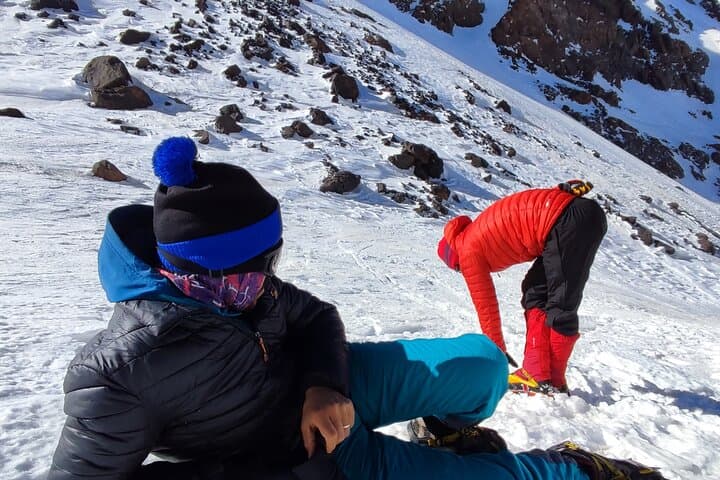
No special permits are required for the usual summer route; technical equipment like crampons may be needed in winter or snowy conditions — plan accordingly.
The Neltner Hut offers dorm-style refuge lodging with basic bedding and cooked meals; bring a lightweight sleeping liner if you prefer extra warmth.
The High Atlas has long been inhabited by Berber communities whose trails connected seasonal pastures; Toubkal’s name and routes reflect centuries of local travel and pastoralism.
Visitor pressure is concentrated on main trails and the refuge; stick to established paths, pack out waste, and support local guide services that contribute fees to community conservation.
Visit Toubkal -Day Tours operates guided outdoor trips and adventures with an emphasis on safety, stewardship, and memorable experiences.
Morning light slices across red ochre kasbahs as the minibus winds out of Marrakech toward Imlil; the Atlas looms, its stone shoulders already catching sun. You step out at 1,740 m, boots on a path that climbs through terraced fields, walnut groves and finally into the raw, stony geometry of high-altitude terrain.
Morning light slices across red ochre kasbahs as the minibus winds out of Marrakech toward Imlil; the Atlas looms, its stone shoulders already catching sun. You step out at 1,740 m, boots on a path that climbs through terraced fields, walnut groves and finally into the raw, stony geometry of high-altitude terrain.
Toubkal, at 4,167 m, is the highest point in the Atlas and North Africa — a volcanic-influenced massif carved by glacial action and millennia of seasonal streams. Local Berber villages dot the approach, their culture steeped in shepherding and dry-farming; expect polite greetings and the smell of brewing mint tea in village squares. The track shifts from dirt to scree as you rise: day one gains roughly 1,470 m to the Neltner (Nelter) Hut at ~3,210 m over 8–10 km, with rocky switchbacks and panoramic views that make the effort tangible.
Day two begins pre-dawn. The summit push adds about 950 m vertical and usually takes 4–6 hours round-trip from the refuge, depending on pace and conditions. On clear days, the ridge rewards you with views across the High Atlas to the Sahara’s edge.
Practically: travel includes private transport, a mountain guide, refuge accommodation and meals. Weather changes fast — wind and sudden cold are common above 3,000 m — and altitude can blunt even strong hikers. Bring layered clothing, good ankle-support boots, poles and a small daypack with water and snacks. Start early, move steadily, and allow the mountain to set the rhythm.