THE ADVENTURE COLLECTIVE® · Independent discovery and booking for outdoor travel

Cross the High Atlas, explore the cinematic kasbahs of Aït Ben Haddou, then sleep under the stars in a Berber camp near Zagora. This two-day loop delivers dramatic passes, palm-lined oases and a sunset camel ride—all with hotel pickup from Marrakech.
Cross the High Atlas, explore the cinematic kasbahs of Aït Ben Haddou, then sleep under the stars in a Berber camp near Zagora. This two-day loop delivers dramatic passes, palm-lined oases and a sunset camel ride—all with hotel pickup from Marrakech.
You roll out of Marrakech before dawn and the city’s honks and spice-scented alleys shrink behind you as the road climbs into the High Atlas. The van threads hairpin turns on the Tizi n’Tichka—Morocco’s highest car pass at roughly 2,260 meters—then opens onto sun-drenched valleys and rust-colored kasbahs.
Verified experiences and guided adventures in the surrounding area.
Operated by Amine Tours · Zagora, Drâa-Tafilalet
You roll out of Marrakech before dawn and the city’s honks and spice-scented alleys shrink behind you as the road climbs into the High Atlas. The van threads hairpin turns on the Tizi n’Tichka—Morocco’s highest car pass at roughly 2,260 meters—then opens onto sun-drenched valleys and rust-colored kasbahs.
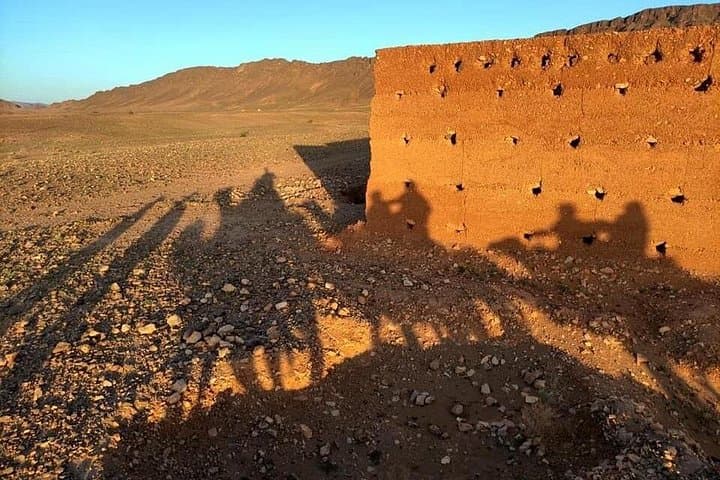
This compact 48-hour loop stitches together geology, history and living culture: the earthen towers of Aït Ben Haddou (a UNESCO ksar and frequent film set), the film-studio façades of Ouarzazate, and the Draa Valley’s palm-lined oases fed by an ancient river system. The land drops steadily from alpine passes into wide, wind-sculpted dunes around Zagora where sand and silence take over.
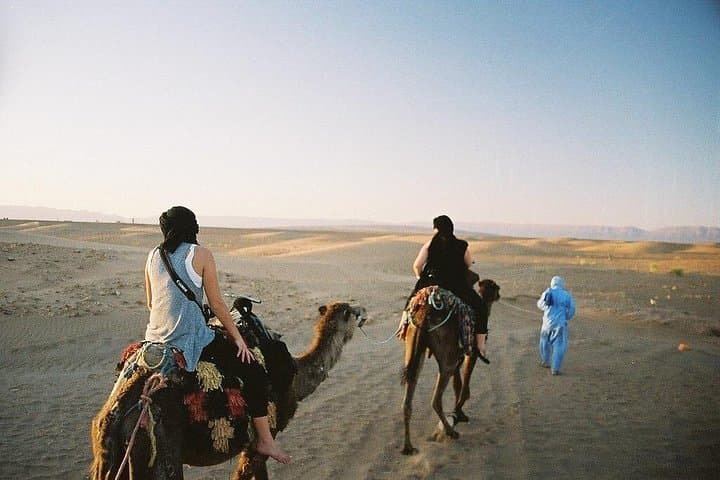
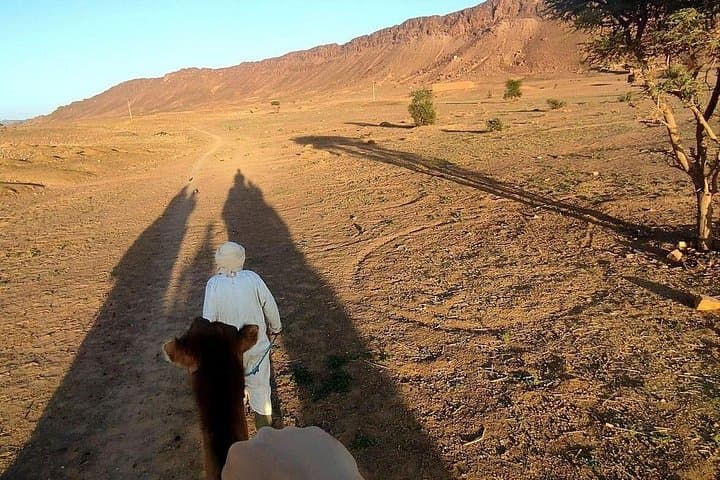
Expect a modest camel trek at sunset across soft sand and a single-night stay in a Berber-style camp—sleep in a nomadic tent, share tajine and mint tea, and hear live drumming around the fire. Sunrise here is immediate and bright; mornings are cool, nights can be surprisingly cold.
Practical notes: the itinerary is mostly driving—several hundred kilometers each way—so bring layered clothing for Alpine-to-desert swings, sun protection, and a refillable water bottle. Comfortable walking shoes work for short kasbah climbs and dune approaches; the camel ride is sedentary and not technically demanding. Hotel/riad pickup and drop-off are included, and the tour is suitable for most fitness levels. Pack cash in Moroccan dirham for small purchases and tips, and plan photo stops along the Draa Valley—the landscape changes quickly, and timing your light makes the difference between a snapshot and a memory.
easy.
2 days (approx. 48 hours).
Suitable for most travelers; comfortable sitting for long drives, short walks on dirt and sand, and a gentle camel ride
The tour departs from Marrakech (hotel/riad pickup) and returns to Marrakech the afternoon of day two.
No—camel treks on this itinerary are short and gentle, suitable for most ages, though mounting can be tricky for some; guides assist as needed.
Restroom stops are available in towns; the desert camp offers basic facilities—expect simple, clean toilets rather than full plumbing in remote sites.
Local guides commonly speak Arabic, Tamazight and French; Moroccan dirham (MAD) is used for purchases and tips—carry small bills for markets.
The route follows ancient caravan and trade corridors south from Marrakech; Aït Ben Haddou was a fortified stopping point on trans-Saharan links and later a favorite film location.
The Sahara’s fragile soils and scarce water mean visitors should limit waste, avoid off-route driving on dunes, and support local guides and camps that practice responsible water use.
Amine Tours operates guided outdoor trips and adventures with an emphasis on safety, stewardship, and memorable experiences.

You roll out of Marrakech before dawn and the city’s honks and spice-scented alleys shrink behind you as the road climbs into the High Atlas. The van threads hairpin turns on the Tizi n’Tichka—Morocco’s highest car pass at roughly 2,260 meters—then opens onto sun-drenched valleys and rust-colored kasbahs.
You roll out of Marrakech before dawn and the city’s honks and spice-scented alleys shrink behind you as the road climbs into the High Atlas. The van threads hairpin turns on the Tizi n’Tichka—Morocco’s highest car pass at roughly 2,260 meters—then opens onto sun-drenched valleys and rust-colored kasbahs.
This compact 48-hour loop stitches together geology, history and living culture: the earthen towers of Aït Ben Haddou (a UNESCO ksar and frequent film set), the film-studio façades of Ouarzazate, and the Draa Valley’s palm-lined oases fed by an ancient river system. The land drops steadily from alpine passes into wide, wind-sculpted dunes around Zagora where sand and silence take over.
Expect a modest camel trek at sunset across soft sand and a single-night stay in a Berber-style camp—sleep in a nomadic tent, share tajine and mint tea, and hear live drumming around the fire. Sunrise here is immediate and bright; mornings are cool, nights can be surprisingly cold.
Practical notes: the itinerary is mostly driving—several hundred kilometers each way—so bring layered clothing for Alpine-to-desert swings, sun protection, and a refillable water bottle. Comfortable walking shoes work for short kasbah climbs and dune approaches; the camel ride is sedentary and not technically demanding. Hotel/riad pickup and drop-off are included, and the tour is suitable for most fitness levels. Pack cash in Moroccan dirham for small purchases and tips, and plan photo stops along the Draa Valley—the landscape changes quickly, and timing your light makes the difference between a snapshot and a memory.