THE ADVENTURE COLLECTIVE® · Independent discovery and booking for outdoor travel

A two-day private journey from Marrakech across the High Atlas to the Zagora dunes, combining UNESCO-listed ksar visits, palm-filled Draa Valley scenery, and an overnight camel-led camp under desert stars. Expect long driving stretches balanced by short camel treks, hot-shower camps, and vivid sunset dunes.
A two-day private journey from Marrakech across the High Atlas to the Zagora dunes, combining UNESCO-listed ksar visits, palm-filled Draa Valley scenery, and an overnight camel-led camp under desert stars. Expect long driving stretches balanced by short camel treks, hot-shower camps, and vivid sunset dunes.
You leave Marrakech at first light and the High Atlas folds around your minivan like a slow-moving wall; Tizi n'Tichka climbs to 2,260 m and the air thins so the road seems to slice through time. By midday the red earth of Aït Benhaddou appears—mud-brick towers holding the memory of caravan routes—and later the palm-lined Draa Valley opens like a green ribbon through arid hills. The day finishes with a sentient horizon: dunes that shift and breathe as you swap the vehicle for a dromedary and ride into sunset.
Verified experiences and guided adventures in the surrounding area.
Operated by Starry Morocco Tours · Zagora, Drâa-Tafilalet
You leave Marrakech at first light and the High Atlas folds around your minivan like a slow-moving wall; Tizi n'Tichka climbs to 2,260 m and the air thins so the road seems to slice through time. By midday the red earth of Aït Benhaddou appears—mud-brick towers holding the memory of caravan routes—and later the palm-lined Draa Valley opens like a green ribbon through arid hills. The day finishes with a sentient horizon: dunes that shift and breathe as you swap the vehicle for a dromedary and ride into sunset.
This itinerary threads cultural landmarks and geology—Aït Benhaddou’s ksar is a UNESCO site built from rammed earth, while the Draa Valley marks the southern edge of Morocco’s agricultural oasis systems fed by mountain runoff. Ouarzazate’s film studios show how the landscape doubles as both location and character in global cinema. Local Berber communities still maintain kasbahs and oasis farming traditions that shape daily life here.
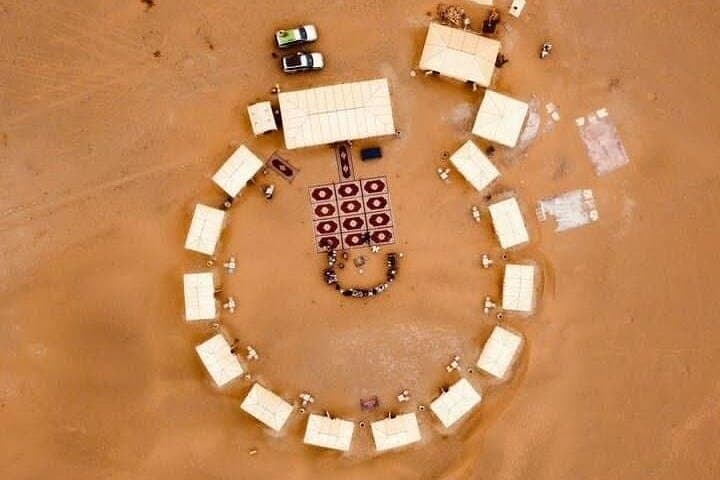
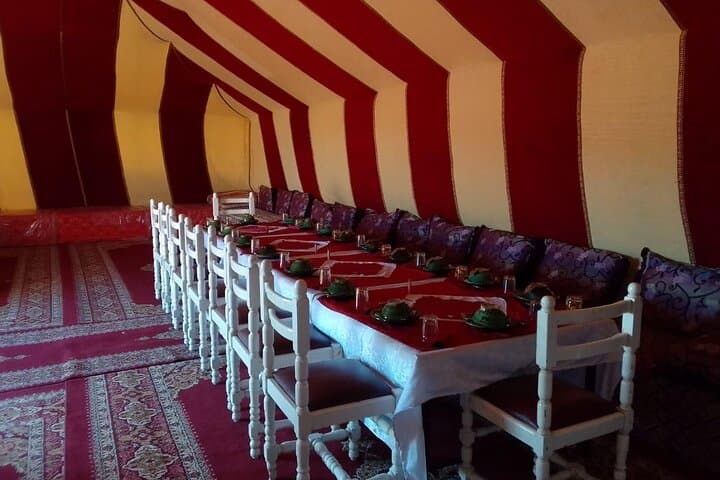
Practical guidance: expect one long driving day and one night in a desert bivouac with outside hot showers and toilets; camel rides at sunset and sunrise last about 40 minutes. Temperatures swing—pack sun protection plus warm layers for desert nights. Wear closed-toe shoes for sand and uneven ksar courtyards, carry at least 2 liters of water, and bring a small day pack with essentials. Pickup and drop-off in Marrakech are included; the tour is private and suitable for most fitness levels. Plan early starts and allow extra time for photo stops—this route rewards patience and a steady pace more than speed.
moderate.
2 days / 1 night (approx. 48 hours).
Suitable for travelers of most fitness levels; involves short camel rides and some walking over uneven surfaces.
Camel rides are short (around 40 minutes) and paced for comfort; the bivouac requires no technical skills and is suitable for most travelers.
Yes—camp accommodations include hot showers and toilets located outside tents as described in the itinerary.
Space is limited during camel transfers—keep overnight essentials in a soft bag under 10–15 kg and leave large suitcases in the minivan or at your Marrakech hotel.
Yes, hotel pickup and drop-off in Marrakech are included with private, air-conditioned transport for the tour.
The route follows historic caravan corridors: Aït Benhaddou’s ksar protected traders and the Draa Valley long supported oasis agriculture that linked inland Morocco to trans-Saharan routes.
Water is scarce and dunes are sensitive—use marked paths, avoid leaving waste, and support local-run camps that follow leave-no-trace practices.
Starry Morocco Tours operates guided outdoor trips and adventures with an emphasis on safety, stewardship, and memorable experiences.
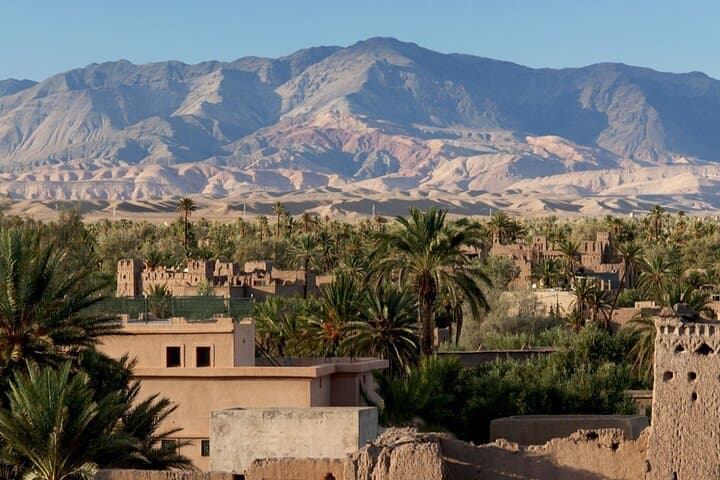
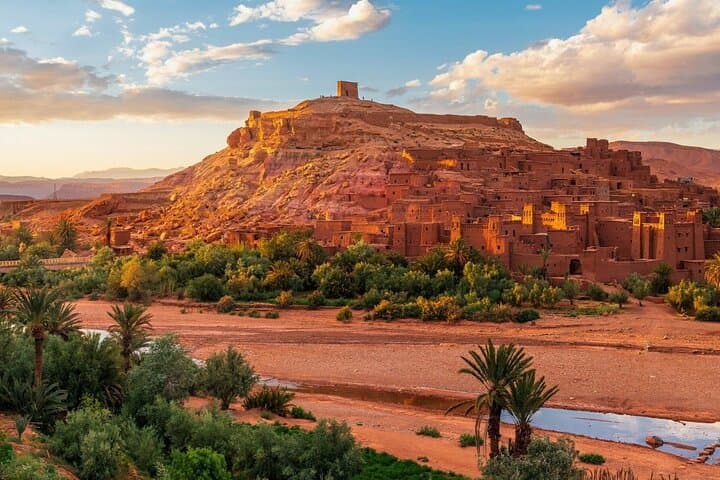
You leave Marrakech at first light and the High Atlas folds around your minivan like a slow-moving wall; Tizi n'Tichka climbs to 2,260 m and the air thins so the road seems to slice through time. By midday the red earth of Aït Benhaddou appears—mud-brick towers holding the memory of caravan routes—and later the palm-lined Draa Valley opens like a green ribbon through arid hills. The day finishes with a sentient horizon: dunes that shift and breathe as you swap the vehicle for a dromedary and ride into sunset.
You leave Marrakech at first light and the High Atlas folds around your minivan like a slow-moving wall; Tizi n'Tichka climbs to 2,260 m and the air thins so the road seems to slice through time. By midday the red earth of Aït Benhaddou appears—mud-brick towers holding the memory of caravan routes—and later the palm-lined Draa Valley opens like a green ribbon through arid hills. The day finishes with a sentient horizon: dunes that shift and breathe as you swap the vehicle for a dromedary and ride into sunset.
This itinerary threads cultural landmarks and geology—Aït Benhaddou’s ksar is a UNESCO site built from rammed earth, while the Draa Valley marks the southern edge of Morocco’s agricultural oasis systems fed by mountain runoff. Ouarzazate’s film studios show how the landscape doubles as both location and character in global cinema. Local Berber communities still maintain kasbahs and oasis farming traditions that shape daily life here.
Practical guidance: expect one long driving day and one night in a desert bivouac with outside hot showers and toilets; camel rides at sunset and sunrise last about 40 minutes. Temperatures swing—pack sun protection plus warm layers for desert nights. Wear closed-toe shoes for sand and uneven ksar courtyards, carry at least 2 liters of water, and bring a small day pack with essentials. Pickup and drop-off in Marrakech are included; the tour is private and suitable for most fitness levels. Plan early starts and allow extra time for photo stops—this route rewards patience and a steady pace more than speed.