THE ADVENTURE COLLECTIVE® · Independent discovery and booking for outdoor travel

A compact, five-day loop from Marrakech through the High Atlas to Zagora’s dunes and back. Expect cultured city streets, UNESCO ksars, long scenic drives, and an overnight Berber camp with sunset and sunrise camel rides.
A compact, five-day loop from Marrakech through the High Atlas to Zagora’s dunes and back. Expect cultured city streets, UNESCO ksars, long scenic drives, and an overnight Berber camp with sunset and sunrise camel rides.
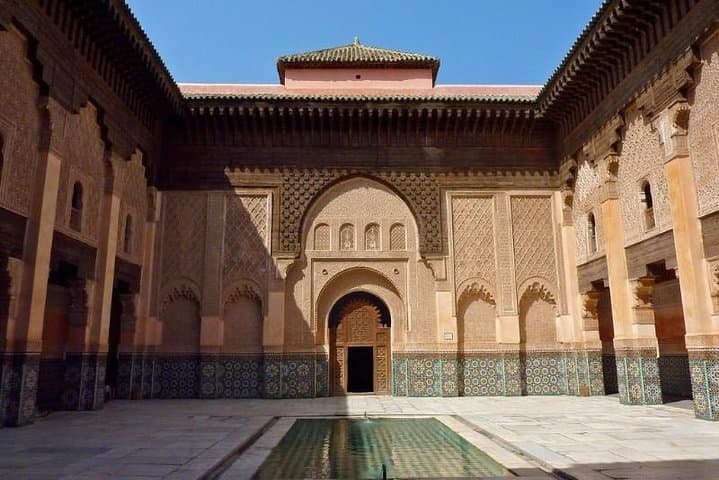
You step out of Marrakech's humid medina into a sun-washed plaza where the call to prayer pulls the city into motion, then climb into a vehicle that will carry you over the High Atlas and down into sand that dares you to leave footprints. The route alternates sensory extremes: the aromatic spice stalls and tiled courtyards of Jemaa el-Fna, the sheer earthen walls of Ait Benhaddou, and the slow rhythm of camels threading orange dunes at dusk.
Verified experiences and guided adventures in the surrounding area.
Operated by Bamba Travel · Marrakech, Marrakech-Safi
You step out of Marrakech's humid medina into a sun-washed plaza where the call to prayer pulls the city into motion, then climb into a vehicle that will carry you over the High Atlas and down into sand that dares you to leave footprints. The route alternates sensory extremes: the aromatic spice stalls and tiled courtyards of Jemaa el-Fna, the sheer earthen walls of Ait Benhaddou, and the slow rhythm of camels threading orange dunes at dusk.
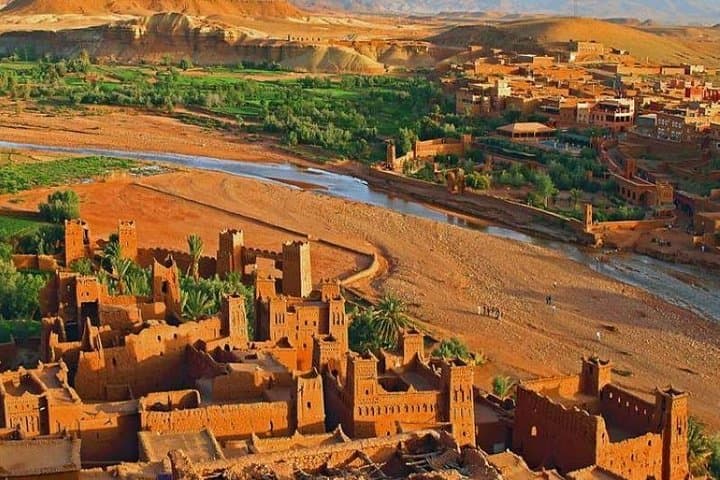
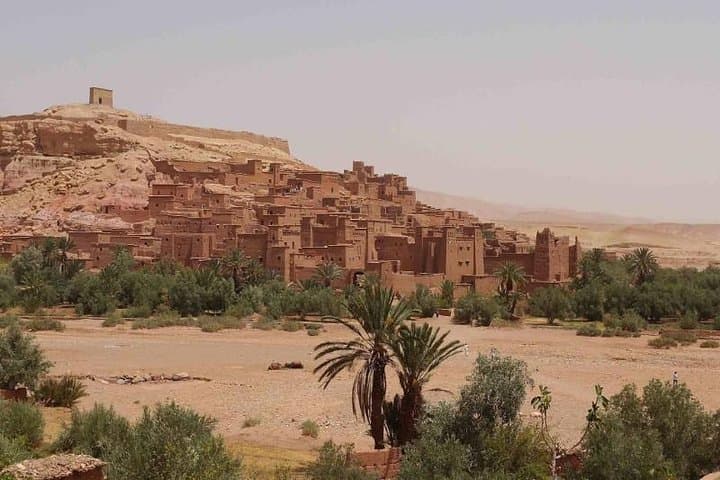
Ait Benhaddou is a living relic of trans-Saharan trade—a ksar of packed-earth kasbahs that has watched caravans and film crews pass for centuries. The High Atlas itself was raised by the collision of African and Eurasian plates; expect steep, terraced valleys and rocky passes before the landscape eases into the Draa palm-lined valley and the erg beyond Zagora.
Cultural notes: Berber hospitality shapes the desert nights—mint tea is both welcome and conversation. Camps are simple but ceremonial: shared dinner, story, and sky. Ecologically, the area balances fragile desert scrub and irrigated date groves that rely on scarce water.
Practical guidance: plan for long drives (multiple 4–6 hour legs), early starts, and cooler mountain mornings. Bring sun protection and a warm layer for nights in camp; shoes should handle sand and uneven kasbah streets. Carry local currency for tips and small purchases; cellular service is intermittent outside cities. If you’re sensitive to motion or require accessible transit, confirm vehicle comforts and camel assistance ahead of booking. Travel with patience—the trip rewards slow observation: a sunrise over the dunes, a quiet kasbah courtyard, and moments where the desert seems to breathe.
moderate.
5 days.
Suitable for travelers in average fitness: short guided walks, mounting camels, and tolerating long vehicle transfers.
Camel rides are gentle and short (typically 30–60 minutes); mounts can be awkward for some, but guides assist. Riders should be able to sit in a saddle for up to an hour.
Camps are traditional and comfortable but rustic—private or shared tents, basic sanitation, and communal dining under the stars are standard.
Tap water is not recommended outside major hotels—use bottled or filtered water provided by the operator to avoid stomach upset.
Visa requirements depend on nationality—check Moroccan entry rules before travel; no special permits are required for the standard route on this itinerary.
Ait Benhaddou sits on old caravan routes and is a UNESCO-listed ksar that illustrates Morocco’s trading history and mud-brick architecture.
The Sahara’s fragile soils and scarce water mean camps and visitors must minimize waste and respect local grazing and irrigation; choose operators who practice low-impact camping.
Bamba Travel operates guided outdoor trips and adventures with an emphasis on safety, stewardship, and memorable experiences.
You step out of Marrakech's humid medina into a sun-washed plaza where the call to prayer pulls the city into motion, then climb into a vehicle that will carry you over the High Atlas and down into sand that dares you to leave footprints. The route alternates sensory extremes: the aromatic spice stalls and tiled courtyards of Jemaa el-Fna, the sheer earthen walls of Ait Benhaddou, and the slow rhythm of camels threading orange dunes at dusk.
You step out of Marrakech's humid medina into a sun-washed plaza where the call to prayer pulls the city into motion, then climb into a vehicle that will carry you over the High Atlas and down into sand that dares you to leave footprints. The route alternates sensory extremes: the aromatic spice stalls and tiled courtyards of Jemaa el-Fna, the sheer earthen walls of Ait Benhaddou, and the slow rhythm of camels threading orange dunes at dusk.
Ait Benhaddou is a living relic of trans-Saharan trade—a ksar of packed-earth kasbahs that has watched caravans and film crews pass for centuries. The High Atlas itself was raised by the collision of African and Eurasian plates; expect steep, terraced valleys and rocky passes before the landscape eases into the Draa palm-lined valley and the erg beyond Zagora.
Cultural notes: Berber hospitality shapes the desert nights—mint tea is both welcome and conversation. Camps are simple but ceremonial: shared dinner, story, and sky. Ecologically, the area balances fragile desert scrub and irrigated date groves that rely on scarce water.
Practical guidance: plan for long drives (multiple 4–6 hour legs), early starts, and cooler mountain mornings. Bring sun protection and a warm layer for nights in camp; shoes should handle sand and uneven kasbah streets. Carry local currency for tips and small purchases; cellular service is intermittent outside cities. If you’re sensitive to motion or require accessible transit, confirm vehicle comforts and camel assistance ahead of booking. Travel with patience—the trip rewards slow observation: a sunrise over the dunes, a quiet kasbah courtyard, and moments where the desert seems to breathe.