THE ADVENTURE COLLECTIVE® · Independent discovery and booking for outdoor travel

Drive over the High Atlas, explore Ait Ben Haddou, and sleep under the Sahara stars on this private 2-day tour from Marrakech to Zagora. Expect golden dunes, camel caravans, Berber campfires and two days of dramatic landscapes.
Drive over the High Atlas, explore Ait Ben Haddou, and sleep under the Sahara stars on this private 2-day tour from Marrakech to Zagora. Expect golden dunes, camel caravans, Berber campfires and two days of dramatic landscapes.
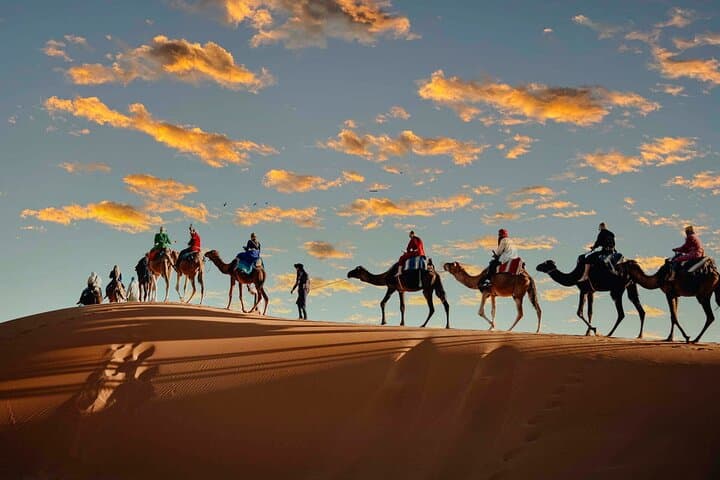
A low sun slides behind the High Atlas as a convoy pulls out of Marrakech, the road climbing into stony passes where wind has carved the stone into sharp ribs. By late afternoon the atlas foothills give way to the Draa Valley’s ribbon of palms; beyond, the horizon softens into the ochre rolls of the Sahara. Travelers arrive at Zagora as the sand drinks the last light, mount a calm caravan of camels and follow a slow, rhythmic procession to a desert camp.
Verified experiences and guided adventures in the surrounding area.
Operated by Tours Excursions Journeys · Zagora, Drâa-Tafilalet
A low sun slides behind the High Atlas as a convoy pulls out of Marrakech, the road climbing into stony passes where wind has carved the stone into sharp ribs. By late afternoon the atlas foothills give way to the Draa Valley’s ribbon of palms; beyond, the horizon softens into the ochre rolls of the Sahara. Travelers arrive at Zagora as the sand drinks the last light, mount a calm caravan of camels and follow a slow, rhythmic procession to a desert camp.
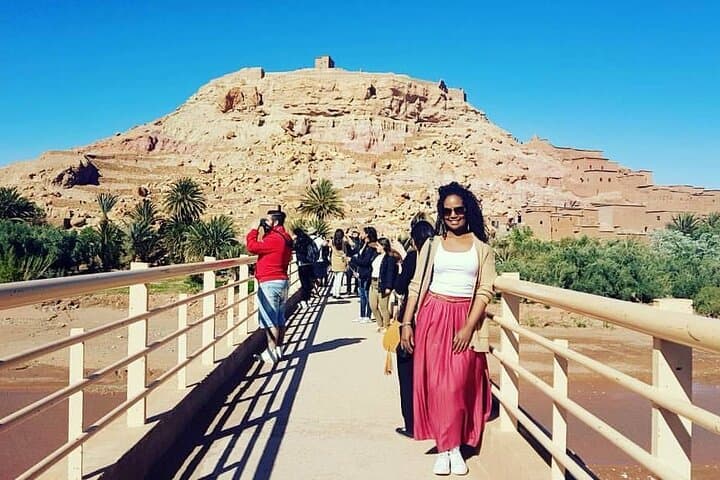
This route stitches together centuries of history: kasbahs at Ait Ben Haddou that guard old caravan tracks, Ouarzazate’s film studios perched on a spreading plain, and the Draa’s palm groves—living irrigation systems shaped by local irrigation practices. Geologically the dunes are recent cousins of the Atlas: sand produced by mountain erosion, redistributed by the same winds that sculpt the desert’s ridges.
Culture here is direct—Berber hosts, music around a fire, and menus centered on tagine and fresh bread. Expect nights under canvas, a sunrise that pushes light across the slopes, and mornings scented with mint tea.
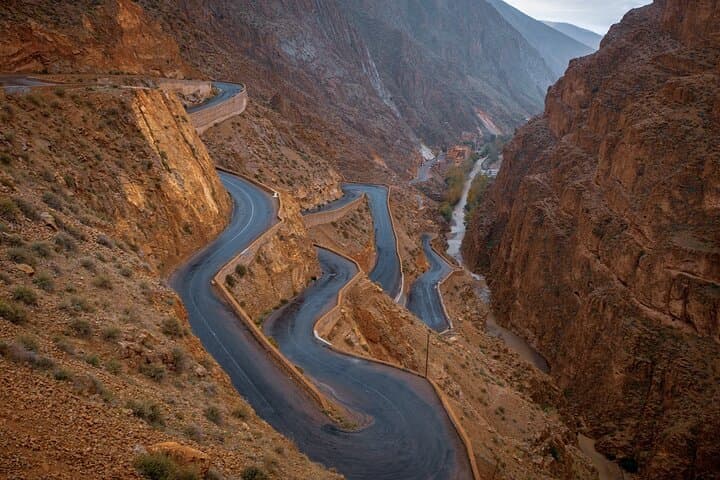
Practicalities: the tour is a full two-day loop with several hours driving each day (Tizi n’Tichka pass is scenic but winding). Camel rides are short caravan-style transfers—not strenuous, but allow time to acclimate and practice mounting. Temperatures swing widely; bring layered clothing, sun protection, plenty of water and a headlamp for camp. Travel over rough tracks means closed shoes and a small backpack for essentials. Pickup in Marrakech is usually included; confirm timing and any mobility limitations when booking.
moderate.
2 days (approx. 8–10 hours driving total).
Moderate endurance for long vehicle transfers, short camel rides, and walking on sand and uneven surfaces.
Camel transfers are typically 30–60 minutes each way—designed as a gentle caravan experience rather than long-distance trekking.
Camps offer comfortable tented accommodation with beds, blankets and private or shared ablutions; standards vary so check the host’s description before booking.
The tour is family-friendly but involves getting on/off camels and walking on uneven sand; travelers with severe mobility restrictions should consult the operator in advance.
Tipping is customary; small amounts to guides, drivers and handlers are appreciated for good service—budget a modest tip per person per service.
Ait Ben Haddou was a key fortified stop on trans-Saharan caravan routes and later a film location hub in Ouarzazate, reflecting both trade and cinematic histories.
Visitors should stick to marked tracks to protect fragile dune vegetation and use refillable water bottles; local guides help minimize impact on remote sites.
Tours Excursions Journeys operates guided outdoor trips and adventures with an emphasis on safety, stewardship, and memorable experiences.

A low sun slides behind the High Atlas as a convoy pulls out of Marrakech, the road climbing into stony passes where wind has carved the stone into sharp ribs. By late afternoon the atlas foothills give way to the Draa Valley’s ribbon of palms; beyond, the horizon softens into the ochre rolls of the Sahara. Travelers arrive at Zagora as the sand drinks the last light, mount a calm caravan of camels and follow a slow, rhythmic procession to a desert camp.
A low sun slides behind the High Atlas as a convoy pulls out of Marrakech, the road climbing into stony passes where wind has carved the stone into sharp ribs. By late afternoon the atlas foothills give way to the Draa Valley’s ribbon of palms; beyond, the horizon softens into the ochre rolls of the Sahara. Travelers arrive at Zagora as the sand drinks the last light, mount a calm caravan of camels and follow a slow, rhythmic procession to a desert camp.
This route stitches together centuries of history: kasbahs at Ait Ben Haddou that guard old caravan tracks, Ouarzazate’s film studios perched on a spreading plain, and the Draa’s palm groves—living irrigation systems shaped by local irrigation practices. Geologically the dunes are recent cousins of the Atlas: sand produced by mountain erosion, redistributed by the same winds that sculpt the desert’s ridges.
Culture here is direct—Berber hosts, music around a fire, and menus centered on tagine and fresh bread. Expect nights under canvas, a sunrise that pushes light across the slopes, and mornings scented with mint tea.
Practicalities: the tour is a full two-day loop with several hours driving each day (Tizi n’Tichka pass is scenic but winding). Camel rides are short caravan-style transfers—not strenuous, but allow time to acclimate and practice mounting. Temperatures swing widely; bring layered clothing, sun protection, plenty of water and a headlamp for camp. Travel over rough tracks means closed shoes and a small backpack for essentials. Pickup in Marrakech is usually included; confirm timing and any mobility limitations when booking.