THE ADVENTURE COLLECTIVE® · Independent discovery and booking for outdoor travel

Cross the High Atlas, explore Ait Ben Haddou and Ouarzazate, then follow the palm-lined Draa to Zagora for a two-hour camel trek and an overnight Berber camp under stellar desert skies.
Cross the High Atlas, explore Ait Ben Haddou and Ouarzazate, then follow the palm-lined Draa to Zagora for a two-hour camel trek and an overnight Berber camp under stellar desert skies.
A dawn departure from Marrakech spills the Atlas foothills into the windshield: sharp light, terraces sliding away, and the road climbing toward Tizi n’Tichka. By midmorning the driver negotiates the high pass at roughly 2,260 meters, and the landscape changes from cedar-scented slopes to ochre kasbahs and sun-baked plains.
Verified experiences and guided adventures in the surrounding area.
Operated by Ok Traveling · Zagora, Drâa-Tafilalet
A dawn departure from Marrakech spills the Atlas foothills into the windshield: sharp light, terraces sliding away, and the road climbing toward Tizi n’Tichka. By midmorning the driver negotiates the high pass at roughly 2,260 meters, and the landscape changes from cedar-scented slopes to ochre kasbahs and sun-baked plains.
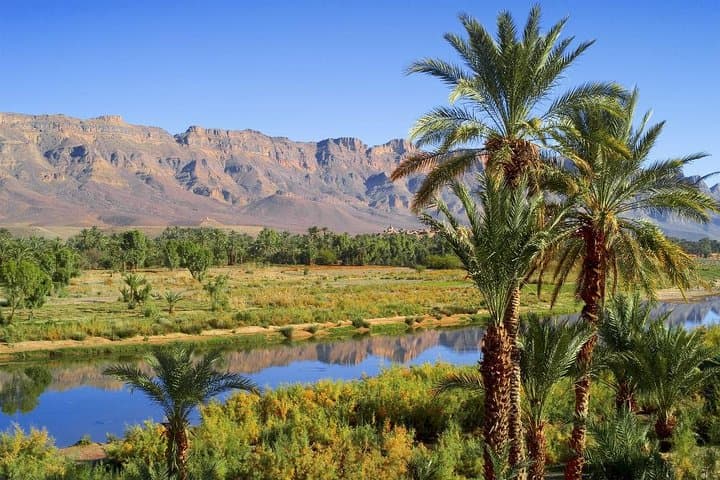
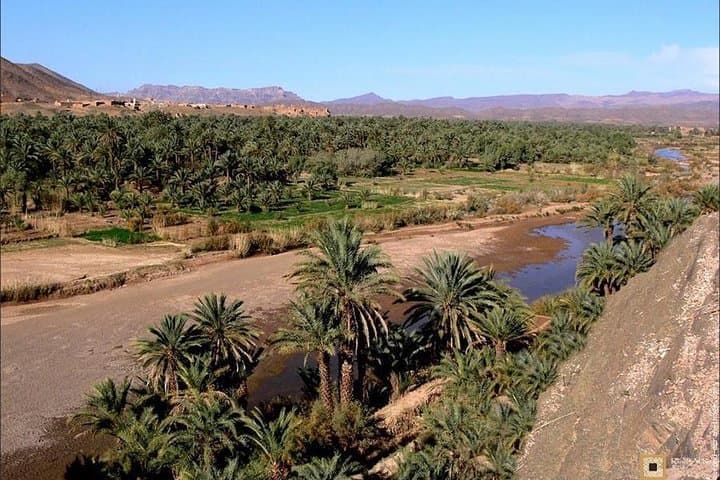
History here is visible in mud-brick walls: Ait Ben Haddou, a UNESCO ksar, once stood on caravan routes and now frames the edge between mountain and Sahara. Geologically, the High Atlas is a folded, uplifted range shaped by the African-European plate collision; below it the Draa valley spreads as a palm-lined ribbon fed by seasonal snowmelt and aquifers, its 180 km grove one of Morocco’s largest.
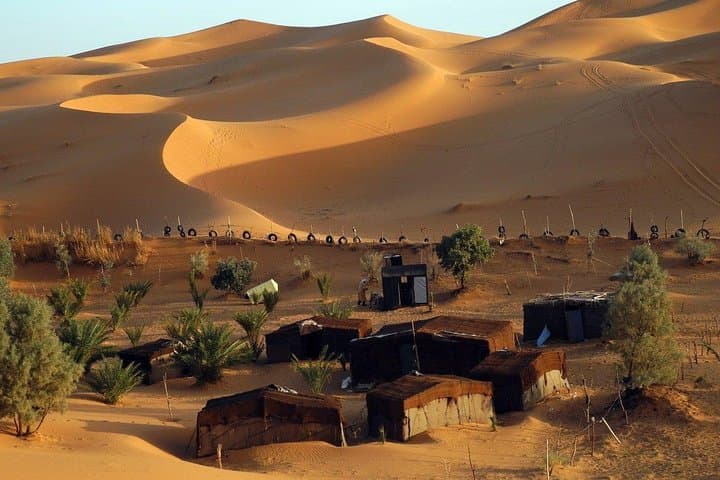
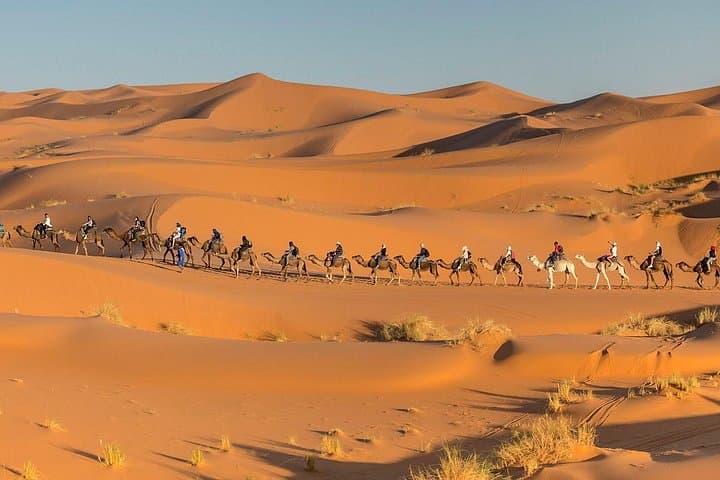
The itinerary balances culture and movement: a stop in Ouarzazate — its film studios offering glimpses into cinematic sets — then on through the Draa toward Zagora. The main draw is the desert night: a two-hour camel trek at sunset to a Berber camp with private bivouacs, dinner, and full bedding, followed by a sunrise ride before the return over passes and villages like Agdez.
Practical notes: expect long hours in an air-conditioned minivan, short walks around kasbahs, and basic camel handling. Temperatures swing sharply between day and night; pack layered clothing, sun protection, and a small daypack for essentials. Bring local currency for small purchases, and be prepared to follow local customs when visiting villages. The route is travel-oriented rather than technically demanding, making it accessible to most active travelers who want a compact, immersive desert experience.
moderate.
2 days (approx. 48 hours).
Suitable for travelers in average physical condition; involves long vehicle transfers, short walks at sites, and 2-hour camel rides.
The camel trek is approximately two hours each way—often timed for sunset and sunrise—over flat desert and small dunes.
Camps provide private Berber bivouacs with full bedding and an evening meal; facilities are basic but designed for comfort under desert conditions.
Yes—visits are typically optional and subject to time; studio entry may require an extra fee and operates on set hours.
No prior experience is required; guides give instructions and camels are used to carrying tourists, but mounting and riding can be bumpy.
The route follows historic caravan corridors; kasbahs were both family homes and defensive structures built from rammed earth and clay.
Water in the Draa valley depends on seasonal melt and groundwater—minimize water use, avoid littering, and respect local irrigation practices.
Ok Traveling operates guided outdoor trips and adventures with an emphasis on safety, stewardship, and memorable experiences.
A dawn departure from Marrakech spills the Atlas foothills into the windshield: sharp light, terraces sliding away, and the road climbing toward Tizi n’Tichka. By midmorning the driver negotiates the high pass at roughly 2,260 meters, and the landscape changes from cedar-scented slopes to ochre kasbahs and sun-baked plains.
A dawn departure from Marrakech spills the Atlas foothills into the windshield: sharp light, terraces sliding away, and the road climbing toward Tizi n’Tichka. By midmorning the driver negotiates the high pass at roughly 2,260 meters, and the landscape changes from cedar-scented slopes to ochre kasbahs and sun-baked plains.
History here is visible in mud-brick walls: Ait Ben Haddou, a UNESCO ksar, once stood on caravan routes and now frames the edge between mountain and Sahara. Geologically, the High Atlas is a folded, uplifted range shaped by the African-European plate collision; below it the Draa valley spreads as a palm-lined ribbon fed by seasonal snowmelt and aquifers, its 180 km grove one of Morocco’s largest.
The itinerary balances culture and movement: a stop in Ouarzazate — its film studios offering glimpses into cinematic sets — then on through the Draa toward Zagora. The main draw is the desert night: a two-hour camel trek at sunset to a Berber camp with private bivouacs, dinner, and full bedding, followed by a sunrise ride before the return over passes and villages like Agdez.
Practical notes: expect long hours in an air-conditioned minivan, short walks around kasbahs, and basic camel handling. Temperatures swing sharply between day and night; pack layered clothing, sun protection, and a small daypack for essentials. Bring local currency for small purchases, and be prepared to follow local customs when visiting villages. The route is travel-oriented rather than technically demanding, making it accessible to most active travelers who want a compact, immersive desert experience.