THE ADVENTURE COLLECTIVE® · Independent discovery and booking for outdoor travel

Cross the High Atlas, explore Ait Benhaddou and Draa Valley, then ride camels into the rocky Zagora desert for a night under the stars in private tents. This compact 2-day route delivers cultural sites, desert panoramas and an authentic bivouac experience.
Cross the High Atlas, explore Ait Benhaddou and Draa Valley, then ride camels into the rocky Zagora desert for a night under the stars in private tents. This compact 2-day route delivers cultural sites, desert panoramas and an authentic bivouac experience.
The sun leans low over the High Atlas as the convoy peels out of Marrakech, the road climbing toward the Tizi-n-Tichka pass where wind and stone sculpt the horizon. By midday the red-brown ramparts of Ait Benhaddou appear, a UNESCO kasbah clinging to a hill—movies have used these walls as backdrops, but the place still reads like lived history rather than film set. From there the route drops into Ouarzazate and the Draa Valley: a long ribbon of palm groves and irrigation channels that seems to dare the desert to reclaim it.
Verified experiences and guided adventures in the surrounding area.
Operated by Deep South Travel Marrakech · Zagora, Drâa-Tafilalet
The sun leans low over the High Atlas as the convoy peels out of Marrakech, the road climbing toward the Tizi-n-Tichka pass where wind and stone sculpt the horizon. By midday the red-brown ramparts of Ait Benhaddou appear, a UNESCO kasbah clinging to a hill—movies have used these walls as backdrops, but the place still reads like lived history rather than film set. From there the route drops into Ouarzazate and the Draa Valley: a long ribbon of palm groves and irrigation channels that seems to dare the desert to reclaim it.
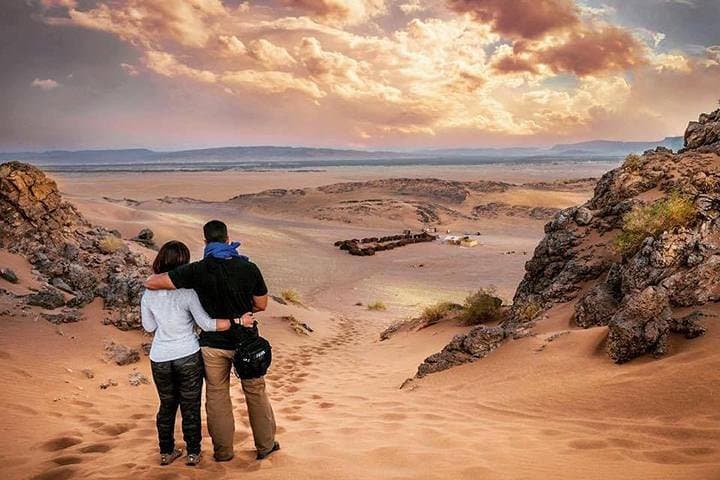
Geology here flips from basalt and folded High Atlas peaks at roughly 2,260 m to the rocky hammada of Zagora, a hard-packed desert that lacks the sweep of Erg Chebbi’s dunes but offers broad, wind-carved vistas. Culturally the region is Berber country—kasbahs, kasbah ruins and small market towns mark caravan routes once used for trade in salt and dates.
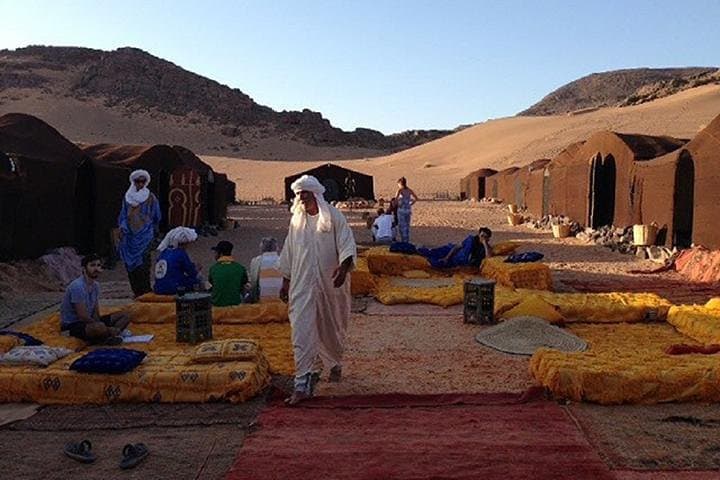
Practically: the tour is a two-day, private trip with air-conditioned 4WD transfers, about one hour camel treks each way into the camp, dinner, sunrise and an overnight in private tents. Expect long stretches in the vehicle, short walks, and temperature swings—hot days, cold nights.
Bring sun protection, a warm layer for night, and a sense of patience for long drives and short walking sections. If you want a shower after the dunes, confirm a Superior/Luxury package. Timing pickups at 7:00 a.m. and return to Marrakech by about 17:00 on day two helps structure the trip and keeps daylight for photography and camel treks.
moderate.
2 days (approx. 48 hours).
Suitable for travelers in average fitness—requires tolerance for long vehicle transfers, short walks, and mounted camel travel.
Camel treks are typically around one hour each way from the vehicle to the bivouac, timed for sunset and sunrise views.
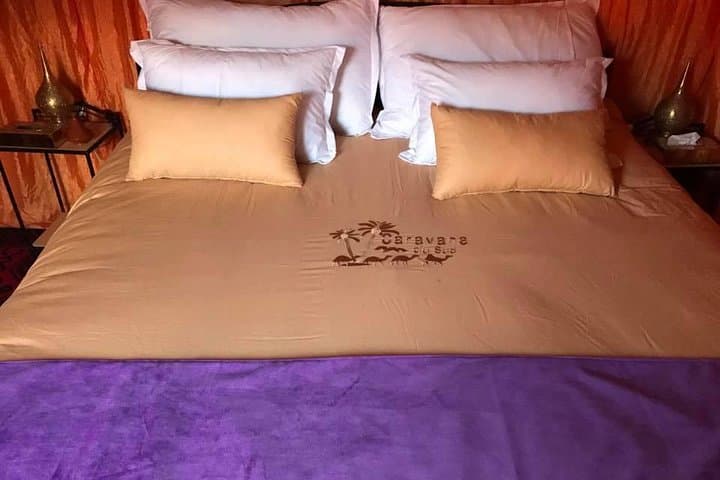
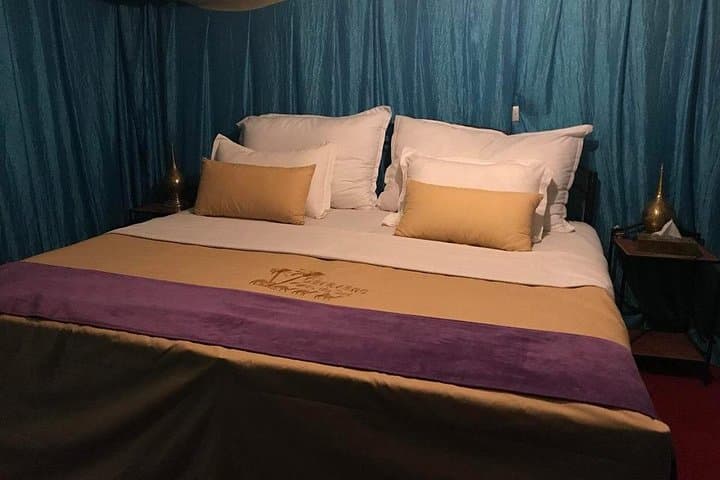
You’ll stay in private tents at a desert bivouac—standards vary by package; Superior and Luxury options often include better bedding and shower facilities.
The trip is suitable for most ages but not recommended for pregnant travelers or people with serious back/heart problems; camel rides require mounting assistance.
Expect long road transfers: Marrakech to Zagora is a full-day drive with stops (via Tizi-n-Tichka, Ait Benhaddou and Ouarzazate), then the return the next day—plan for vehicle time and short site visits.
Ait Benhaddou grew as a caravan stop between the Sahara and Marrakech; Ouarzazate later developed as Morocco’s film center. Zagora was historically a gateway on southbound routes.
The Draa Valley relies on groundwater and traditional irrigation; travelers should avoid single-use plastics, conserve water, and support local guide-run initiatives where possible.
Deep South Travel Marrakech operates guided outdoor trips and adventures with an emphasis on safety, stewardship, and memorable experiences.
The sun leans low over the High Atlas as the convoy peels out of Marrakech, the road climbing toward the Tizi-n-Tichka pass where wind and stone sculpt the horizon. By midday the red-brown ramparts of Ait Benhaddou appear, a UNESCO kasbah clinging to a hill—movies have used these walls as backdrops, but the place still reads like lived history rather than film set. From there the route drops into Ouarzazate and the Draa Valley: a long ribbon of palm groves and irrigation channels that seems to dare the desert to reclaim it.
The sun leans low over the High Atlas as the convoy peels out of Marrakech, the road climbing toward the Tizi-n-Tichka pass where wind and stone sculpt the horizon. By midday the red-brown ramparts of Ait Benhaddou appear, a UNESCO kasbah clinging to a hill—movies have used these walls as backdrops, but the place still reads like lived history rather than film set. From there the route drops into Ouarzazate and the Draa Valley: a long ribbon of palm groves and irrigation channels that seems to dare the desert to reclaim it.
Geology here flips from basalt and folded High Atlas peaks at roughly 2,260 m to the rocky hammada of Zagora, a hard-packed desert that lacks the sweep of Erg Chebbi’s dunes but offers broad, wind-carved vistas. Culturally the region is Berber country—kasbahs, kasbah ruins and small market towns mark caravan routes once used for trade in salt and dates.
Practically: the tour is a two-day, private trip with air-conditioned 4WD transfers, about one hour camel treks each way into the camp, dinner, sunrise and an overnight in private tents. Expect long stretches in the vehicle, short walks, and temperature swings—hot days, cold nights.
Bring sun protection, a warm layer for night, and a sense of patience for long drives and short walking sections. If you want a shower after the dunes, confirm a Superior/Luxury package. Timing pickups at 7:00 a.m. and return to Marrakech by about 17:00 on day two helps structure the trip and keeps daylight for photography and camel treks.