THE ADVENTURE COLLECTIVE® · Independent discovery and booking for outdoor travel

Drive over the High Atlas and into the Draa Valley, ride a dromedary at sunset, and sleep beneath Sahara stars on this compact two-day loop from Marrakech to Zagora. Expect long drives, UNESCO history at Aït Ben Haddou, and a practical mix of comfort and desert simplicity.
Drive over the High Atlas and into the Draa Valley, ride a dromedary at sunset, and sleep beneath Sahara stars on this compact two-day loop from Marrakech to Zagora. Expect long drives, UNESCO history at Aït Ben Haddou, and a practical mix of comfort and desert simplicity.
The sun is low on the horizon as Marrakech slips behind you and the road climbs Tizi n’Tichka, the High Atlas opening like a book of stone. By midafternoon the landscape changes—ochre kasbahs and palm-lined valleys give way to broad dunescapes, wind shaping sand into ridges that dare you to walk their crests.
Verified experiences and guided adventures in the surrounding area.
Operated by Gboo Morocco Tours · Zagora, Drâa-Tafilalet
The sun is low on the horizon as Marrakech slips behind you and the road climbs Tizi n’Tichka, the High Atlas opening like a book of stone. By midafternoon the landscape changes—ochre kasbahs and palm-lined valleys give way to broad dunescapes, wind shaping sand into ridges that dare you to walk their crests.
This two-day journey threads history, geology and film lore. You’ll pass Tizi n’Tichka (a high mountain pass at roughly 2,200–2,300 m), stop at Aït Ben Haddou—its mud-brick ksar declared a UNESCO site in 1986—and skim Ouarzazate, the Moroccan film gateway. The Draa Valley’s date palms and kasbahs mark a long human relationship with scarce water; the dunes outside Zagora are the eastern edge of the Sahara’s western reaches.
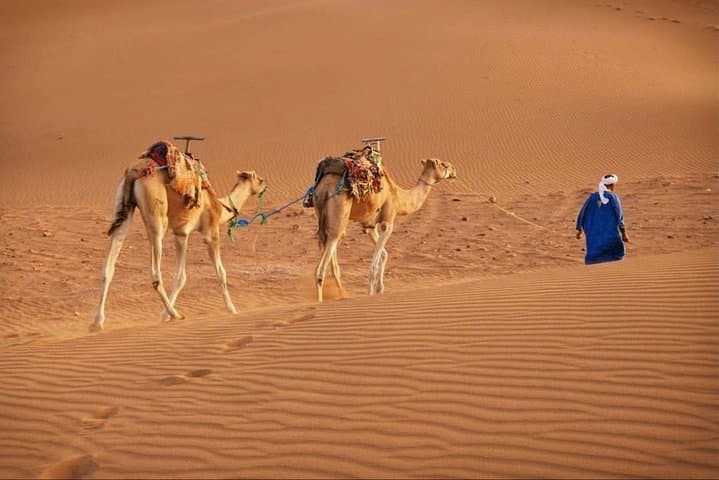
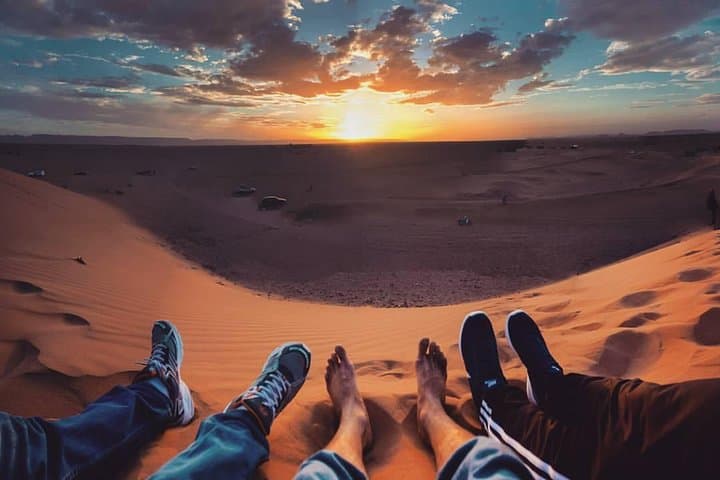
Expect a practical mix: long road stretches (roughly 6–8 hours of driving each way with stops), a one-hour sunset camel ride into the dunes, and an overnight in a desert camp under a sky that feels close enough to touch. Nights can drop sharply in temperature, and days demand sun protection.
Plan for early pickup, carry cash for small purchases and tips, and leave fragile plans in Marrakech—this trip favors flexibility. Footwear that grips sand and uneven kasbah paths, a sun hat, reusable water bottle, and a warm layer for night will keep the logistics simple and the experience immediate. The itinerary prioritizes access to authentic Berber villages while balancing comfort: air-conditioned transfer, simple campsite accommodation, and guided camel rides for sunrise and sunset.
moderate.
2 days.
Moderate — comfortable with several hours in a vehicle, short camel rides and walking on sand and uneven surfaces.
Plan for roughly 6–8 hours of driving one-way with stops; the trip routes through Tizi n’Tichka, Aït Ben Haddou and Ouarzazate.
No special skill is needed; camel handlers guide each ride, but you should be steady on your feet and able to mount and dismount with assistance.
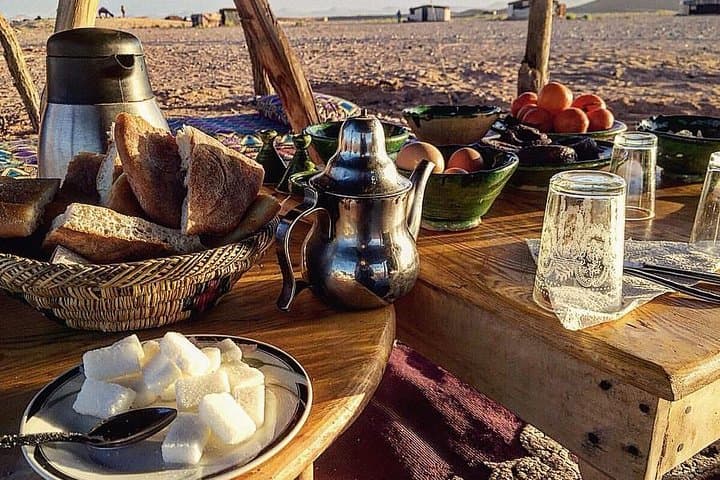
Overnight is in a basic desert camp with simple sleeping arrangements and shared facilities; meals are usually local-style and included as noted.
This tour is not recommended for people with serious heart issues; travelers should have moderate fitness and be able to manage short walks and camel riding.
The route follows ancient trans-Saharan corridors; Aït Ben Haddou’s ksar served caravan trade and later drew filmmakers attracted to its intact earthen architecture.
Travelers should avoid stepping on fragile dune vegetation, carry out waste, and respect local water use—water is scarce and treated as a shared resource.
Gboo Morocco Tours operates guided outdoor trips and adventures with an emphasis on safety, stewardship, and memorable experiences.
The sun is low on the horizon as Marrakech slips behind you and the road climbs Tizi n’Tichka, the High Atlas opening like a book of stone. By midafternoon the landscape changes—ochre kasbahs and palm-lined valleys give way to broad dunescapes, wind shaping sand into ridges that dare you to walk their crests.
The sun is low on the horizon as Marrakech slips behind you and the road climbs Tizi n’Tichka, the High Atlas opening like a book of stone. By midafternoon the landscape changes—ochre kasbahs and palm-lined valleys give way to broad dunescapes, wind shaping sand into ridges that dare you to walk their crests.
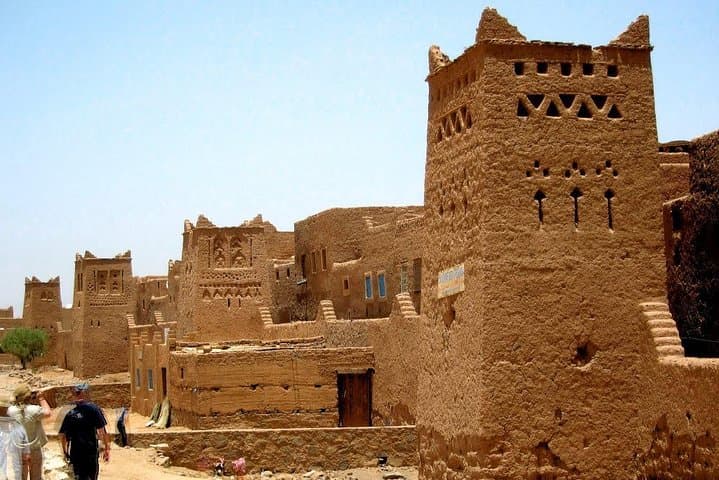
This two-day journey threads history, geology and film lore. You’ll pass Tizi n’Tichka (a high mountain pass at roughly 2,200–2,300 m), stop at Aït Ben Haddou—its mud-brick ksar declared a UNESCO site in 1986—and skim Ouarzazate, the Moroccan film gateway. The Draa Valley’s date palms and kasbahs mark a long human relationship with scarce water; the dunes outside Zagora are the eastern edge of the Sahara’s western reaches.
Expect a practical mix: long road stretches (roughly 6–8 hours of driving each way with stops), a one-hour sunset camel ride into the dunes, and an overnight in a desert camp under a sky that feels close enough to touch. Nights can drop sharply in temperature, and days demand sun protection.
Plan for early pickup, carry cash for small purchases and tips, and leave fragile plans in Marrakech—this trip favors flexibility. Footwear that grips sand and uneven kasbah paths, a sun hat, reusable water bottle, and a warm layer for night will keep the logistics simple and the experience immediate. The itinerary prioritizes access to authentic Berber villages while balancing comfort: air-conditioned transfer, simple campsite accommodation, and guided camel rides for sunrise and sunset.