THE ADVENTURE COLLECTIVE® · Independent discovery and booking for outdoor travel

Cross the High Atlas, visit the UNESCO kasbah at Ait Ben Haddou, then ride camels into Zagora’s desert for an overnight Berber camp under Sahara stars. This compact two-day route pairs dramatic mountain roads with palm-studded valleys and a short, authentic desert experience.
Cross the High Atlas, visit the UNESCO kasbah at Ait Ben Haddou, then ride camels into Zagora’s desert for an overnight Berber camp under Sahara stars. This compact two-day route pairs dramatic mountain roads with palm-studded valleys and a short, authentic desert experience.
Before the sun clears the red walls of Marrakech you’re already on the road — the atlas silhouette climbing ahead, switchbacks rising to the Tizi n’Tichka pass (about 2,260 m). Wind-scoured rock gives way to the earthen geometry of Ait Ben Haddou, where mudbrick kasbahs throw long shadows and film crews once found their backdrops.
Verified experiences and guided adventures in the surrounding area.
Operated by Morocco Tours Trips - Day Tour · Marrakech, Marrakech-Safi
Before the sun clears the red walls of Marrakech you’re already on the road — the atlas silhouette climbing ahead, switchbacks rising to the Tizi n’Tichka pass (about 2,260 m). Wind-scoured rock gives way to the earthen geometry of Ait Ben Haddou, where mudbrick kasbahs throw long shadows and film crews once found their backdrops.
The route is geological theater: folded, uplifted ranges of the High Atlas give way to alluvial fans and the palm-lined Draa Valley, a long ribbon of life where irrigation sustains oases and fortified villages. Cultural layers are visible — Amazigh (Berber) architecture, caravan-era routes and the UNESCO-listed kasbah whose lanes still echo cinematic footsteps.
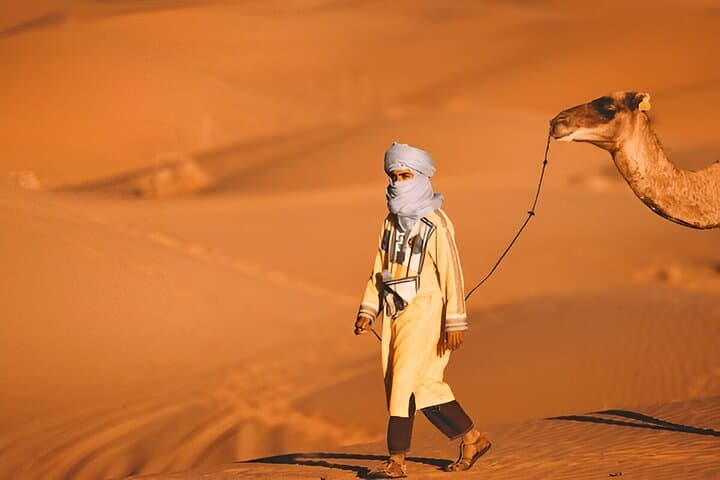
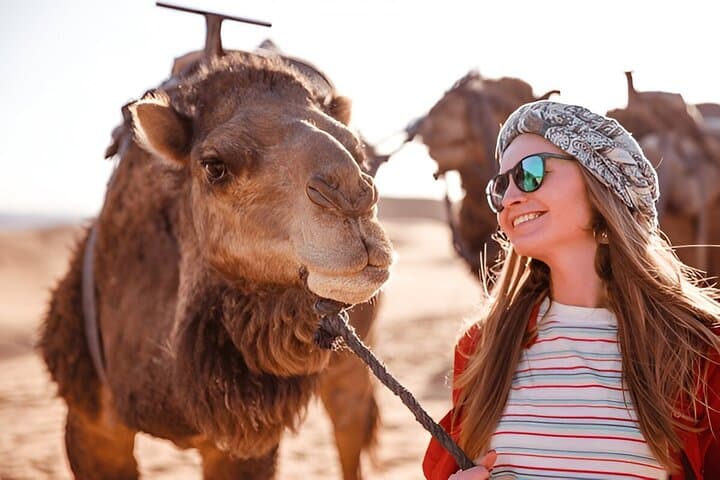
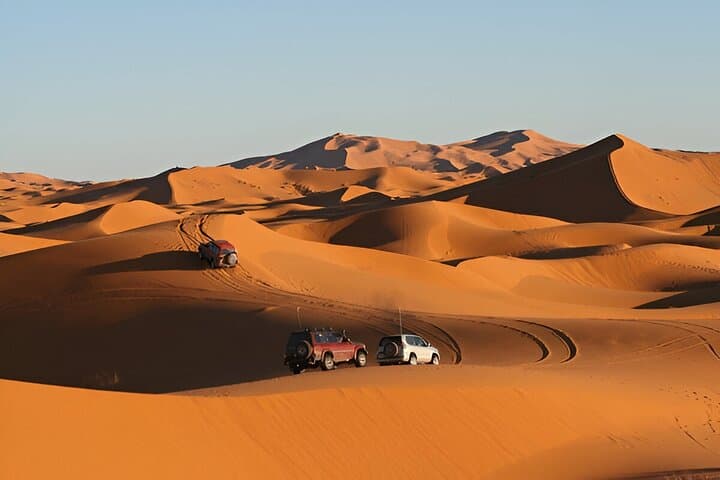
In Zagora the asphalt ends and tracks bite into sand. A short camel trek carries you across low dunes toward a Berber camp; dunes here are wind-shaped and intimate rather than an endless erg, but the night sky is uncompromising — clear, low-humidity, and full of stars.
Expect roughly 6–8 hours of driving distributed over two days with photo stops; the total distance covered can approach 350–400 km depending on routing. Terrain shifts from paved mountain passes to gravel tracks and soft sand; evenings drop sharply in temperature so layers matter. Practical notes: hydrate, use high-SPF sun protection, bring a headlamp and cash for tips and local purchases, and be ready for basic camp facilities. An early sunrise over the dunes rewards the brisk wake-up.
This two-day crossing balances long road hours with concentrated cultural and desert immersion — a compact, practical slice of southern Morocco.
moderate.
2 days.
Suitable for travelers in basic to good fitness who can handle several hours in vehicles, short camel treks, and brief walks at moderate altitude.
Expect about 3–6 hours of driving on day one with stops (Marrakech → Zagora route is scenic and pace varies); day two includes 3–5 hours returning with time for valley stops.
Camel treks on this itinerary are short and gentle; riders should be able to sit in a saddle for 1–2 hours and manage getting on and off with assistance.
Camps typically offer mattresses in individual or shared tents, basic blankets, and communal dining; facilities are rustic with limited electricity but comfortable enough for cold nights.
Breakfast and one dinner are included per the itinerary; bring extra cash for snacks or water between stops if desired.
Ait Ben Haddou and the Draa Valley were key points on trans-Saharan trade routes; mudbrick ksars and kasbahs reflect centuries of Amazigh (Berber) settlement and defensive architecture.
The desert is fragile and water-scarce — stick to designated tracks, minimize single-use plastics, and support local guides and community-run camps to ensure tourism benefits stay local.
Morocco Tours Trips - Day Tour operates guided outdoor trips and adventures with an emphasis on safety, stewardship, and memorable experiences.

Before the sun clears the red walls of Marrakech you’re already on the road — the atlas silhouette climbing ahead, switchbacks rising to the Tizi n’Tichka pass (about 2,260 m). Wind-scoured rock gives way to the earthen geometry of Ait Ben Haddou, where mudbrick kasbahs throw long shadows and film crews once found their backdrops.
Before the sun clears the red walls of Marrakech you’re already on the road — the atlas silhouette climbing ahead, switchbacks rising to the Tizi n’Tichka pass (about 2,260 m). Wind-scoured rock gives way to the earthen geometry of Ait Ben Haddou, where mudbrick kasbahs throw long shadows and film crews once found their backdrops.
The route is geological theater: folded, uplifted ranges of the High Atlas give way to alluvial fans and the palm-lined Draa Valley, a long ribbon of life where irrigation sustains oases and fortified villages. Cultural layers are visible — Amazigh (Berber) architecture, caravan-era routes and the UNESCO-listed kasbah whose lanes still echo cinematic footsteps.
In Zagora the asphalt ends and tracks bite into sand. A short camel trek carries you across low dunes toward a Berber camp; dunes here are wind-shaped and intimate rather than an endless erg, but the night sky is uncompromising — clear, low-humidity, and full of stars.
Expect roughly 6–8 hours of driving distributed over two days with photo stops; the total distance covered can approach 350–400 km depending on routing. Terrain shifts from paved mountain passes to gravel tracks and soft sand; evenings drop sharply in temperature so layers matter. Practical notes: hydrate, use high-SPF sun protection, bring a headlamp and cash for tips and local purchases, and be ready for basic camp facilities. An early sunrise over the dunes rewards the brisk wake-up.
This two-day crossing balances long road hours with concentrated cultural and desert immersion — a compact, practical slice of southern Morocco.