THE ADVENTURE COLLECTIVE® · Independent discovery and booking for outdoor travel

A full-day shared excursion from Marrakech to Ouzoud Waterfalls that pairs a riverside walk with a short boat ride beneath North Africa’s tallest cascade. Expect dramatic views, steep stone steps, and local cafés near the plunge pool.
A full-day shared excursion from Marrakech to Ouzoud Waterfalls that pairs a riverside walk with a short boat ride beneath North Africa’s tallest cascade. Expect dramatic views, steep stone steps, and local cafés near the plunge pool.
The road from Marrakech eases out into ochre plains and low Atlas foothills, and the near-constant roar that defines Ouzoud becomes a promise on the horizon. On arrival the falls announce themselves in a wall of spray: 110 meters (360 feet) of water falling into a churning pool where small wooden boats bob and local vendors ring bells for freshly squeezed orange juice.
Verified experiences and guided adventures in the surrounding area.
Operated by Red City Tours Marrakech · Azilal, Béni Mellal-Khénifra
The road from Marrakech eases out into ochre plains and low Atlas foothills, and the near-constant roar that defines Ouzoud becomes a promise on the horizon. On arrival the falls announce themselves in a wall of spray: 110 meters (360 feet) of water falling into a churning pool where small wooden boats bob and local vendors ring bells for freshly squeezed orange juice.
Geology here is straightforward and dramatic — the falls sit on the El-Abid River, cutting through Miocene-era sandstone and conglomerates that form stepped cliffs and deep plunge pools. Human presence has long focused on the river: small Berber villages and olive terraces occupy the slopes, and the area’s name and economy reflect centuries of water management and olive cultivation.
Visitors spend the day walking a network of stone steps and narrow trails that lead to multiple viewpoints, riverside cafés, and the boat landing below the main drop. The boat ride is short, close to the mist line, and best experienced with a waterproof layer. Wildlife sightings often include local monkeys and river birds, and the site carries a lived-in, working feel — guides, artisans, and shepherds share the same trails.
Practical guidance: expect 2½–3 hours each way from Marrakech by air-conditioned minibus on mostly paved roads; bring sturdy shoes for slippery steps, water and sun protection, and a small amount of local currency for boats and vendors. The organized day tour handles logistics and pickup, making it a solid option for travelers who want a full-day nature escape without self-drive planning.
easy.
10 hours (full-day).
Suitable for most fitness levels; includes short hikes on uneven, stepped trails.
The full-day shared tour is approximately 10 hours door-to-door, with about 2½–3 hours each way by air-conditioned vehicle.
Yes—on most organized tours a short boat ride at the base of the falls is included or available for a small additional cash fee on-site.
Yes; paths are stepped but manageable. Those with mobility issues should note there are many steps and sections can be slippery.
Yes, several cafés and vendors operate near viewpoints and the riverside; bring cash in Moroccan dirham as card access is limited.
Ouzoud sits in the Atlas foothills where traditional olive cultivation has shaped local settlement; the falls have long supported mills and village life along the El-Abid River.
Avoid feeding wildlife and follow marked trails; local guides and community initiatives work to limit litter and preserve water quality for the river and olive groves.
Red City Tours Marrakech operates guided outdoor trips and adventures with an emphasis on safety, stewardship, and memorable experiences.


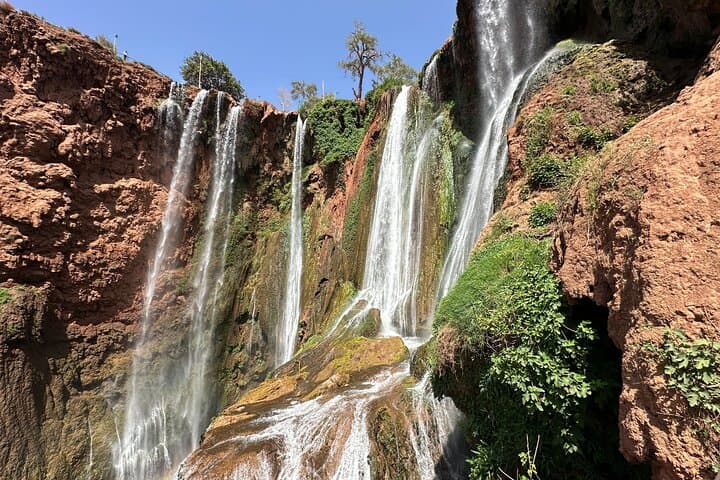

The road from Marrakech eases out into ochre plains and low Atlas foothills, and the near-constant roar that defines Ouzoud becomes a promise on the horizon. On arrival the falls announce themselves in a wall of spray: 110 meters (360 feet) of water falling into a churning pool where small wooden boats bob and local vendors ring bells for freshly squeezed orange juice.
The road from Marrakech eases out into ochre plains and low Atlas foothills, and the near-constant roar that defines Ouzoud becomes a promise on the horizon. On arrival the falls announce themselves in a wall of spray: 110 meters (360 feet) of water falling into a churning pool where small wooden boats bob and local vendors ring bells for freshly squeezed orange juice.
Geology here is straightforward and dramatic — the falls sit on the El-Abid River, cutting through Miocene-era sandstone and conglomerates that form stepped cliffs and deep plunge pools. Human presence has long focused on the river: small Berber villages and olive terraces occupy the slopes, and the area’s name and economy reflect centuries of water management and olive cultivation.
Visitors spend the day walking a network of stone steps and narrow trails that lead to multiple viewpoints, riverside cafés, and the boat landing below the main drop. The boat ride is short, close to the mist line, and best experienced with a waterproof layer. Wildlife sightings often include local monkeys and river birds, and the site carries a lived-in, working feel — guides, artisans, and shepherds share the same trails.
Practical guidance: expect 2½–3 hours each way from Marrakech by air-conditioned minibus on mostly paved roads; bring sturdy shoes for slippery steps, water and sun protection, and a small amount of local currency for boats and vendors. The organized day tour handles logistics and pickup, making it a solid option for travelers who want a full-day nature escape without self-drive planning.