THE ADVENTURE COLLECTIVE® · Independent discovery and booking for outdoor travel

A day-long escape from Marrakech to Ouzoud reveals North Africa’s highest cascades, a lively monkey population and terraces of olive groves. This shared tour pairs a scenic 3–4 km loop hike with a riverside Berber lunch and plenty of photo stops.
A day-long escape from Marrakech to Ouzoud reveals North Africa’s highest cascades, a lively monkey population and terraces of olive groves. This shared tour pairs a scenic 3–4 km loop hike with a riverside Berber lunch and plenty of photo stops.
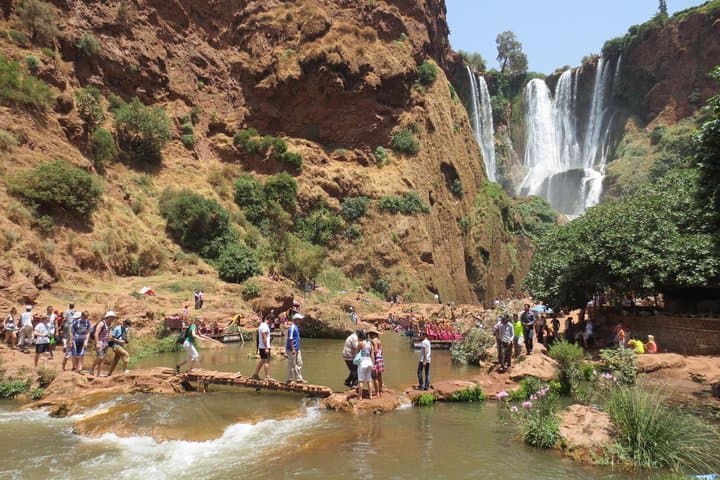
The first time the falls appear from the bus window it feels like an apparition: white spray rising from a bowl of green, a rainbow pinned to the cliff. The three-hour drive from Marrakech slides past red-oxide hills, oleander-splashed roadsides and low adobe Berber villages until the Middle Atlas pulls into view and the world tilts toward water. At Ouzoud, the river El-Abid makes a theatrical exit—falling roughly 100 metres in a series of curtains and ledges that keep convincing you there must be one more drop.
Verified experiences and guided adventures in the surrounding area.
Operated by Snoubi Travelling · Azilal, Béni Mellal-Khénifra
The first time the falls appear from the bus window it feels like an apparition: white spray rising from a bowl of green, a rainbow pinned to the cliff. The three-hour drive from Marrakech slides past red-oxide hills, oleander-splashed roadsides and low adobe Berber villages until the Middle Atlas pulls into view and the world tilts toward water. At Ouzoud, the river El-Abid makes a theatrical exit—falling roughly 100 metres in a series of curtains and ledges that keep convincing you there must be one more drop.
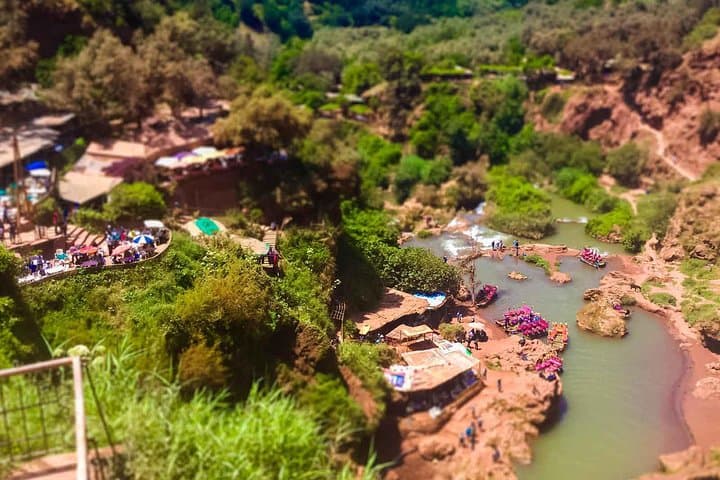
Geologically the falls are where mountain runoff meets softer bedrock. Over millennia the water has cut through layers of sandstone and limestone, undercutting shelves and creating the stepped cascades you see today. The surrounding slopes are carved into terraces for olive groves—evidence of centuries of simple agriculture and the region’s Berber communities who still farm these hills.
Culture is part of the visit. Small family-run restaurants perch on overlooks; tagines steam on clay stoves and mint tea arrives in narrow glasses. Local guides—often young men from nearby villages—offer to lead you down the steps to the base and point out the resident Barbary macaques. The monkeys appear unbothered by human traffic but have learned where lunch plates live; they’re curious, quick and best appreciated on their terms, not yours.
The hike around Ouzoud is both scenic and practical. Expect 2–3 hours of walking on a loop that’s roughly 3–4 km with about 150–250 m of total elevation change as you descend to the river and climb back to the rim. Trails alternate between compact dirt, stone steps and occasional muddy stretches; some viewpoints sit on narrow ledges that reward steadiness with wide valley views.
Timing matters: arrive mid-morning to see the falls in full flow and avoid the largest tour groups, or stay for late afternoon light when the spray favors backlit rainbows. Wear sturdy shoes—slippers are a liability on the stone steps—and bring a waterproof layer for the spray on the lower trail. Local restaurants offer a hearty lunch and shaded seating; carry cash for tips and small purchases.
Practicalities: the shared tour picks up in Marrakech at 8:00 a.m., includes round-trip transport in an air-conditioned vehicle and a professional driver, and returns around 7:30 p.m. Hiring a local guide at the falls is optional but helpful for navigating side trails and learning about the area’s ecology. Be mindful of conservation—stay on marked paths, don’t feed wildlife, and pack out what you pack in. When the water is high, the falls roar like a living thing; follow its lead but respect the rules that keep this place wild and accessible.
moderate.
11–12 hours (tour); 2–3 hours hiking.
Moderate fitness: able to handle several hundred metres of elevation gain on uneven stone steps and dirt paths.
The shared tour is about a 2.5–3 hour drive each way depending on traffic; total trip time is roughly 11–12 hours including hiking and lunch.
Trails include stone steps and some steep sections down to the river; they’re non-technical but require sure footing and basic fitness.
Swimming is possible in some pools during low flow, but currents and rocks make it risky—local advice should guide any attempt.
No—paths are well trodden, but a local guide can point out viewpoints, wildlife and cultural context for a small additional fee.
Barbary macaques are commonly seen around the falls, but interaction is unpredictable; do not feed or attempt to touch them.
Most visitors eat at a local restaurant offering tagine and salads; bring cash if you prefer specific items or plan to tip.
The falls sit in the traditional territory of Berber communities who have farmed the terraces and groves for generations; the area’s name, Ouzoud, comes from the Amazigh (Berber) word for the local olive tree.
Increased tourism pressures mean staying on marked trails and avoiding single-use plastics helps protect riverine habitats; local businesses are increasingly adopting waste management practices.
Snoubi Travelling operates guided outdoor trips and adventures with an emphasis on safety, stewardship, and memorable experiences.


The first time the falls appear from the bus window it feels like an apparition: white spray rising from a bowl of green, a rainbow pinned to the cliff. The three-hour drive from Marrakech slides past red-oxide hills, oleander-splashed roadsides and low adobe Berber villages until the Middle Atlas pulls into view and the world tilts toward water. At Ouzoud, the river El-Abid makes a theatrical exit—falling roughly 100 metres in a series of curtains and ledges that keep convincing you there must be one more drop.
The first time the falls appear from the bus window it feels like an apparition: white spray rising from a bowl of green, a rainbow pinned to the cliff. The three-hour drive from Marrakech slides past red-oxide hills, oleander-splashed roadsides and low adobe Berber villages until the Middle Atlas pulls into view and the world tilts toward water. At Ouzoud, the river El-Abid makes a theatrical exit—falling roughly 100 metres in a series of curtains and ledges that keep convincing you there must be one more drop.
Geologically the falls are where mountain runoff meets softer bedrock. Over millennia the water has cut through layers of sandstone and limestone, undercutting shelves and creating the stepped cascades you see today. The surrounding slopes are carved into terraces for olive groves—evidence of centuries of simple agriculture and the region’s Berber communities who still farm these hills.
Culture is part of the visit. Small family-run restaurants perch on overlooks; tagines steam on clay stoves and mint tea arrives in narrow glasses. Local guides—often young men from nearby villages—offer to lead you down the steps to the base and point out the resident Barbary macaques. The monkeys appear unbothered by human traffic but have learned where lunch plates live; they’re curious, quick and best appreciated on their terms, not yours.
The hike around Ouzoud is both scenic and practical. Expect 2–3 hours of walking on a loop that’s roughly 3–4 km with about 150–250 m of total elevation change as you descend to the river and climb back to the rim. Trails alternate between compact dirt, stone steps and occasional muddy stretches; some viewpoints sit on narrow ledges that reward steadiness with wide valley views.
Timing matters: arrive mid-morning to see the falls in full flow and avoid the largest tour groups, or stay for late afternoon light when the spray favors backlit rainbows. Wear sturdy shoes—slippers are a liability on the stone steps—and bring a waterproof layer for the spray on the lower trail. Local restaurants offer a hearty lunch and shaded seating; carry cash for tips and small purchases.
Practicalities: the shared tour picks up in Marrakech at 8:00 a.m., includes round-trip transport in an air-conditioned vehicle and a professional driver, and returns around 7:30 p.m. Hiring a local guide at the falls is optional but helpful for navigating side trails and learning about the area’s ecology. Be mindful of conservation—stay on marked paths, don’t feed wildlife, and pack out what you pack in. When the water is high, the falls roar like a living thing; follow its lead but respect the rules that keep this place wild and accessible.