THE ADVENTURE COLLECTIVE® · Independent discovery and booking for outdoor travel

A private day trip from Marrakech to the Waterfalls of Ouzoud takes you 150 km into the Atlas foothills to witness a stepped 110‑metre cascade, resident Barbary macaques and rocky pools perfect for a summer dip. This guide walks you through what to expect, how to prepare and where to shoot the best rainbow-lit photos.
A private day trip from Marrakech to the Waterfalls of Ouzoud takes you 150 km into the Atlas foothills to witness a stepped 110‑metre cascade, resident Barbary macaques and rocky pools perfect for a summer dip. This guide walks you through what to expect, how to prepare and where to shoot the best rainbow-lit photos.
By the time the road drops away from Marrakech’s ochre blocks and the air sharpens, the Atlas foothills begin to rewrite the map of your day. Olive trees and low scrub give way to steeper terraces; the lane bends, opens and then the landscape announces itself in water and stone. A distant roar grows, then resolves: the Ouzoud Falls, the cascade that throws its spray like confetti across the canyon, about 110 metres of stepped limestone that breaks into pools and plunges.
Verified experiences and guided adventures in the surrounding area.
Operated by Toubkal Guide · Ouzoud, Azilal Province
By the time the road drops away from Marrakech’s ochre blocks and the air sharpens, the Atlas foothills begin to rewrite the map of your day. Olive trees and low scrub give way to steeper terraces; the lane bends, opens and then the landscape announces itself in water and stone. A distant roar grows, then resolves: the Ouzoud Falls, the cascade that throws its spray like confetti across the canyon, about 110 metres of stepped limestone that breaks into pools and plunges.
The route from Marrakech is straightforward — roughly 150 km and about two to three hours by private vehicle each way depending on traffic and stops. The falls sit in a landscape shaped by the Tabouda and El Abid rivers and by centuries of small-scale agriculture: stone walls, olive groves, and Berber villages clinging to the slopes. Geologically, Ouzoud’s tiers form where hard travertine and limestone layer above softer beds; water finds fracture, then works its patience until the cliff drops.
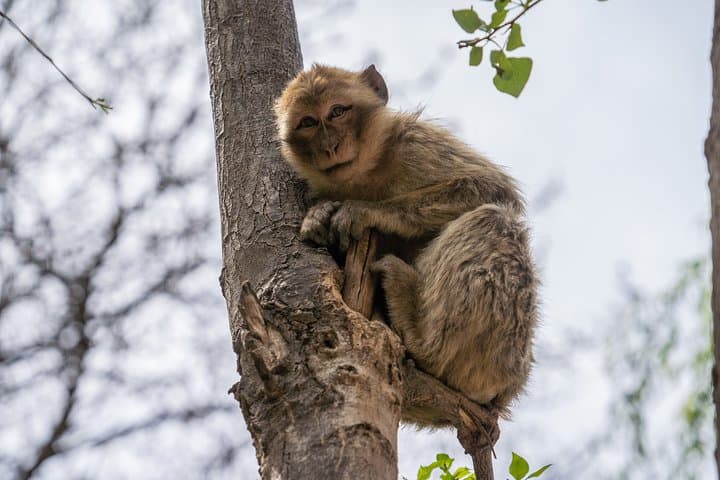
Culturally the area remains quietly lived-in. Local Berber families farm terraced plots; small cafés serve mint tea under plane trees, and a handful of guesthouses in the village offer a slower overnight option. Wildlife here is bold: Barbary macaques (often called magots) are regulars at the overlooks and along the paths, drawn by water and human food. Guides advise not feeding or cornering them — they’re charming and opportunistic.
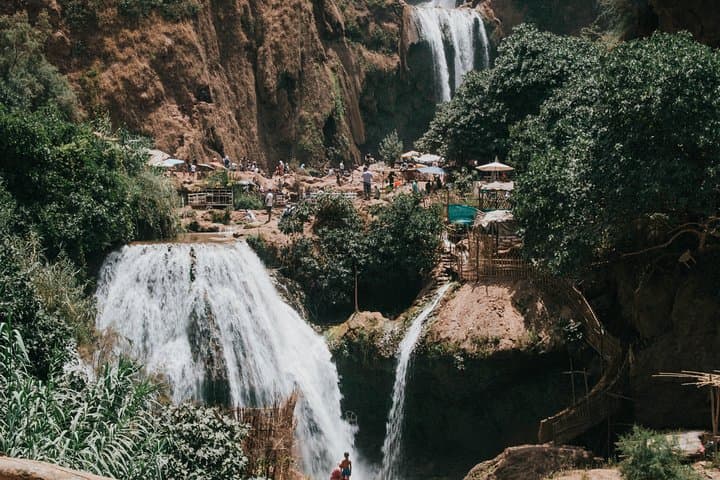
Most visitors follow a loop of well-maintained tracks that total about 3 km with modest elevation change (expect up to ~100 m of ups and downs). Trails range from paved stairs at the main viewpoints to rock and packed-earth singletrack closer to the pools. In summer, swimming in calm pools below the falls is common; boats can take you close to the spray in calmer conditions.
Practicalities: this private day-trip typically departs Marrakech at 08:00 and returns around 17:00. Wear sturdy shoes with grip — parts of the trail are wet and slippery — and bring a light waterproof, sun protection, and cash for small purchases and tips. If you want the rainbow across the curtain of spray, late morning into early afternoon often produces the best light. Respect local customs: smart-casual dress is suggested in public areas and modest swimwear at the pools.
A private tour makes logistics painless: hotel pickup, a bilingual guide/driver, and a leisurely lunch near the falls are usually included. For photographers, the best shots mix wide canyon vistas and intimate water textures; for everyone else, let the water dare you forward and use the day to slow down into the geography — the falls are as much an audio landmark as a visual one.
moderate.
8–10 hours.
Suitable for people in reasonable walking condition — short hikes of 2–4 km on uneven terrain with modest elevation changes (≈100 m).
The drive is about 150 km each way; expect roughly 2–3 hours of driving each direction depending on stops and traffic, with a full-day tour lasting 8–10 hours total.
Yes—during warmer months there are calm pools suitable for swimming below the falls; always check local conditions and avoid strong currents near the main plunge.
They are generally curious but wild; do not feed or provoke them, secure belongings and follow your guide’s advice to avoid bites or scratches.
Most paths are family-friendly but include steps and uneven sections; the tour operator notes the trip is suitable for all fitness levels, but those with limited mobility may need assistance.
On this private day-trip, admission to the falls and a traditional Berber lunch are typically included; confirm details at booking.
Yes—there are public buses and shared excursions to Ouzoud, but a private transfer is faster, more flexible and typically includes guide services and hotel pickup.
The Ouzoud area has long been farmed by Berber communities; terraced agriculture and stone tracks reflect generations of hillside cultivation.
Visitors are encouraged to minimize waste and avoid feeding wildlife; local guides and small businesses are invested in keeping trails clean and sustainable.
Toubkal Guide operates guided outdoor trips and adventures with an emphasis on safety, stewardship, and memorable experiences.
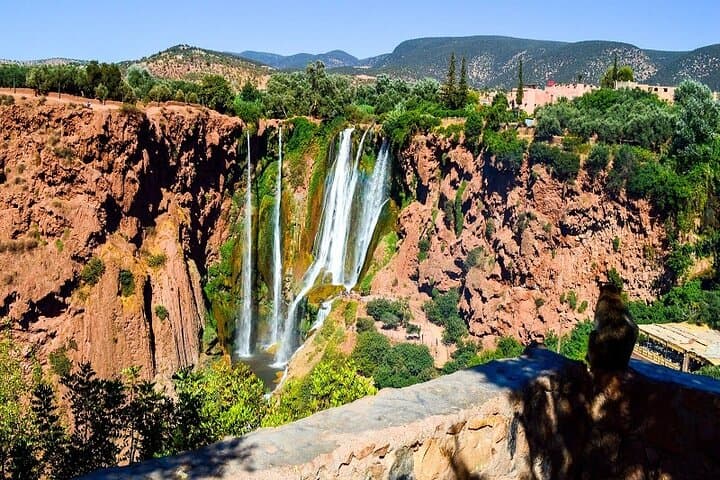
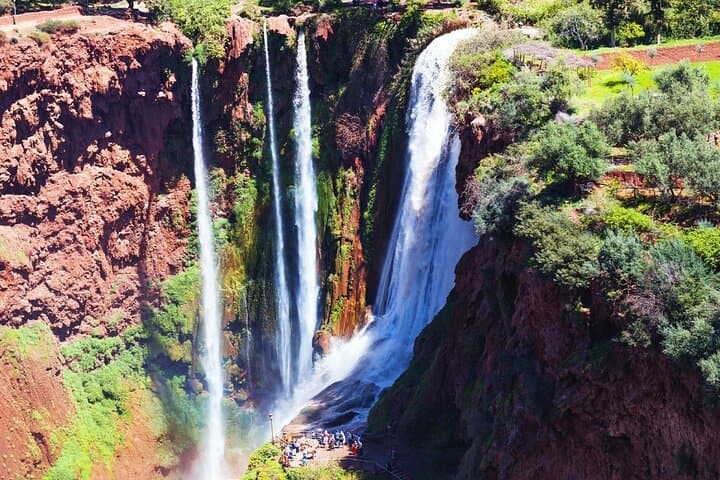
By the time the road drops away from Marrakech’s ochre blocks and the air sharpens, the Atlas foothills begin to rewrite the map of your day. Olive trees and low scrub give way to steeper terraces; the lane bends, opens and then the landscape announces itself in water and stone. A distant roar grows, then resolves: the Ouzoud Falls, the cascade that throws its spray like confetti across the canyon, about 110 metres of stepped limestone that breaks into pools and plunges.
By the time the road drops away from Marrakech’s ochre blocks and the air sharpens, the Atlas foothills begin to rewrite the map of your day. Olive trees and low scrub give way to steeper terraces; the lane bends, opens and then the landscape announces itself in water and stone. A distant roar grows, then resolves: the Ouzoud Falls, the cascade that throws its spray like confetti across the canyon, about 110 metres of stepped limestone that breaks into pools and plunges.
The route from Marrakech is straightforward — roughly 150 km and about two to three hours by private vehicle each way depending on traffic and stops. The falls sit in a landscape shaped by the Tabouda and El Abid rivers and by centuries of small-scale agriculture: stone walls, olive groves, and Berber villages clinging to the slopes. Geologically, Ouzoud’s tiers form where hard travertine and limestone layer above softer beds; water finds fracture, then works its patience until the cliff drops.
Culturally the area remains quietly lived-in. Local Berber families farm terraced plots; small cafés serve mint tea under plane trees, and a handful of guesthouses in the village offer a slower overnight option. Wildlife here is bold: Barbary macaques (often called magots) are regulars at the overlooks and along the paths, drawn by water and human food. Guides advise not feeding or cornering them — they’re charming and opportunistic.
Most visitors follow a loop of well-maintained tracks that total about 3 km with modest elevation change (expect up to ~100 m of ups and downs). Trails range from paved stairs at the main viewpoints to rock and packed-earth singletrack closer to the pools. In summer, swimming in calm pools below the falls is common; boats can take you close to the spray in calmer conditions.
Practicalities: this private day-trip typically departs Marrakech at 08:00 and returns around 17:00. Wear sturdy shoes with grip — parts of the trail are wet and slippery — and bring a light waterproof, sun protection, and cash for small purchases and tips. If you want the rainbow across the curtain of spray, late morning into early afternoon often produces the best light. Respect local customs: smart-casual dress is suggested in public areas and modest swimwear at the pools.
A private tour makes logistics painless: hotel pickup, a bilingual guide/driver, and a leisurely lunch near the falls are usually included. For photographers, the best shots mix wide canyon vistas and intimate water textures; for everyone else, let the water dare you forward and use the day to slow down into the geography — the falls are as much an audio landmark as a visual one.