THE ADVENTURE COLLECTIVE® · Independent discovery and booking for outdoor travel

Drive the Tizi n'Tichka pass, walk the alleys of the UNESCO ksar Aït Ben Haddou, and sleep among palms in Skoura on this active two-day cultural loop. Expect high mountain views, mud-brick kasbahs, and short guided walks between scenic stops.
Drive the Tizi n'Tichka pass, walk the alleys of the UNESCO ksar Aït Ben Haddou, and sleep among palms in Skoura on this active two-day cultural loop. Expect high mountain views, mud-brick kasbahs, and short guided walks between scenic stops.
You climb out of Marrakech before dawn, the city noise thinning as the road threads upward through the High Atlas. The Tizi n'Tichka pass pushes you up to roughly 2,260 m, and switchbacks open into terraces of stone and ochre villages that seem to cling to the mountainside.
Verified experiences and guided adventures in the surrounding area.
Operated by Trendy Travel · Aït Ben Haddou, Drâa-Tafilalet
You climb out of Marrakech before dawn, the city noise thinning as the road threads upward through the High Atlas. The Tizi n'Tichka pass pushes you up to roughly 2,260 m, and switchbacks open into terraces of stone and ochre villages that seem to cling to the mountainside.
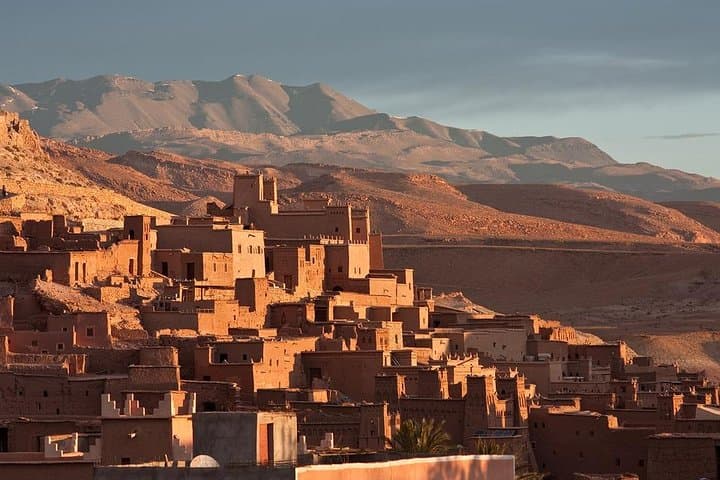
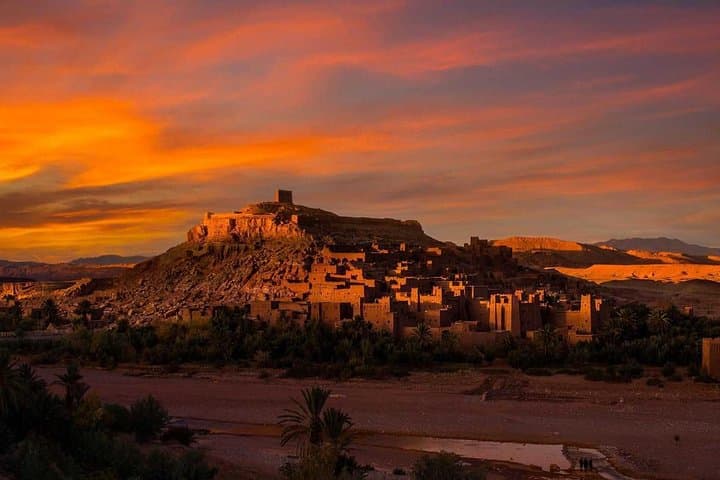
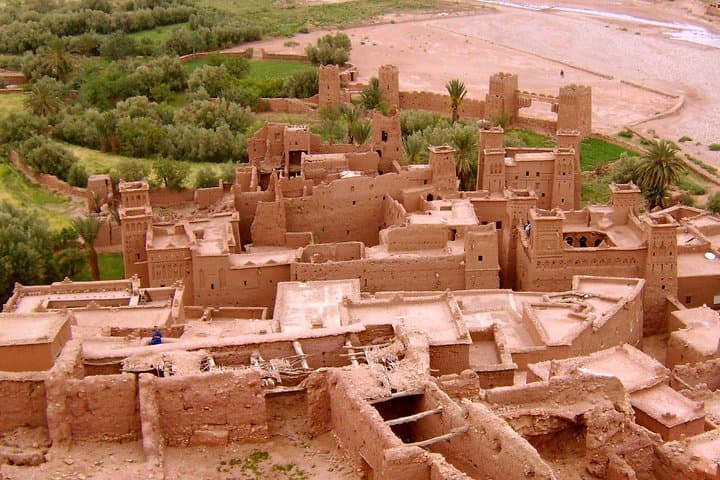
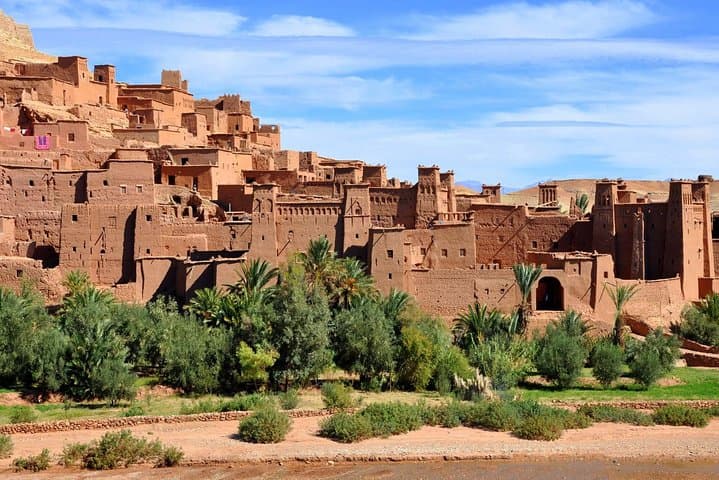
This two-day loop traces old caravan arteries: Telouet's renovated mule tracks, the former seat of Pasha Glaoui, and the mud-brick alleys of Aït Ben Haddou — a UNESCO ksar whose stacked granaries and kasbah roofs tell of trans-Saharan trade. Geologically the area is folded Paleozoic rocks and recent alluvial fans; the contrast between barren slopes and the irrigated Skoura palm grove is immediate and striking. Local Berber families still tend date palms and small gardens fed by mountain runoff, and Ouarzazate's film studios offer a modern counterpoint to centuries-old adobe architecture.
Practically: expect long stretches in an air-conditioned vehicle broken by short guided walks — 30–120 minutes at each stop. The route is about 200–230 km one-way with several photo and cultural stops; weather can swing from hot valley sun to windy, cool passes. Bring layered clothing, sun protection, a small daypack, and reusable water. Wear sturdy shoes for uneven ksar streets and rocky viewing points. Start early, charge devices for photography, and keep cash for small local purchases.
Respect prayer times and private property; the landscape rewards slow observation and straightforward preparation.
moderate.
2 days.
Light to moderate fitness — comfortable with short walks on uneven ground and long vehicle transfers
Expect roughly 4–5 hours of driving including stops; distance is about 200–230 km depending on route and traffic.
The itinerary includes guided stops at Aït Ben Haddou and kasbah visits noted in the tour; confirm specific admission coverage when booking.
Yes — the tour notes it is suitable for all fitness levels with short walks; however, long vehicle transfers may be tiring for very young children or those with limited mobility.
Yes — the itinerary lists optional studio visits in Ouarzazate; timing may be limited, so prioritize it when booking or on the second day.
The route follows historic caravan tracks that linked Marrakech to sub-Saharan trade routes; many kasbahs were political and commercial hubs in the 17th–19th centuries.
Water is scarce; support local guides, avoid single-use plastics, and stick to marked paths to protect fragile adobe structures and palm irrigation systems.
Trendy Travel operates guided outdoor trips and adventures with an emphasis on safety, stewardship, and memorable experiences.
You climb out of Marrakech before dawn, the city noise thinning as the road threads upward through the High Atlas. The Tizi n'Tichka pass pushes you up to roughly 2,260 m, and switchbacks open into terraces of stone and ochre villages that seem to cling to the mountainside.
You climb out of Marrakech before dawn, the city noise thinning as the road threads upward through the High Atlas. The Tizi n'Tichka pass pushes you up to roughly 2,260 m, and switchbacks open into terraces of stone and ochre villages that seem to cling to the mountainside.
This two-day loop traces old caravan arteries: Telouet's renovated mule tracks, the former seat of Pasha Glaoui, and the mud-brick alleys of Aït Ben Haddou — a UNESCO ksar whose stacked granaries and kasbah roofs tell of trans-Saharan trade. Geologically the area is folded Paleozoic rocks and recent alluvial fans; the contrast between barren slopes and the irrigated Skoura palm grove is immediate and striking. Local Berber families still tend date palms and small gardens fed by mountain runoff, and Ouarzazate's film studios offer a modern counterpoint to centuries-old adobe architecture.
Practically: expect long stretches in an air-conditioned vehicle broken by short guided walks — 30–120 minutes at each stop. The route is about 200–230 km one-way with several photo and cultural stops; weather can swing from hot valley sun to windy, cool passes. Bring layered clothing, sun protection, a small daypack, and reusable water. Wear sturdy shoes for uneven ksar streets and rocky viewing points. Start early, charge devices for photography, and keep cash for small local purchases.
Respect prayer times and private property; the landscape rewards slow observation and straightforward preparation.