THE ADVENTURE COLLECTIVE® · Independent discovery and booking for outdoor travel

Cross the High Atlas and sleep beneath the stars on this six-day Marrakech to Merzouga itinerary. From Aït Ben Haddou to Erg Chebbi, the trip blends mountain passes, palm oases, and desert nights in a mix of luxury camps and local stays.
Cross the High Atlas and sleep beneath the stars on this six-day Marrakech to Merzouga itinerary. From Aït Ben Haddou to Erg Chebbi, the trip blends mountain passes, palm oases, and desert nights in a mix of luxury camps and local stays.
A low sun slices the dunes of Erg Chebbi into sharp ribs of gold as a caravan of camels threads toward the horizon. The first day’s asphalt gives up to winding tarmac through the High Atlas, where the Tizi n’Tichka pass (2,205 m) opens the world between Marrakech and the Sahara.
Verified experiences and guided adventures in the surrounding area.
Operated by Bouquet Tours · Merzouga, Drâa-Tafilalet
A low sun slices the dunes of Erg Chebbi into sharp ribs of gold as a caravan of camels threads toward the horizon. The first day’s asphalt gives up to winding tarmac through the High Atlas, where the Tizi n’Tichka pass (2,205 m) opens the world between Marrakech and the Sahara.
This six-day route stitches together Morocco’s layered history: earthen kasbahs at Aït Ben Haddou, Amazigh (Berber) villages still using khettara irrigation, and film-studio backlots that recall Hollywood’s desert fantasies. Geologically, you move from folded metamorphic and volcanic rocks of the High Atlas into the wind-worked sands of Erg Chebbi—dunes that can reach 120–150 m and shift with seasonal winds. Cultural highlights include Gnawa music in Khamlia, rose cooperatives in the Valley of Roses, and fossil galleries around Erfoud.
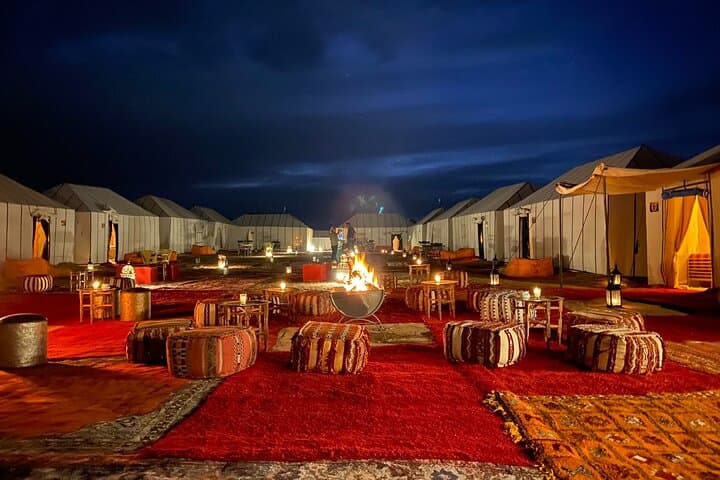
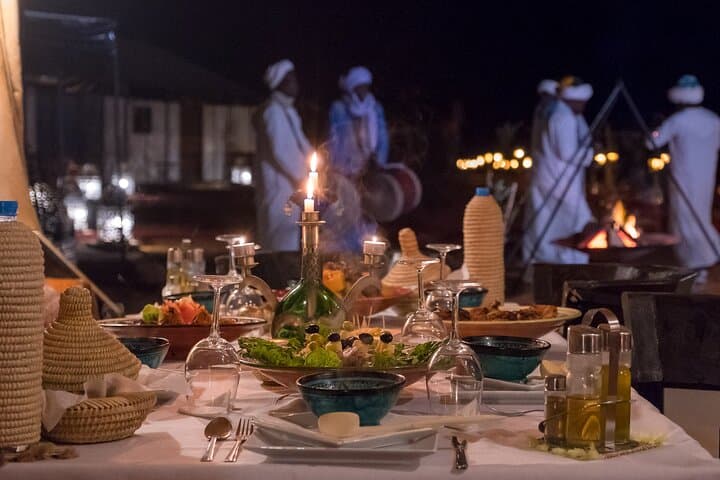
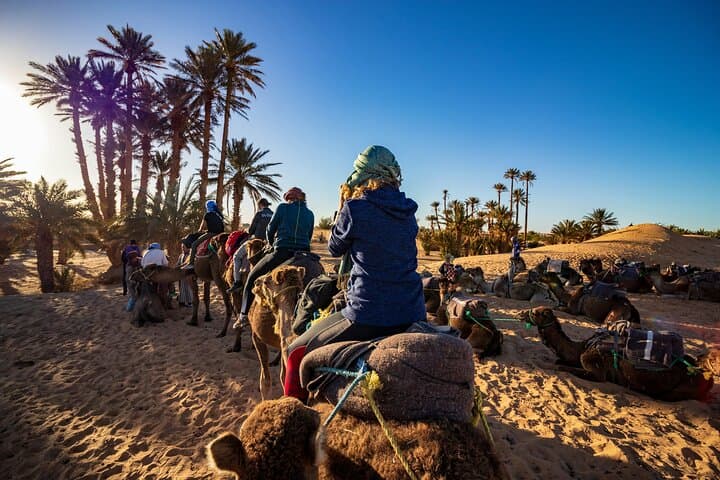
Expect long but scenic drives—daily transfers of 3–6 hours broken by hikes through Todgha Gorge, palm groves, and market towns. The tour culminates in sunset camel rides and a luxury bivouac under clear desert skies; nights can drop sharply in temperature despite daytime heat.
Practical guidance: time photography for sunrise and sunset, carry 3–4 liters of water per day in the desert, and bring layered clothing for cold nights. Comfortable, broken-in shoes handle rocky gorges and soft sand; sun protection and a small, fast-drying towel are essential. Respect private homes when visiting Amazigh families, carry local currency for tips and small purchases, and be prepared for limited facilities in remote stretches.
easy.
6 days (daily 3–6 hour transfers with short hikes).
Suitable for travelers in average fitness—most travel is by vehicle with light walking, camel rides, and short gorge hikes.
Yes—transport is private and the pace is gentle. Camel rides and desert walks are low-impact, though some overnight camps have simple facilities; check accessibility when booking.
The full route spans roughly 9–11 hours of driving split across several days with stops; expect 3–6 hours of driving on most travel days with scenic breaks.
The itinerary includes luxury desert camps with proper mattresses, blankets, and en-suite or shared facilities depending on the chosen camp—confirm specifics when booking.
Carry Moroccan dirham for tips, small purchases, and local markets; larger hotels accept cards but remote villages and some vendors are cash-only.
The route traces centuries-old trans-Saharan corridors and Amazigh settlement patterns; Aït Ben Haddou exemplifies southern earthen architecture used since medieval trade eras.
Tourism here stresses water and fragile dune ecosystems—use refillable bottles, stay on established tracks, and follow local guidance to minimize impact.
Bouquet Tours operates guided outdoor trips and adventures with an emphasis on safety, stewardship, and memorable experiences.
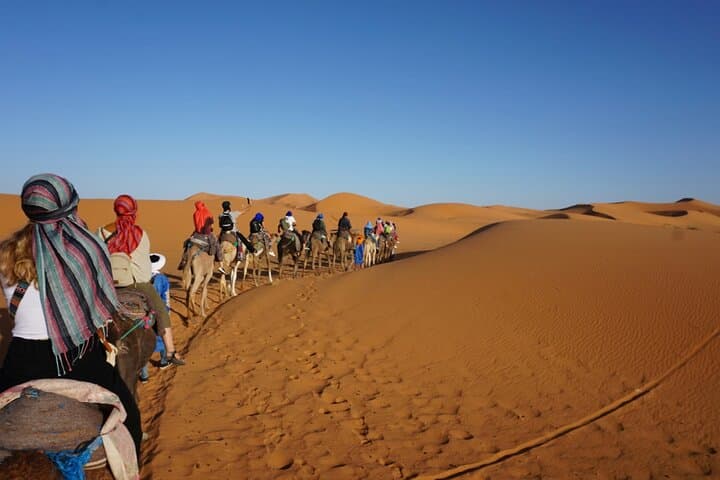
A low sun slices the dunes of Erg Chebbi into sharp ribs of gold as a caravan of camels threads toward the horizon. The first day’s asphalt gives up to winding tarmac through the High Atlas, where the Tizi n’Tichka pass (2,205 m) opens the world between Marrakech and the Sahara.
A low sun slices the dunes of Erg Chebbi into sharp ribs of gold as a caravan of camels threads toward the horizon. The first day’s asphalt gives up to winding tarmac through the High Atlas, where the Tizi n’Tichka pass (2,205 m) opens the world between Marrakech and the Sahara.
This six-day route stitches together Morocco’s layered history: earthen kasbahs at Aït Ben Haddou, Amazigh (Berber) villages still using khettara irrigation, and film-studio backlots that recall Hollywood’s desert fantasies. Geologically, you move from folded metamorphic and volcanic rocks of the High Atlas into the wind-worked sands of Erg Chebbi—dunes that can reach 120–150 m and shift with seasonal winds. Cultural highlights include Gnawa music in Khamlia, rose cooperatives in the Valley of Roses, and fossil galleries around Erfoud.
Expect long but scenic drives—daily transfers of 3–6 hours broken by hikes through Todgha Gorge, palm groves, and market towns. The tour culminates in sunset camel rides and a luxury bivouac under clear desert skies; nights can drop sharply in temperature despite daytime heat.
Practical guidance: time photography for sunrise and sunset, carry 3–4 liters of water per day in the desert, and bring layered clothing for cold nights. Comfortable, broken-in shoes handle rocky gorges and soft sand; sun protection and a small, fast-drying towel are essential. Respect private homes when visiting Amazigh families, carry local currency for tips and small purchases, and be prepared for limited facilities in remote stretches.