THE ADVENTURE COLLECTIVE® · Independent discovery and booking for outdoor travel

Cross the High Atlas from Marrakech to the orange ridges of Erg Chebbi in four days of kasbahs, gorges, and a nomad-style night under the stars. Expect long drives, short canyon walks, a camel trek, and sunrise dune climbs.
Cross the High Atlas from Marrakech to the orange ridges of Erg Chebbi in four days of kasbahs, gorges, and a nomad-style night under the stars. Expect long drives, short canyon walks, a camel trek, and sunrise dune climbs.
The convoy slips out of Marrakech before dawn, tires whispering over the Tizi n’Tichka pass as the High Atlas lifts like a stone wall against the sky.
Verified experiences and guided adventures in the surrounding area.
Operated by Tilila Travel · Merzouga, Drâa-Tafilalet
The convoy slips out of Marrakech before dawn, tires whispering over the Tizi n’Tichka pass as the High Atlas lifts like a stone wall against the sky.
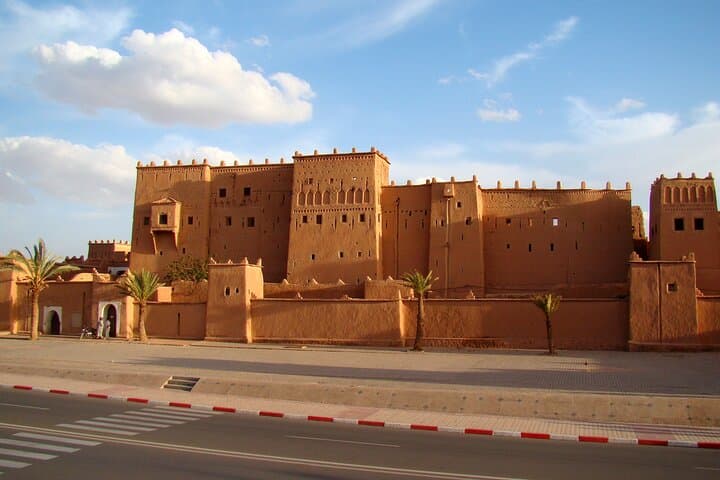
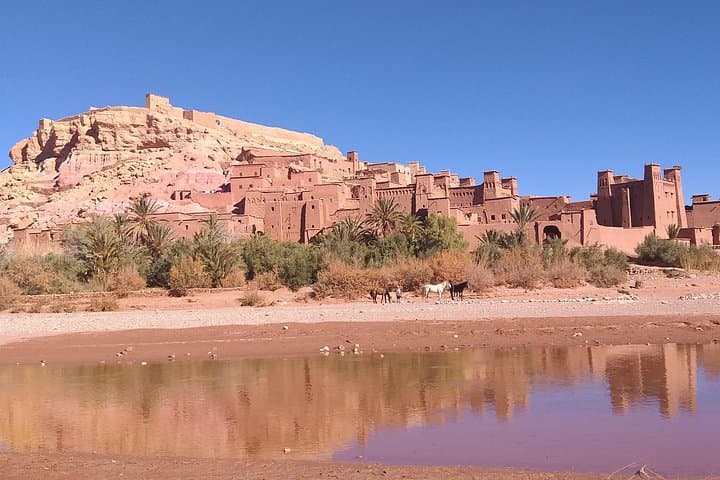
Across 4 days travelers move from crumbling kasbahs to red dunes: Ait Ben Haddou’s sun-baked clay walls, the palm-fringed Dades and Todra gorges where narrow canyons force the river to carve dramatic ribs, and finally the rolling ridges of Erg Chebbi at Merzouga. Geology reads here in layers—folded limestone in the Atlas, alluvial terraces along the Draa Valley, and wind-sculpted sand where each dawn repaints the horizon.
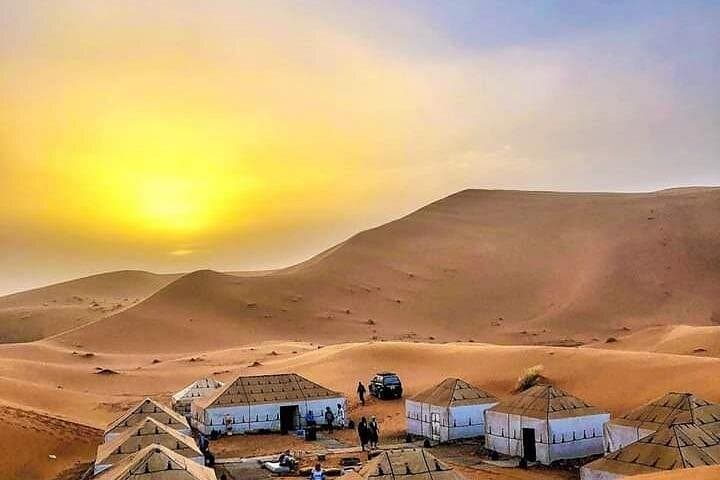
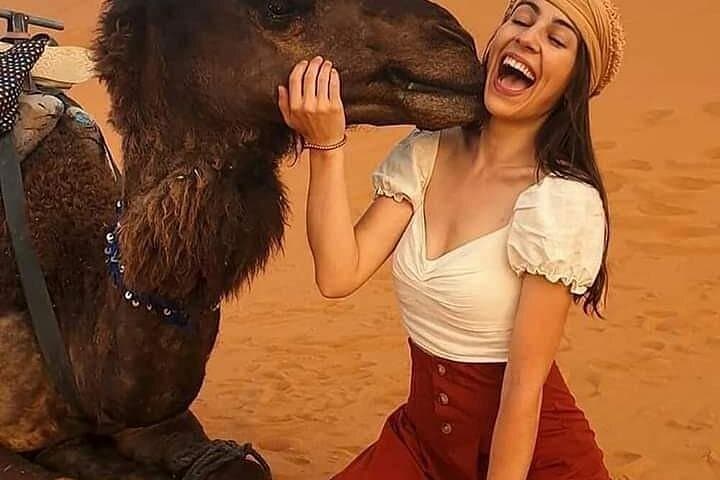
Culture is immediate: kasbah architecture that once guarded caravan routes, fossil workshops in Erfoud, and Berber communities still living by seasonal rhythms. The tour includes short walks through gorges, visits to Ait Ben Haddou (UNESCO), film-studio glimpses in Ouarzazate, and a 90-minute camel trek to a nomad-style bivouac under a broad desert sky.
Practical guidance: anticipate long driving days—breaks are frequent but bring earplugs if you’re sensitive to vehicle noise. Daytime heat can be intense; plan hiking and dune climbs for early morning or late afternoon. Nights in the desert get cold—pack warm layers and a headlamp. Carry cash for small purchases, respect private properties and local customs when photographing people, and leave no trace in sensitive dune areas. With modest fitness, a spirit for wide-open places, and basic desert gear, this route delivers a compact, well-paced introduction to Morocco’s southern landscapes.
moderate.
4 days.
Suitable for travelers with basic aerobic fitness; be comfortable with short hikes, dune climbs, and sitting through long drives.
The typical camel trek to the bivouac is about 1 to 1.5 hours at a steady pace, timed to reach the camp before sunset.
The tour mixes nights in local kasbah-style hotels and a traditional nomad tent (bivouac) in Erg Chebbi; basic but comfortable beds and shared facilities are common.
Short walks and camel rides are family-friendly, but long drives and dune terrain can be challenging; not recommended for those with serious spinal or cardiovascular conditions.
Full refund if canceled at least 24 hours before departure; within 24 hours is non-refundable—confirm specifics with the operator at booking.
This corridor follows ancient caravan routes between Marrakech and the Sahara; Ait Ben Haddou is a well-preserved example of earthen architecture that once protected trade links.
The Sahara’s dune systems are fragile—stick to existing tracks, minimize water use, and avoid leaving any waste at campsites.
Tilila Travel operates guided outdoor trips and adventures with an emphasis on safety, stewardship, and memorable experiences.
The convoy slips out of Marrakech before dawn, tires whispering over the Tizi n’Tichka pass as the High Atlas lifts like a stone wall against the sky.
The convoy slips out of Marrakech before dawn, tires whispering over the Tizi n’Tichka pass as the High Atlas lifts like a stone wall against the sky.
Across 4 days travelers move from crumbling kasbahs to red dunes: Ait Ben Haddou’s sun-baked clay walls, the palm-fringed Dades and Todra gorges where narrow canyons force the river to carve dramatic ribs, and finally the rolling ridges of Erg Chebbi at Merzouga. Geology reads here in layers—folded limestone in the Atlas, alluvial terraces along the Draa Valley, and wind-sculpted sand where each dawn repaints the horizon.
Culture is immediate: kasbah architecture that once guarded caravan routes, fossil workshops in Erfoud, and Berber communities still living by seasonal rhythms. The tour includes short walks through gorges, visits to Ait Ben Haddou (UNESCO), film-studio glimpses in Ouarzazate, and a 90-minute camel trek to a nomad-style bivouac under a broad desert sky.
Practical guidance: anticipate long driving days—breaks are frequent but bring earplugs if you’re sensitive to vehicle noise. Daytime heat can be intense; plan hiking and dune climbs for early morning or late afternoon. Nights in the desert get cold—pack warm layers and a headlamp. Carry cash for small purchases, respect private properties and local customs when photographing people, and leave no trace in sensitive dune areas. With modest fitness, a spirit for wide-open places, and basic desert gear, this route delivers a compact, well-paced introduction to Morocco’s southern landscapes.