THE ADVENTURE COLLECTIVE® · Independent discovery and booking for outdoor travel

A compact, three-day route from Marrakech to the Erg Chebbi dunes that pairs High Atlas passes and ksars with a sunset camel ride and overnight Berber camp. Ideal for travelers who want a fast, immersive Sahara experience with cultural stops along the way.
A compact, three-day route from Marrakech to the Erg Chebbi dunes that pairs High Atlas passes and ksars with a sunset camel ride and overnight Berber camp. Ideal for travelers who want a fast, immersive Sahara experience with cultural stops along the way.
Late afternoon light flattens the ridges of Erg Chebbi into bands of rust and gold as a line of camels threads the dune crests toward a distant campfire. The air tastes of warm sand and thyme; the dunes themselves seem to breathe, shifting with each gust and daring you to climb them.
Verified experiences and guided adventures in the surrounding area.
Operated by Desertbrise Travel · Merzouga, Errachidia Province
Late afternoon light flattens the ridges of Erg Chebbi into bands of rust and gold as a line of camels threads the dune crests toward a distant campfire. The air tastes of warm sand and thyme; the dunes themselves seem to breathe, shifting with each gust and daring you to climb them.
This short circuit links two Moroccan worlds: the High Atlas passes and the red-rock kasbahs lining ancient caravan routes, and the vast Erg Chebbi sea of dunes that formed over millennia as wind carried Saharan sands north. Ait Ben Haddou—a fortified ksar on the route—has watched trans-Saharan trade and film crews alike, while the Dades and Todra gorges show geology carved by water where erosion met rock. Berber villages and date-palmed oases are living cultural notes along the highway between Marrakech and Merzouga.
Expect long road hours (Marrakech to Erg Chebbi is roughly 8–10 hours of driving split across scenic stops), an hour-long camel ride at sunset, and an early-morning climb for sunrise over dunes up to 100–150m high. Overnight is in a desert camp—options range from basic Berber tents to more comfortable luxury setups—where music around the fire punctuates the cold desert night.
Practical pointers: pack layers for big diurnal temperature swings, carry 2–3 liters of water for a camel excursion, wear shoes that tolerate sand, and plan extra days if you want a slower pace. The route is rewarding for photographers and anyone who wants a concentrated taste of the Sahara without committing to a week-long crossing.
moderate.
3 days.
Suitable for moderately fit travelers; long vehicle transfers reduce required endurance but involve dune walking and short treks up sand slopes.
The typical camel trek to the camp is about one hour at sunset; luggage is transferred by 4x4 to the camp.
The itinerary is labeled suitable for most fitness levels; camel mounts and dunes can be challenging for limited mobility—talk to the operator about alternatives like riding in the 4x4.
Camps range from simple Berber tents with shared facilities to luxury tents with ensuite bathrooms—confirm the camp grade when booking.
Expect approximately 8–10 hours of cumulative driving each way broken up with stops (Ait Ben Haddou, Ouarzazate, Dades/Todra Gorges), so the tour is travel-heavy but scenic.
The route follows historic trans-Saharan corridors; Ait Ben Haddou served as a fortified caravan stop and is now a UNESCO-listed ksar seen in many films.
Dune ecosystems are fragile—avoid disturbing vegetation, pack out all waste, and choose camps that use established sites and low-impact practices.
Desertbrise Travel operates guided outdoor trips and adventures with an emphasis on safety, stewardship, and memorable experiences.
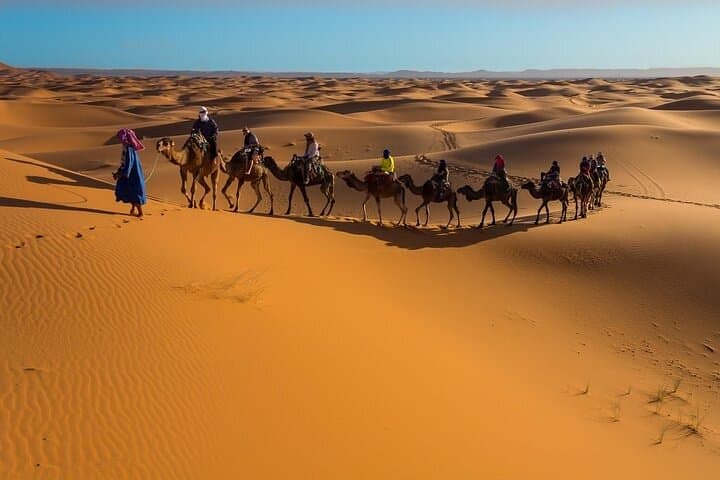
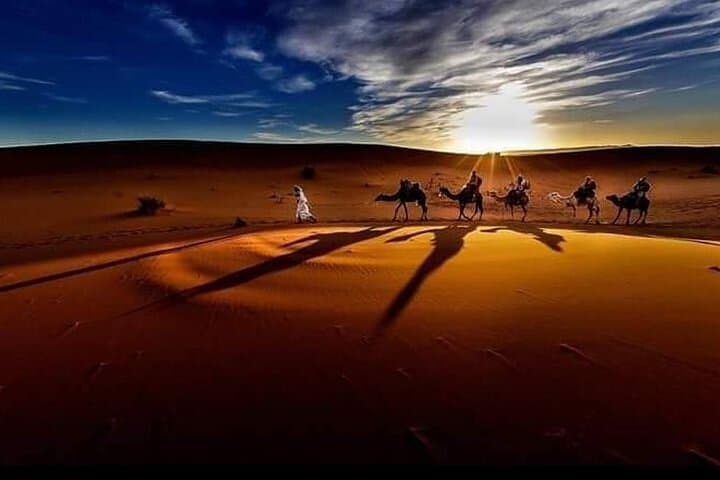
Late afternoon light flattens the ridges of Erg Chebbi into bands of rust and gold as a line of camels threads the dune crests toward a distant campfire. The air tastes of warm sand and thyme; the dunes themselves seem to breathe, shifting with each gust and daring you to climb them.
Late afternoon light flattens the ridges of Erg Chebbi into bands of rust and gold as a line of camels threads the dune crests toward a distant campfire. The air tastes of warm sand and thyme; the dunes themselves seem to breathe, shifting with each gust and daring you to climb them.
This short circuit links two Moroccan worlds: the High Atlas passes and the red-rock kasbahs lining ancient caravan routes, and the vast Erg Chebbi sea of dunes that formed over millennia as wind carried Saharan sands north. Ait Ben Haddou—a fortified ksar on the route—has watched trans-Saharan trade and film crews alike, while the Dades and Todra gorges show geology carved by water where erosion met rock. Berber villages and date-palmed oases are living cultural notes along the highway between Marrakech and Merzouga.
Expect long road hours (Marrakech to Erg Chebbi is roughly 8–10 hours of driving split across scenic stops), an hour-long camel ride at sunset, and an early-morning climb for sunrise over dunes up to 100–150m high. Overnight is in a desert camp—options range from basic Berber tents to more comfortable luxury setups—where music around the fire punctuates the cold desert night.
Practical pointers: pack layers for big diurnal temperature swings, carry 2–3 liters of water for a camel excursion, wear shoes that tolerate sand, and plan extra days if you want a slower pace. The route is rewarding for photographers and anyone who wants a concentrated taste of the Sahara without committing to a week-long crossing.