THE ADVENTURE COLLECTIVE® · Independent discovery and booking for outdoor travel

Cross the High Atlas, explore UNESCO-listed Aït Ben Haddou, descend into Jorge-like gorges, then ride camels into Erg Chebbi for a night under the stars. This three-day circuit pairs geology and culture with practical desert travel.
Cross the High Atlas, explore UNESCO-listed Aït Ben Haddou, descend into Jorge-like gorges, then ride camels into Erg Chebbi for a night under the stars. This three-day circuit pairs geology and culture with practical desert travel.
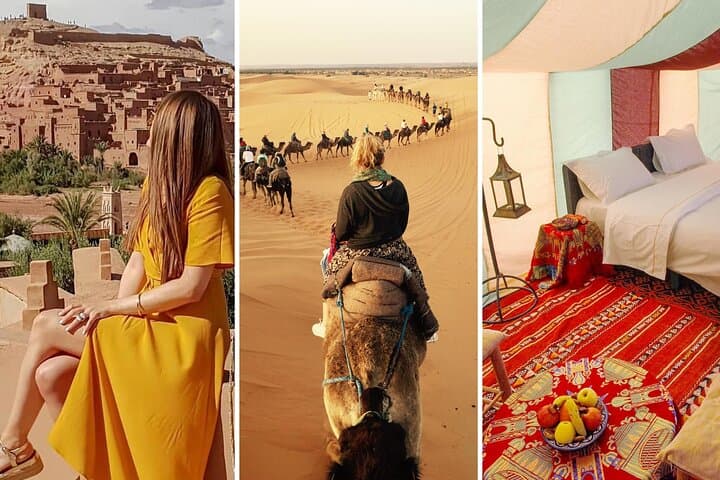
You leave Marrakech before dawn and the High Atlas rises like a wall, its passes pushing you higher until the air thins at Tizi n’Tichka. The road carves through stony ridges, and by midday you’re walking the narrow alleys of Aït Ben Haddou, a clay-brick ksar that has watched caravans and camera crews pass for centuries.
Verified experiences and guided adventures in the surrounding area.
Operated by Marrakech Around Tours · Merzouga, Errachidia
You leave Marrakech before dawn and the High Atlas rises like a wall, its passes pushing you higher until the air thins at Tizi n’Tichka. The road carves through stony ridges, and by midday you’re walking the narrow alleys of Aït Ben Haddou, a clay-brick ksar that has watched caravans and camera crews pass for centuries.
The route is a cross-section of southern Morocco: folded Atlas geology, river-carved canyons, and the palm-lined Draa and Dades valleys where irrigation channels still mark ancient agricultural knowledge. Todgha Gorge cuts limestone walls 300 m high; Erg Chebbi’s dunes are wind-built architecture—ridges and bowls that change shape with every gust. Local culture is Berber and hospitality-focused: small kasbahs, village markets, and nomadic traditions persist alongside modern tourism.
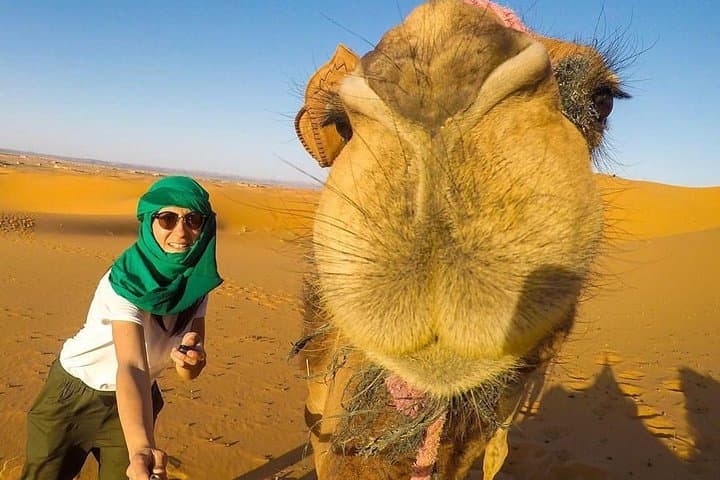
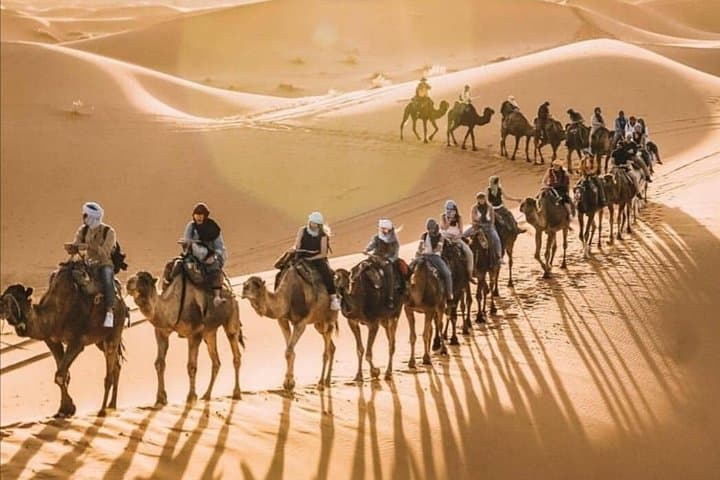
Expect long but scenic driving stretches, short guided walks at heritage sites, and a late-afternoon camel ride that delivers you to a desert camp. Sunsets flatten color across the sand; sunrise throws the dunes into sharp relief. Nights are cold and crystalline; stars feel close enough to touch.
Practical guidance: pack layers for temperature swings, bring a wide-brim hat and strong sunscreen, and carry at least 2 liters of water for camel treks. Wear sturdy shoes for rocky gorges and loose sand gaiters if you have them. The trip is suitable for most fitness levels but includes periods of walking on uneven terrain and extended vehicle time—prepare for bumpy roads. Respect local customs, tip camel guides, and avoid climbing fragile dunes to minimize erosion.
moderate.
3 days.
Suitable for travelers in average fitness—able to manage short hikes, camel rides, and long vehicle transfers.
The tour departs from Marrakech and returns there on day three; pickup and drop-off details are arranged at booking.
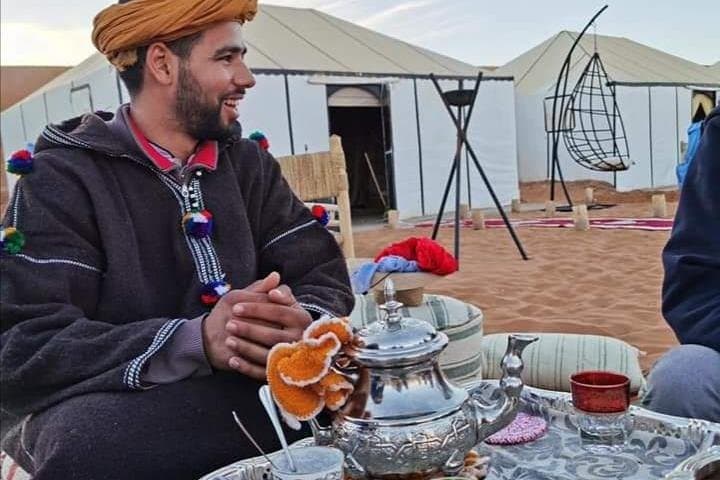
Camel rides are short to moderate and suitable for most people; desert camp sleeping is usually in traditional tents with basic bedding—expect simple comforts.
Two dinners and two breakfasts plus overnight stays (hotel and desert camp) are included as specified by the operator.
The itinerary notes wheelchair-accessible options and stroller access, but camel riding and dune walking may be challenging—check with the operator about tailored arrangements.
Aït Ben Haddou is a fortified ksar and UNESCO World Heritage site—an outstanding example of southern Moroccan earthen architecture and a historic caravan stop.
Erg Chebbi’s dunes are ecologically sensitive; stick to marked camel routes, avoid driving on dune faces, and support local guides to minimize impact.
Marrakech Around Tours operates guided outdoor trips and adventures with an emphasis on safety, stewardship, and memorable experiences.
You leave Marrakech before dawn and the High Atlas rises like a wall, its passes pushing you higher until the air thins at Tizi n’Tichka. The road carves through stony ridges, and by midday you’re walking the narrow alleys of Aït Ben Haddou, a clay-brick ksar that has watched caravans and camera crews pass for centuries.
You leave Marrakech before dawn and the High Atlas rises like a wall, its passes pushing you higher until the air thins at Tizi n’Tichka. The road carves through stony ridges, and by midday you’re walking the narrow alleys of Aït Ben Haddou, a clay-brick ksar that has watched caravans and camera crews pass for centuries.
The route is a cross-section of southern Morocco: folded Atlas geology, river-carved canyons, and the palm-lined Draa and Dades valleys where irrigation channels still mark ancient agricultural knowledge. Todgha Gorge cuts limestone walls 300 m high; Erg Chebbi’s dunes are wind-built architecture—ridges and bowls that change shape with every gust. Local culture is Berber and hospitality-focused: small kasbahs, village markets, and nomadic traditions persist alongside modern tourism.
Expect long but scenic driving stretches, short guided walks at heritage sites, and a late-afternoon camel ride that delivers you to a desert camp. Sunsets flatten color across the sand; sunrise throws the dunes into sharp relief. Nights are cold and crystalline; stars feel close enough to touch.
Practical guidance: pack layers for temperature swings, bring a wide-brim hat and strong sunscreen, and carry at least 2 liters of water for camel treks. Wear sturdy shoes for rocky gorges and loose sand gaiters if you have them. The trip is suitable for most fitness levels but includes periods of walking on uneven terrain and extended vehicle time—prepare for bumpy roads. Respect local customs, tip camel guides, and avoid climbing fragile dunes to minimize erosion.