THE ADVENTURE COLLECTIVE® · Independent discovery and booking for outdoor travel

A private 3-day drive from Marrakech across the High Atlas to Merzouga, with stops at Ait Ben Haddou and Dades Valley and a 90-minute camel trek to a desert bivouac. Expect long drives, dramatic terrain changes, and an authentic overnight under the stars.
A private 3-day drive from Marrakech across the High Atlas to Merzouga, with stops at Ait Ben Haddou and Dades Valley and a 90-minute camel trek to a desert bivouac. Expect long drives, dramatic terrain changes, and an authentic overnight under the stars.
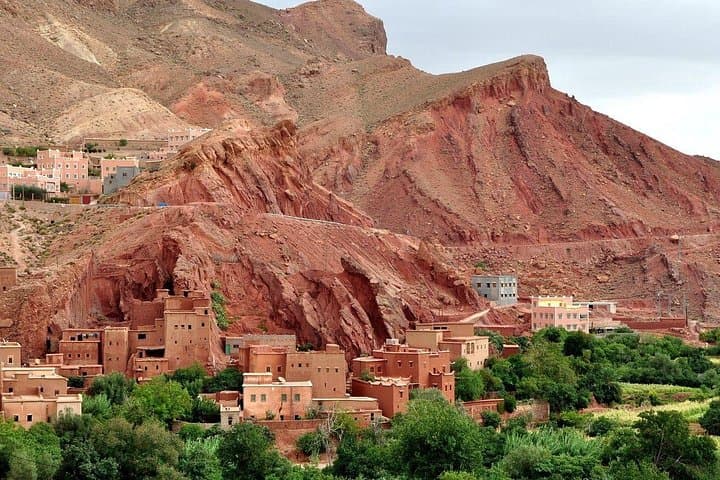
You wake before dawn in Marrakech and the city’s last lights shrink as the road climbs toward the High Atlas. Air thins and the landscape sharpens—rock folds, kasbah ruins and a serrated skyline at Tizi n’Tichka pass (about 2,260 m). By midday the red-ochre of Ait Ben Haddou appears, a honeycombed kasbah that has watched caravans and film crews alike.
Verified experiences and guided adventures in the surrounding area.
Operated by Tours From Marrakech · Merzouga, Drâa-Tafilalet
You wake before dawn in Marrakech and the city’s last lights shrink as the road climbs toward the High Atlas. Air thins and the landscape sharpens—rock folds, kasbah ruins and a serrated skyline at Tizi n’Tichka pass (about 2,260 m). By midday the red-ochre of Ait Ben Haddou appears, a honeycombed kasbah that has watched caravans and film crews alike.
Geology here shifts fast: the Atlas is folded metamorphic rock giving way down-valley to alluvial plains and, eventually, wind-sculpted sand of Erg Chebbi—dunes that rise in waves of orange sand pushed from the Sahara interior. Culturally the route threads Berber villages, rose distilleries in Kalaa M’gouna and fortified kasbahs that mark historic caravan corridors between Marrakech and the Sahara.
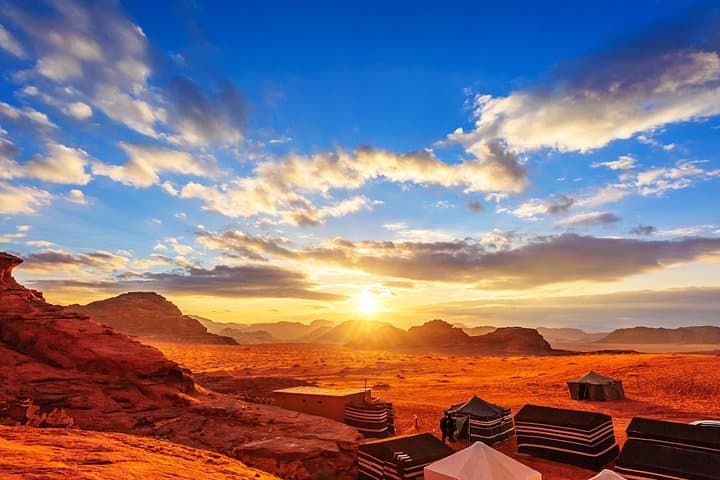
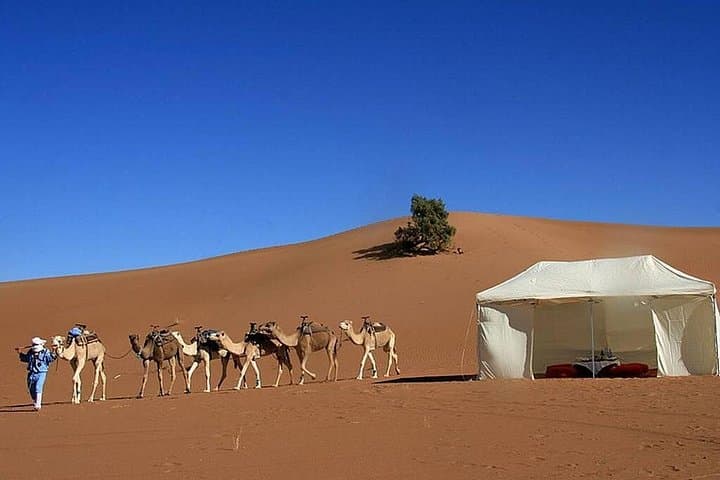
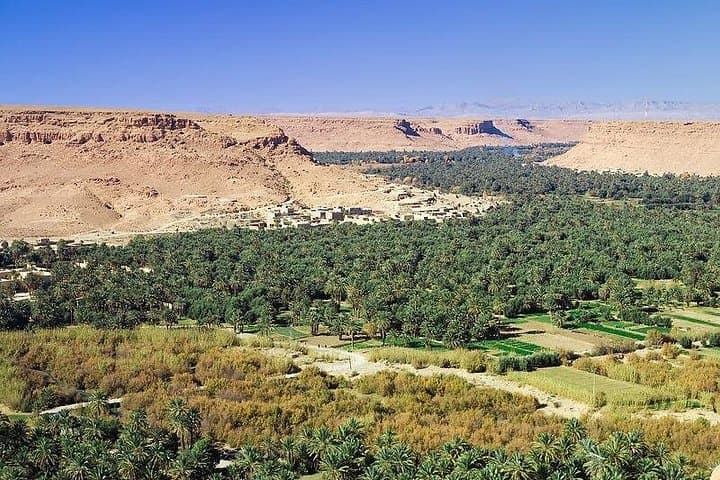
On day two the road narrows through Dades Valley; small kasbahs perch on cliffs and the river insists on life amid arid slopes. Late afternoon you mount a dromedary for roughly 90 minutes of slow, swaying travel over dunefields to a bivouac. Sunset paints the dunes; the camp serves local tagine and, at night, the Milky Way feels immediate.
Practical guidance: expect long driving days (up to ~10 hours total between Marrakech and Merzouga), dusty sand, and minimal cell service on stretches. Bring layered clothing for hot days and cool nights, sun protection, cash for small purchases and tips, and a tender stomach precaution for camel riding. If you want more time to explore, add an extra day between Ouarzazate and Merzouga.
easy.
3 days (approx. 72 hours total).
Suitable for travelers in basic fitness—able to mount a camel, walk short stretches on sand, and withstand long vehicle transfers.
The camel trek to reach the camp is typically about 1–1.5 hours at a steady pace over dunes.
Facilities vary by camp—basic bivouacs usually have simple toilet facilities and may offer hot-water bucket showers; luxury camps provide flushing toilets and private showers.
Yes—this private tour is graded easy and suitable for most ages, though mounting camels and long drives can be tiring; consult the operator if mobility is limited.
Expect about 9–10 hours of total driving one-way including stops; the itinerary splits this across two travel days with sightseeing pauses.
The route follows historic caravan tracks linking Marrakech to trans-Saharan trade routes; Ait Ben Haddou is a UNESCO-listed ksar and long-standing Berber settlement.
Erg Chebbi’s dunes are mobile and fragile—stick to established camp sites, minimize water use, and choose operators practicing low-impact camping.
Tours From Marrakech operates guided outdoor trips and adventures with an emphasis on safety, stewardship, and memorable experiences.
You wake before dawn in Marrakech and the city’s last lights shrink as the road climbs toward the High Atlas. Air thins and the landscape sharpens—rock folds, kasbah ruins and a serrated skyline at Tizi n’Tichka pass (about 2,260 m). By midday the red-ochre of Ait Ben Haddou appears, a honeycombed kasbah that has watched caravans and film crews alike.
You wake before dawn in Marrakech and the city’s last lights shrink as the road climbs toward the High Atlas. Air thins and the landscape sharpens—rock folds, kasbah ruins and a serrated skyline at Tizi n’Tichka pass (about 2,260 m). By midday the red-ochre of Ait Ben Haddou appears, a honeycombed kasbah that has watched caravans and film crews alike.
Geology here shifts fast: the Atlas is folded metamorphic rock giving way down-valley to alluvial plains and, eventually, wind-sculpted sand of Erg Chebbi—dunes that rise in waves of orange sand pushed from the Sahara interior. Culturally the route threads Berber villages, rose distilleries in Kalaa M’gouna and fortified kasbahs that mark historic caravan corridors between Marrakech and the Sahara.
On day two the road narrows through Dades Valley; small kasbahs perch on cliffs and the river insists on life amid arid slopes. Late afternoon you mount a dromedary for roughly 90 minutes of slow, swaying travel over dunefields to a bivouac. Sunset paints the dunes; the camp serves local tagine and, at night, the Milky Way feels immediate.
Practical guidance: expect long driving days (up to ~10 hours total between Marrakech and Merzouga), dusty sand, and minimal cell service on stretches. Bring layered clothing for hot days and cool nights, sun protection, cash for small purchases and tips, and a tender stomach precaution for camel riding. If you want more time to explore, add an extra day between Ouarzazate and Merzouga.