THE ADVENTURE COLLECTIVE® · Independent discovery and booking for outdoor travel

Trade Marrakech’s bustle for vast sand seas on a compact 3-day trip to Erg Chebbi. Drive the High Atlas, explore kasbahs, and sleep under Saharan stars with guided transfers and two nights’ accommodation.
Trade Marrakech’s bustle for vast sand seas on a compact 3-day trip to Erg Chebbi. Drive the High Atlas, explore kasbahs, and sleep under Saharan stars with guided transfers and two nights’ accommodation.
You leave Marrakech before dawn and the city’s mosaic of souks shrinks behind you as the road climbs into the High Atlas. Wind and rock take over: red ochre kasbahs, switchbacks at the Tizi n’Tichka pass (around 2,260 m), and then a slow, widening quiet as the land eases into the pre-Sahara. By late afternoon the dunes of Erg Chebbi rise like a moving wall, their ridges catching light and shadow, daring you to walk their crests.
Verified experiences and guided adventures in the surrounding area.
Operated by Morkosh Tours · Merzouga, Drâa-Tafilalet
You leave Marrakech before dawn and the city’s mosaic of souks shrinks behind you as the road climbs into the High Atlas. Wind and rock take over: red ochre kasbahs, switchbacks at the Tizi n’Tichka pass (around 2,260 m), and then a slow, widening quiet as the land eases into the pre-Sahara. By late afternoon the dunes of Erg Chebbi rise like a moving wall, their ridges catching light and shadow, daring you to walk their crests.
This three-day loop threads history and geology together — ancient caravan routes, fortified kasbahs such as Ait Ben Haddou and Telouet, and the wind-sculpted sand seas that collected here over millennia. Along the route, palm groves and dry riverbeds mark old watercourses; local Amazigh (Berber) communities keep hospitality and mint tea at the center of the visit.
Expect long drives (roughly 560 km round trip) broken by cultural stops and short hikes; the desert nights swing cold after sunlit days. The package commonly includes two nights’ accommodation with a desert camp option, guided transfers, and dinner. Practical notes: schedule dune time for sunrise or sunset when the sand is coolest and the light is best; wear layered clothing for temperature swings; carry at least 2–3 liters of water daily. A basic tolerance for long road days and walking on shifting sand is enough for most travelers — the landscape is dramatic but straightforward to explore with a local guide.
Plan for dust, brilliant skies, and the kind of quiet that changes how you measure distance.
moderate.
3 days (≈72 hours).
Suitable for travelers in average fitness: must tolerate long vehicle transfers and short walks on soft sand.
Expect roughly 8–10 hours of driving one-way with stops; the itinerary breaks the route into manageable segments over the three days.
Most 3-day itineraries include a short camel trek to the camp and at least one night in a bivouac or desert camp, though options range from basic tents to private desert lodges.
Sites like Ait Ben Haddou are regularly open with entry fees; smaller kasbahs and some interiors may be closed or partially restored—your guide will advise on access.
Yes — the tour notes it’s suitable for all fitness levels, but plan for long drives and temperature swings; inform operators about specific needs when booking.
This corridor linked Saharan caravans to southern Morocco and featured powerful local caïds; the mud-brick kasbahs reflect centuries of trade and strategic mountain passes.
Erg Chebbi is an active dune system; stick to marked tracks, avoid driving on vegetated areas, and use local guides to support sustainable tourism.
Morkosh Tours operates guided outdoor trips and adventures with an emphasis on safety, stewardship, and memorable experiences.
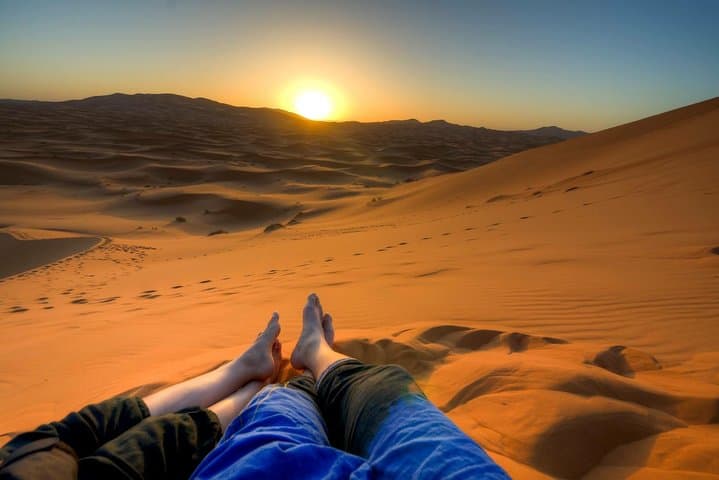


You leave Marrakech before dawn and the city’s mosaic of souks shrinks behind you as the road climbs into the High Atlas. Wind and rock take over: red ochre kasbahs, switchbacks at the Tizi n’Tichka pass (around 2,260 m), and then a slow, widening quiet as the land eases into the pre-Sahara. By late afternoon the dunes of Erg Chebbi rise like a moving wall, their ridges catching light and shadow, daring you to walk their crests.
You leave Marrakech before dawn and the city’s mosaic of souks shrinks behind you as the road climbs into the High Atlas. Wind and rock take over: red ochre kasbahs, switchbacks at the Tizi n’Tichka pass (around 2,260 m), and then a slow, widening quiet as the land eases into the pre-Sahara. By late afternoon the dunes of Erg Chebbi rise like a moving wall, their ridges catching light and shadow, daring you to walk their crests.
This three-day loop threads history and geology together — ancient caravan routes, fortified kasbahs such as Ait Ben Haddou and Telouet, and the wind-sculpted sand seas that collected here over millennia. Along the route, palm groves and dry riverbeds mark old watercourses; local Amazigh (Berber) communities keep hospitality and mint tea at the center of the visit.
Expect long drives (roughly 560 km round trip) broken by cultural stops and short hikes; the desert nights swing cold after sunlit days. The package commonly includes two nights’ accommodation with a desert camp option, guided transfers, and dinner. Practical notes: schedule dune time for sunrise or sunset when the sand is coolest and the light is best; wear layered clothing for temperature swings; carry at least 2–3 liters of water daily. A basic tolerance for long road days and walking on shifting sand is enough for most travelers — the landscape is dramatic but straightforward to explore with a local guide.
Plan for dust, brilliant skies, and the kind of quiet that changes how you measure distance.