THE ADVENTURE COLLECTIVE® · Independent discovery and booking for outdoor travel

Cross the High Atlas, wander through kasbahs and sleep under a galaxy of stars on this classic three-day trek from Marrakech to Erg Chebbi. Expect long drives, towering dunes and desert nights that demand warm layers.
Cross the High Atlas, wander through kasbahs and sleep under a galaxy of stars on this classic three-day trek from Marrakech to Erg Chebbi. Expect long drives, towering dunes and desert nights that demand warm layers.
The road peels away from Marrakech at dawn—red clay city blocks giving way to hairpin turns and the cold stone of the High Atlas. By mid-afternoon the world flattens into ochre plains and then the first ribs of sand appear: Erg Chebbi’s dunes rising like slow waves.
Verified experiences and guided adventures in the surrounding area.
Operated by Face Tours · Merzouga, Errachidia Province
The road peels away from Marrakech at dawn—red clay city blocks giving way to hairpin turns and the cold stone of the High Atlas. By mid-afternoon the world flattens into ochre plains and then the first ribs of sand appear: Erg Chebbi’s dunes rising like slow waves.
This three-day loop follows historic caravan tracks. You cross Tizi n’Tichka (about 2,260 m) and pass Aït Ben Haddou, a UNESCO ksar that once controlled trade between Marrakech and the Sahara. Geologically, Erg Chebbi is a wind-sculpted sea of sand—dunes commonly reach 100–150 m above the plain—and they move with every wind shift, swallowing footprints overnight.
Culturally the trip threads Berber villages, kasbah architecture and palm-lined oases in the Draa Valley. Todra Gorge offers a sudden vertical contrast: bare limestone walls up to 300 m high.
Practically, expect roughly 8–10 hours of driving round-trip (≈560 km each way), two nights—one in a guesthouse near Boumalne Dades and one in a luxury desert camp—and camel transfers at sunset and sunrise. Sunrise on a dune is a short, sandy scramble with brilliant, cold mornings; nights in the desert dip sharply, so layer up.
Bring sun protection, plenty of water, and shoes that can handle sand and short rocky hikes. If you’re photographing the landscape, arrive at the dune ridge before sunset and stay after sunrise—the light sculpts the sand into dramatic contours. Respect local camp rules, pack out what you bring, and tip your camel handler for guiding you through the shifting sea of sand.
moderate.
3 days.
Moderate fitness: able to handle long vehicle transfers, short hikes on sand and steps in kasbahs.
Expect about 8–10 hours of driving each way (roughly 560 km), with stops at Tizi n’Tichka, Aït Ben Haddou and other viewpoints.
Yes—camels are managed by experienced handlers; rides are generally gentle but advise staff of any mobility concerns.
The tour lists pregnancy and serious heart conditions as not recommended; check the operator’s policy before booking for children and vulnerable guests.
Pack warm layers, sleepwear, toiletries, a headlamp, and a small daypack; the camp provides sleeping arrangements, dinner and breakfast.
This corridor linked trans-Saharan caravan routes; kasbahs and ksars along the way were fortified stops for trade in salt, dates and spices.
Dune ecosystems are fragile—avoid driving on unmarked dunes, limit campfire impact, and follow Leave No Trace principles to protect scarce desert water and wildlife.
Face Tours operates guided outdoor trips and adventures with an emphasis on safety, stewardship, and memorable experiences.
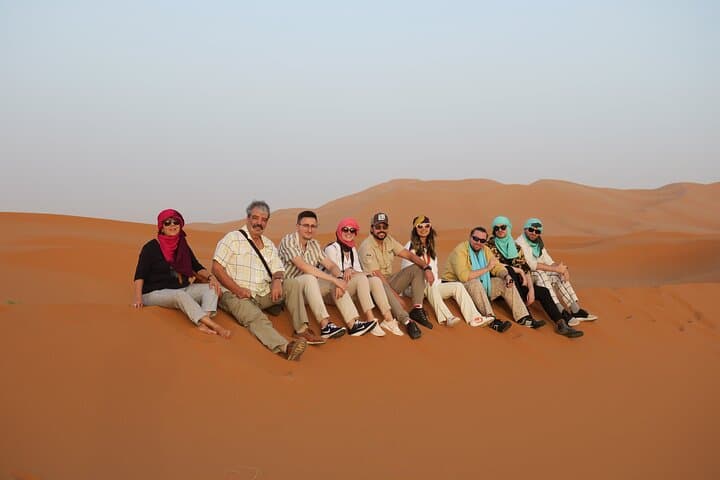
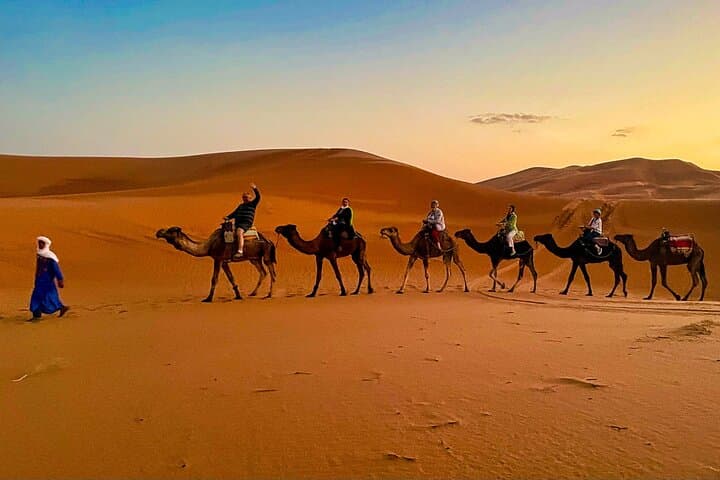
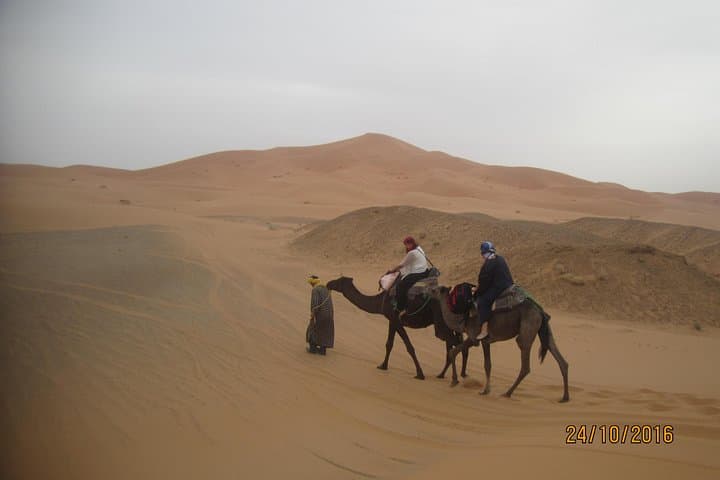
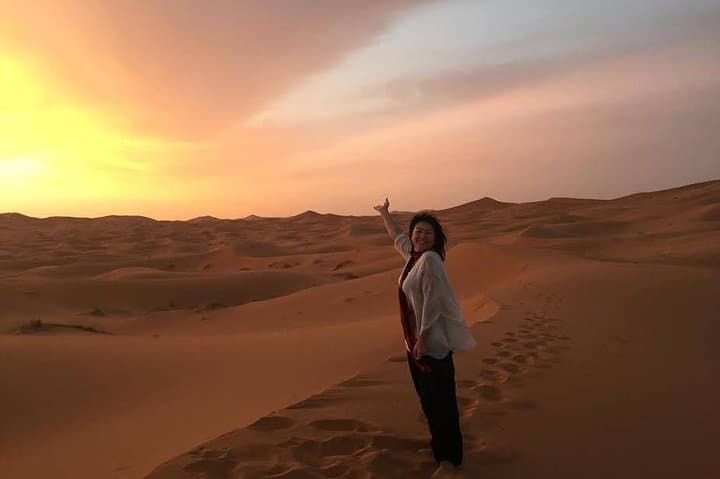
The road peels away from Marrakech at dawn—red clay city blocks giving way to hairpin turns and the cold stone of the High Atlas. By mid-afternoon the world flattens into ochre plains and then the first ribs of sand appear: Erg Chebbi’s dunes rising like slow waves.
The road peels away from Marrakech at dawn—red clay city blocks giving way to hairpin turns and the cold stone of the High Atlas. By mid-afternoon the world flattens into ochre plains and then the first ribs of sand appear: Erg Chebbi’s dunes rising like slow waves.
This three-day loop follows historic caravan tracks. You cross Tizi n’Tichka (about 2,260 m) and pass Aït Ben Haddou, a UNESCO ksar that once controlled trade between Marrakech and the Sahara. Geologically, Erg Chebbi is a wind-sculpted sea of sand—dunes commonly reach 100–150 m above the plain—and they move with every wind shift, swallowing footprints overnight.
Culturally the trip threads Berber villages, kasbah architecture and palm-lined oases in the Draa Valley. Todra Gorge offers a sudden vertical contrast: bare limestone walls up to 300 m high.
Practically, expect roughly 8–10 hours of driving round-trip (≈560 km each way), two nights—one in a guesthouse near Boumalne Dades and one in a luxury desert camp—and camel transfers at sunset and sunrise. Sunrise on a dune is a short, sandy scramble with brilliant, cold mornings; nights in the desert dip sharply, so layer up.
Bring sun protection, plenty of water, and shoes that can handle sand and short rocky hikes. If you’re photographing the landscape, arrive at the dune ridge before sunset and stay after sunrise—the light sculpts the sand into dramatic contours. Respect local camp rules, pack out what you bring, and tip your camel handler for guiding you through the shifting sea of sand.