THE ADVENTURE COLLECTIVE® · Independent discovery and booking for outdoor travel

Cross the High Atlas, explore Ait Ben Haddou and Todgha Gorges, then ride camels into Erg Chebbi for sunset at a Bedouin camp. This 3-day safari balances scenic drives with dune time and authentic nights under the stars.
Cross the High Atlas, explore Ait Ben Haddou and Todgha Gorges, then ride camels into Erg Chebbi for sunset at a Bedouin camp. This 3-day safari balances scenic drives with dune time and authentic nights under the stars.
The road peels away from Marrakech at dawn, wind and dust carving the silhouette of the High Atlas as the minibus climbs toward Tizi n'Tichka (about 2,260 m). By midday the city’s red roofs shrink; by evening the landscape opens into ochre valleys and the first foothills of the Sahara. On day two the scene changes again—rocky gorges give way to the rolling orange of Erg Chebbi, dunes that can rise roughly 100–150 m above the plain.
Verified experiences and guided adventures in the surrounding area.
Operated by Marrakech Desert Line · Merzouga, Drâa-Tafilalet
The road peels away from Marrakech at dawn, wind and dust carving the silhouette of the High Atlas as the minibus climbs toward Tizi n'Tichka (about 2,260 m). By midday the city’s red roofs shrink; by evening the landscape opens into ochre valleys and the first foothills of the Sahara. On day two the scene changes again—rocky gorges give way to the rolling orange of Erg Chebbi, dunes that can rise roughly 100–150 m above the plain.
This route threads centuries of history: Ait Ben Haddou’s mud-brick ksar recalls trans-Saharan trade and fortified caravan stops, while Ouarzazate earned the nickname Gate of the Sahara for its position on historic routes and modern film sets. Geology here is dramatic—folded Atlas ranges and alluvial fans feed the sand seas where wind sculpts crescent dunes.
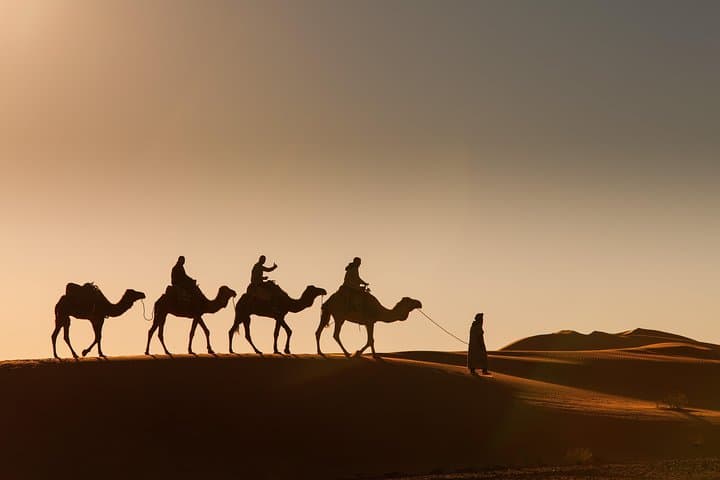
Expect a mix of paved and rural roads, short canyon walks (Todgha Gorges), then camel trekking across soft, shifting sand at sunset. Nights are shared Berber-camp hospitality—simple bedding, communal dinners, Tam Tam drumming and vast stars far from light pollution.
Practical guidance: pack layered clothing for hot days and cool nights, a wide-brimmed hat, and at least 2–3 liters of water per day. Footwear should handle dusty village streets and sandy slopes; expect 5–7 hours of driving each long travel day. Bring cash (Moroccan dirham) for remote purchases and tips, and allow morning departures to avoid mountain fog or afternoon heat. The trip suits travelers comfortable with basic accommodations, long drives, and short camel rides—rewarding with close-up desert light, quiet dunes, and cultural encounters that feel deliberate rather than rushed.
moderate.
3 days (approx 72 hours).
Suitable for travelers in average fitness who can handle several hours of travel, short hikes, and camel treks of about an hour.
Typical camel treks to the camp last about 45–75 minutes at sunset and a shorter ride at sunrise—timing varies by group and dune access.
Accommodations are basic to standard: a hotel en route and a shared Berber camp with simple bedding, communal meals and outdoor facilities.
Yes—many operators note the trip is suitable for a range of ages, but long drives and camel rides may be uncomfortable for very young children or those with limited mobility.
No special vaccinations are required beyond routine shots; carry any personal medications, sun protection and a basic first-aid kit—water is scarce so prioritize hydration.
Ait Ben Haddou stands on former trans-Saharan trade paths and has been a fortified filming location; Ouarzazate grew as a caravan stop and later a film center.
The Sahara is fragile—minimize waste, use established campsites, avoid disturbing wildlife, and follow local guidance on water use and fire safety.
Marrakech Desert Line operates guided outdoor trips and adventures with an emphasis on safety, stewardship, and memorable experiences.
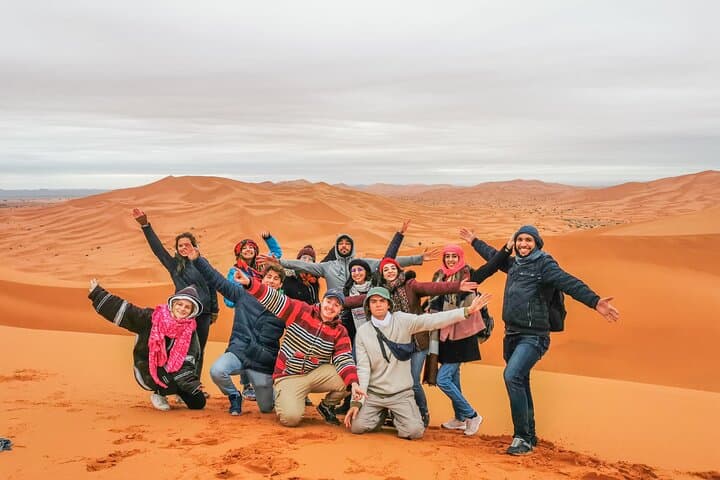
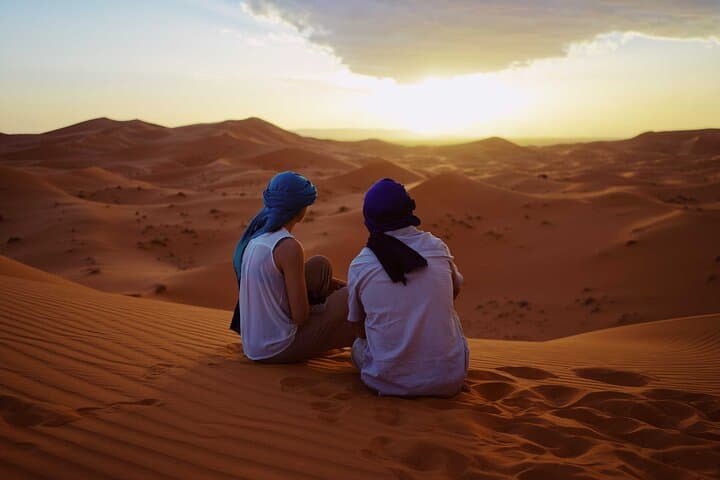
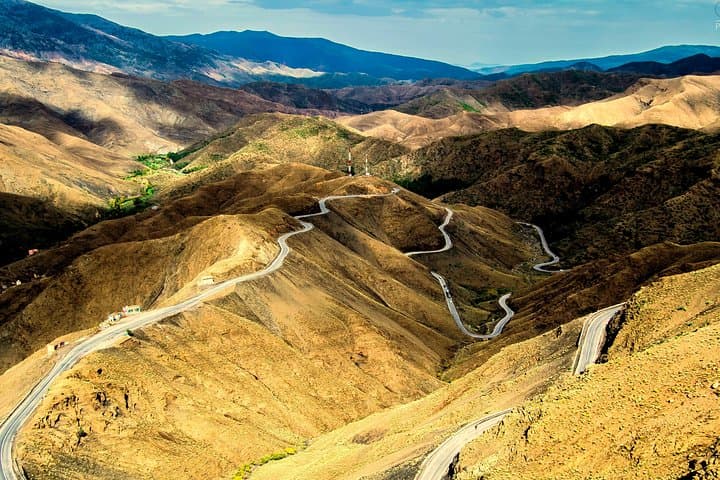
The road peels away from Marrakech at dawn, wind and dust carving the silhouette of the High Atlas as the minibus climbs toward Tizi n'Tichka (about 2,260 m). By midday the city’s red roofs shrink; by evening the landscape opens into ochre valleys and the first foothills of the Sahara. On day two the scene changes again—rocky gorges give way to the rolling orange of Erg Chebbi, dunes that can rise roughly 100–150 m above the plain.
The road peels away from Marrakech at dawn, wind and dust carving the silhouette of the High Atlas as the minibus climbs toward Tizi n'Tichka (about 2,260 m). By midday the city’s red roofs shrink; by evening the landscape opens into ochre valleys and the first foothills of the Sahara. On day two the scene changes again—rocky gorges give way to the rolling orange of Erg Chebbi, dunes that can rise roughly 100–150 m above the plain.
This route threads centuries of history: Ait Ben Haddou’s mud-brick ksar recalls trans-Saharan trade and fortified caravan stops, while Ouarzazate earned the nickname Gate of the Sahara for its position on historic routes and modern film sets. Geology here is dramatic—folded Atlas ranges and alluvial fans feed the sand seas where wind sculpts crescent dunes.
Expect a mix of paved and rural roads, short canyon walks (Todgha Gorges), then camel trekking across soft, shifting sand at sunset. Nights are shared Berber-camp hospitality—simple bedding, communal dinners, Tam Tam drumming and vast stars far from light pollution.
Practical guidance: pack layered clothing for hot days and cool nights, a wide-brimmed hat, and at least 2–3 liters of water per day. Footwear should handle dusty village streets and sandy slopes; expect 5–7 hours of driving each long travel day. Bring cash (Moroccan dirham) for remote purchases and tips, and allow morning departures to avoid mountain fog or afternoon heat. The trip suits travelers comfortable with basic accommodations, long drives, and short camel rides—rewarding with close-up desert light, quiet dunes, and cultural encounters that feel deliberate rather than rushed.