THE ADVENTURE COLLECTIVE® · Independent discovery and booking for outdoor travel

Drive out of Marrakech into the High Atlas for a guided 4 km walk through irrigated terraces, hamlets and streams, then share a traditional Berber lunch in a family home. This day trip combines an easy mountain hike with a cultural stop in Imlil.
Drive out of Marrakech into the High Atlas for a guided 4 km walk through irrigated terraces, hamlets and streams, then share a traditional Berber lunch in a family home. This day trip combines an easy mountain hike with a cultural stop in Imlil.
A crisp morning departure from Marrakech moves through the Moulay Brahim gorges, the road climbing until the city’s heat thins and pine-scented air takes over. By the time the vehicle drops you at the main trailhead, gullies and streams branch like veins through a quilt of irrigated terraces; the walk follows stone tracks that have carried pack animals and villagers for generations.
Verified experiences and guided adventures in the surrounding area.
Operated by Marrakech day trip · Imlil, Marrakesh-Safi
A crisp morning departure from Marrakech moves through the Moulay Brahim gorges, the road climbing until the city’s heat thins and pine-scented air takes over. By the time the vehicle drops you at the main trailhead, gullies and streams branch like veins through a quilt of irrigated terraces; the walk follows stone tracks that have carried pack animals and villagers for generations.
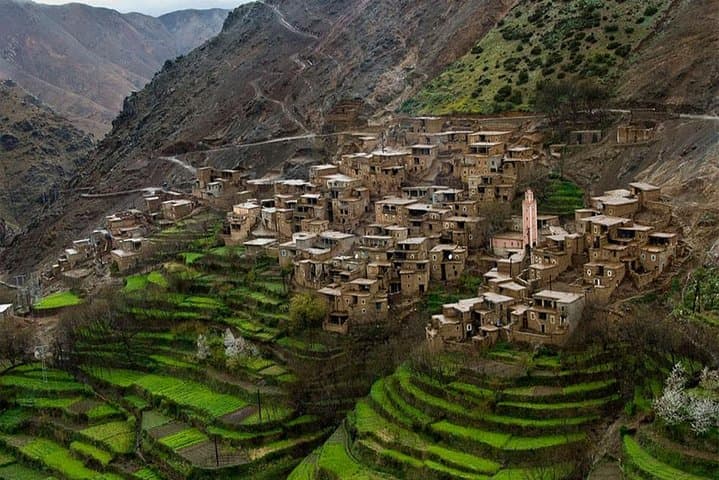
Imlil sits at roughly 1,700–1,800 m, a cluster of stone houses with flat roofs and walnut orchards framed by the higher ridges of the High Atlas. The 4 km (about 2.5 miles) guided route to Aroumd passes small hamlets—Ait Souka, Targa, Imola—and showcases traditional terraced agriculture: barley, corn and orchards fed by ancient irrigation channels. Geologically, the area is folded sedimentary rock cut by seasonal streams; weather can change quickly at these elevations.
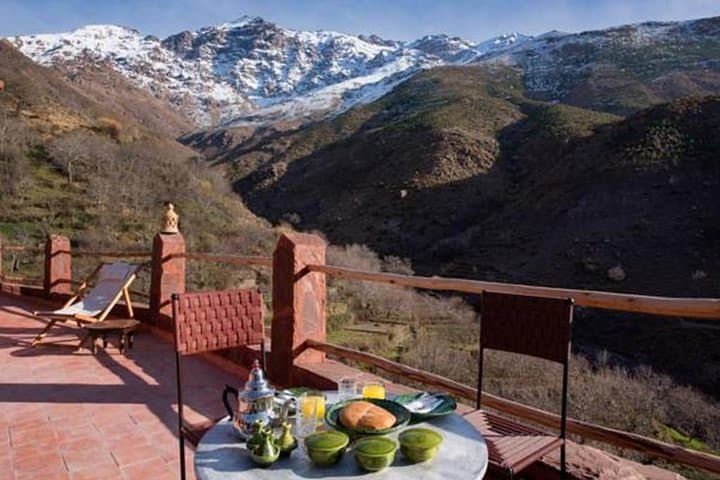
Culture is immediate and human: a stop for mint tea, then a home-cooked lunch in Achan where time is measured in stories and shared bread. Expect modest guest facilities and food prepared with local olive oil and preserved greens.
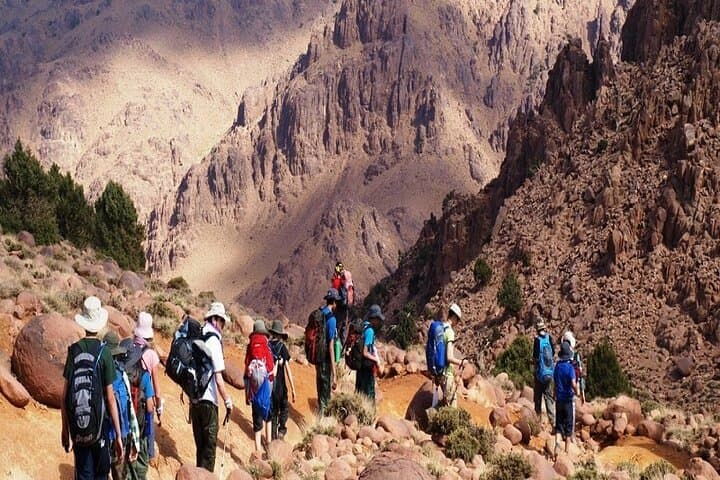
Practical guidance: wear sturdy walking shoes, dress in layers for sun and wind, carry 1–2 liters of water and basic rain protection. The route is non-technical but uneven—poles help on descents. The trip is ideal as a full-day immersion in Berber mountain life with a manageable hike and a cultural reward at midday.
easy.
7–9 hours.
Suitable for most people who can walk 4 km on uneven ground; expect several short ascents and descents.
The guided walk is about 4 km (2.5 miles) one way with typically 2.5–3 hours of walking spread across the valley route.
Yes—it's classified as easy. The trail is uneven but non-technical; families and older travelers who are moderately active usually manage well.
Standard inclusions are a local mountain guide, professional driver/guide, and hotel pick-up and drop-off; lunch with a Berber family is part of the itinerary.
Bring modest cash for souvenirs or tipping, and wear comfortable walking shoes and layers; a small gift for the host family is appreciated but not required.
Imlil’s villages are part of Berber communities that have farmed these slopes for centuries, using terraced fields and irrigation systems adapted to thin mountain soils.
Visitors should stay on marked tracks to protect fragile terraces and avoid littering; supporting local meals and guides helps keep tourism benefits in the community.
Marrakech day trip operates guided outdoor trips and adventures with an emphasis on safety, stewardship, and memorable experiences.
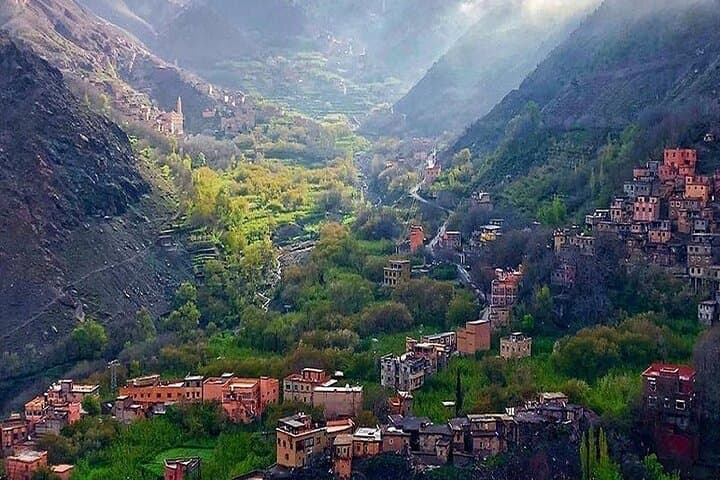
A crisp morning departure from Marrakech moves through the Moulay Brahim gorges, the road climbing until the city’s heat thins and pine-scented air takes over. By the time the vehicle drops you at the main trailhead, gullies and streams branch like veins through a quilt of irrigated terraces; the walk follows stone tracks that have carried pack animals and villagers for generations.
A crisp morning departure from Marrakech moves through the Moulay Brahim gorges, the road climbing until the city’s heat thins and pine-scented air takes over. By the time the vehicle drops you at the main trailhead, gullies and streams branch like veins through a quilt of irrigated terraces; the walk follows stone tracks that have carried pack animals and villagers for generations.
Imlil sits at roughly 1,700–1,800 m, a cluster of stone houses with flat roofs and walnut orchards framed by the higher ridges of the High Atlas. The 4 km (about 2.5 miles) guided route to Aroumd passes small hamlets—Ait Souka, Targa, Imola—and showcases traditional terraced agriculture: barley, corn and orchards fed by ancient irrigation channels. Geologically, the area is folded sedimentary rock cut by seasonal streams; weather can change quickly at these elevations.
Culture is immediate and human: a stop for mint tea, then a home-cooked lunch in Achan where time is measured in stories and shared bread. Expect modest guest facilities and food prepared with local olive oil and preserved greens.
Practical guidance: wear sturdy walking shoes, dress in layers for sun and wind, carry 1–2 liters of water and basic rain protection. The route is non-technical but uneven—poles help on descents. The trip is ideal as a full-day immersion in Berber mountain life with a manageable hike and a cultural reward at midday.