THE ADVENTURE COLLECTIVE® · Independent discovery and booking for outdoor travel

Three days of High Atlas passes, Kasbah Aït Ben Haddou, and an overnight under Saharan stars. Expect long drives, cultural stops, a one-hour camel trek and an authentic desert bivouac experience.
Three days of High Atlas passes, Kasbah Aït Ben Haddou, and an overnight under Saharan stars. Expect long drives, cultural stops, a one-hour camel trek and an authentic desert bivouac experience.
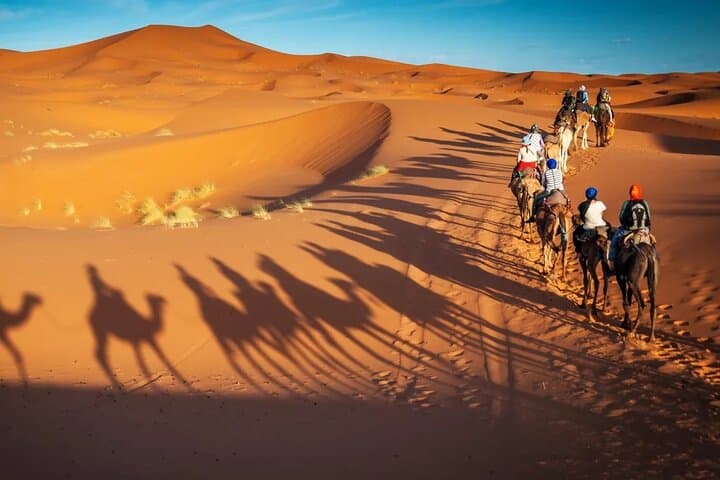
You step out of the 4x4 as the desert horizon tips from gold to orange; a single camel bell marks the beginning of a slow procession over Erg Chebbi’s rippled dunes. The wind shapes the sand and seems to urge you forward, while the tented bivouac waits like an island of warmth under the wide Saharan sky.
Verified experiences and guided adventures in the surrounding area.
Operated by Mounir MARRAKECH · Marrakech, Marrakesh-Safi
You step out of the 4x4 as the desert horizon tips from gold to orange; a single camel bell marks the beginning of a slow procession over Erg Chebbi’s rippled dunes. The wind shapes the sand and seems to urge you forward, while the tented bivouac waits like an island of warmth under the wide Saharan sky.
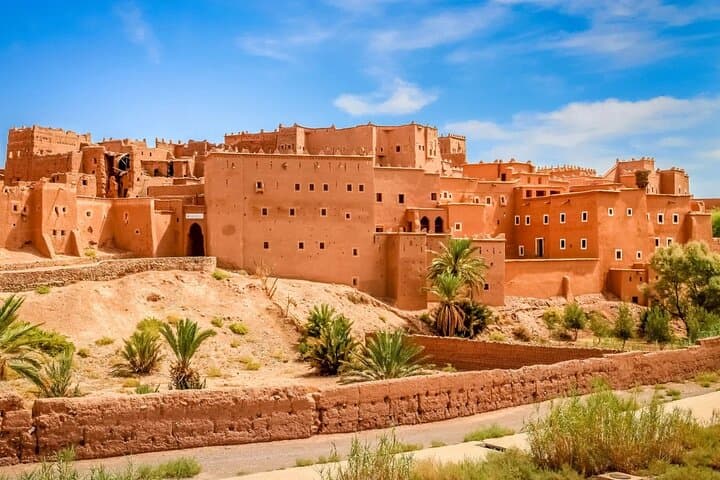
This three-day route threads classic southern Morocco sights: the earthen towers of Aït Ben Haddou, carved from the High Atlas’s flanks and long a caravan and film landmark; the Dades Valley’s sculpted gorges; and Merzouga’s Erg Chebbi dunes—geology written in wind-blown sand and ancient river terraces. Along the way you’ll encounter Berber kasbah architecture and small villages where rose cooperatives and date palms mark human adaptation to arid edges.
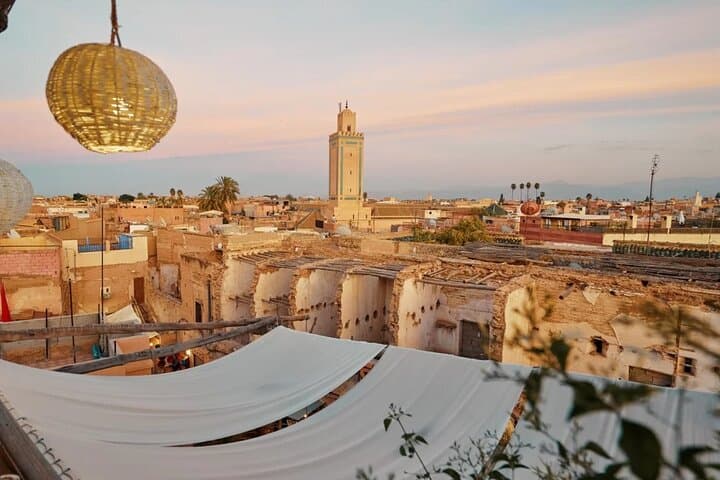
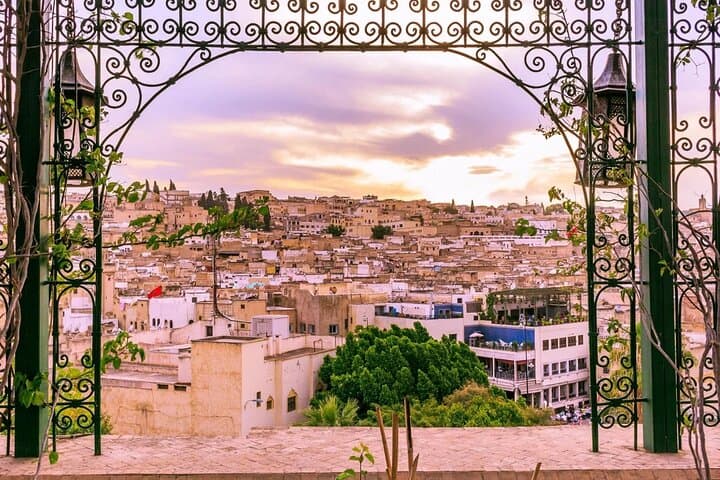
The experience mixes long scenic drives with short, cultural stops and a one-hour camel trek into a desert bivouac where dinners and overnight tents are provided. Nights are cold by desert standards and the dunes are physically gentle but uneven—expect soft sand and stepped climbs. Guides handle logistics and most meals, leaving you to focus on light hikes in gorges, walking the medina lanes in Fez, and camera-ready views at sunset.
Practical guidance: carry a refillable water bottle, sun protection, sturdy closed-toe shoes for rocky kasbahs and shifting sand, and a warm layer for night. Schedule travel windows to avoid peak summer heat and leave wiggle room for road-time—the Atlas crossings and valley side trips make this an active, travel-heavy mini-expedition rather than a walk-in hike.
moderate.
3 days.
Suitable for travelers who can handle several hours of driving per day, short camel rides, and light walking on uneven sand and rocky lanes.
The advertised camel trek is about one hour, enough to reach the desert camp near Erg Chebbi dunes; riders should be prepared for slow, rhythmic walking on sand.
Most overnight tents offer shared toilet facilities but no showers; hotels before and after the desert stay provide full bathroom amenities.
The itinerary is rated physically easy overall, but camel rides and uneven surfaces in kasbahs and dunes can be challenging—check with the operator for stroller or wheelchair accessibility on specific transfers.
Guides commonly speak French, English and Arabic (Darija); specific language needs can usually be requested at booking.
Aït Ben Haddou is a fortified ksar on old trans-Saharan routes and reflects centuries of mudbrick architecture used by caravan communities and filmmakers alike.
The Sahara’s dune systems and oasis pockets are fragile—follow guide instructions, avoid off-track driving, carry out waste, and minimize water use to reduce impact.
Mounir MARRAKECH operates guided outdoor trips and adventures with an emphasis on safety, stewardship, and memorable experiences.
You step out of the 4x4 as the desert horizon tips from gold to orange; a single camel bell marks the beginning of a slow procession over Erg Chebbi’s rippled dunes. The wind shapes the sand and seems to urge you forward, while the tented bivouac waits like an island of warmth under the wide Saharan sky.
You step out of the 4x4 as the desert horizon tips from gold to orange; a single camel bell marks the beginning of a slow procession over Erg Chebbi’s rippled dunes. The wind shapes the sand and seems to urge you forward, while the tented bivouac waits like an island of warmth under the wide Saharan sky.
This three-day route threads classic southern Morocco sights: the earthen towers of Aït Ben Haddou, carved from the High Atlas’s flanks and long a caravan and film landmark; the Dades Valley’s sculpted gorges; and Merzouga’s Erg Chebbi dunes—geology written in wind-blown sand and ancient river terraces. Along the way you’ll encounter Berber kasbah architecture and small villages where rose cooperatives and date palms mark human adaptation to arid edges.
The experience mixes long scenic drives with short, cultural stops and a one-hour camel trek into a desert bivouac where dinners and overnight tents are provided. Nights are cold by desert standards and the dunes are physically gentle but uneven—expect soft sand and stepped climbs. Guides handle logistics and most meals, leaving you to focus on light hikes in gorges, walking the medina lanes in Fez, and camera-ready views at sunset.
Practical guidance: carry a refillable water bottle, sun protection, sturdy closed-toe shoes for rocky kasbahs and shifting sand, and a warm layer for night. Schedule travel windows to avoid peak summer heat and leave wiggle room for road-time—the Atlas crossings and valley side trips make this an active, travel-heavy mini-expedition rather than a walk-in hike.