THE ADVENTURE COLLECTIVE® · Independent discovery and booking for outdoor travel

Three days across the High Atlas to the Sahara fold dramatic geology, Berber culture, and a night under desert stars. From Ait Ben Haddou to the Erg Chebbi dunes, this route pairs long driving sections with memorable short hikes and a classic camel trek.
Three days across the High Atlas to the Sahara fold dramatic geology, Berber culture, and a night under desert stars. From Ait Ben Haddou to the Erg Chebbi dunes, this route pairs long driving sections with memorable short hikes and a classic camel trek.
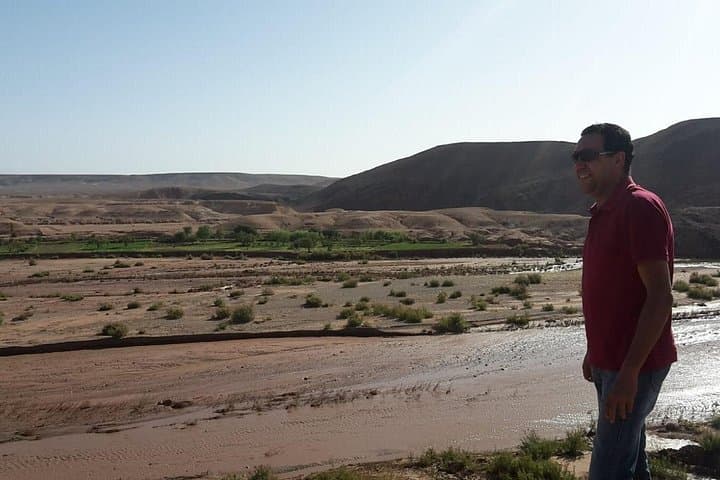
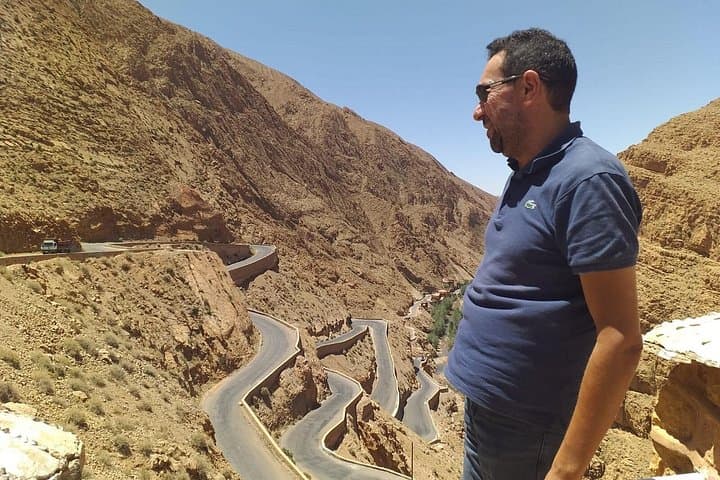
Early morning light fractures across the High Atlas as the road climbs to Tizi-n-Tichka and the temperature drops with every switchback. You feel altitude and distance at once—mountain passes give way to kasbahs and the palm-lined Ziz Valley, and by the second day the landscape opens into the ochre escalator of Erg Chebbi dunes.
Verified experiences and guided adventures in the surrounding area.
Operated by Karim transport touristique · Marrakech, Marrakesh-Safi
Early morning light fractures across the High Atlas as the road climbs to Tizi-n-Tichka and the temperature drops with every switchback. You feel altitude and distance at once—mountain passes give way to kasbahs and the palm-lined Ziz Valley, and by the second day the landscape opens into the ochre escalator of Erg Chebbi dunes.
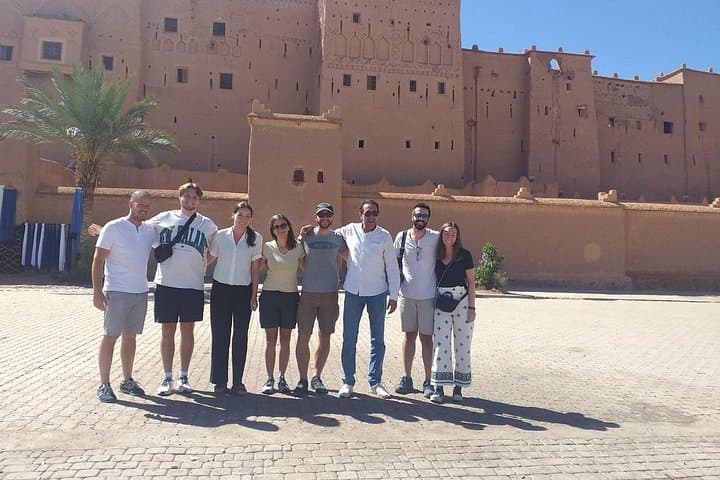
This route stitches together Morocco’s layered history: the fortified clay of Ait Ben Haddou (a UNESCO film location), the fertile Dades and Valley of Roses near Kelaat M’gouna, and the fluted limestone corridors of Todra Gorge, where cliffs tower roughly 300 meters and narrow to about 20 meters at the throat. Geologically you pass Precambrian and Mesozoic formations, Hamada plateaus, and the wind-sculpted sand seas—Erg Chebbi’s dunes can reach 100–150 meters high.
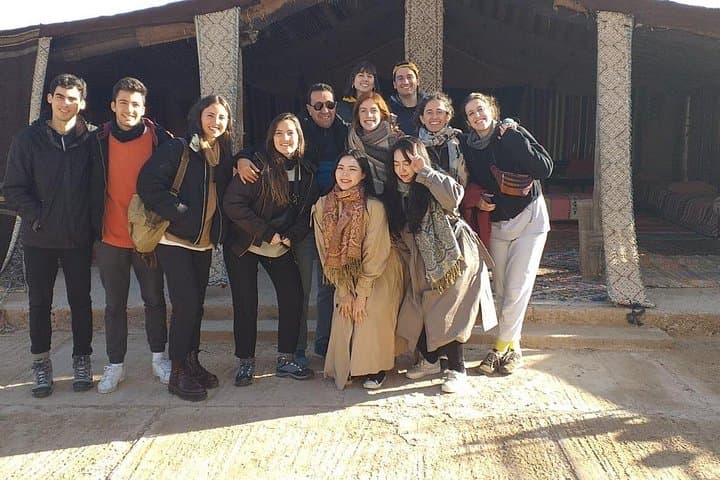
Culturally, expect Berber villages, roadside markets, and simple hospitality in family-run riads and desert tents; the itinerary typically includes two dinners and two breakfasts and an in-person guide in English or French. Wildlife is sparse but visible—desert foxes and migratory birds, with monkeys near Azrou’s cedar groves.
Practical guidance: the circuit covers roughly 550–600 km over three days with long driving stretches; ascent to Tizi-n-Tichka tops 2,260 m. Pack layered clothing for cool nights in the desert, 2+ liters of water per day, sun protection, and sturdy shoes for rocky gorges and soft sand. Expect short walks (1–4 km) at viewpoints, a camel trek at sunset, and an early sunrise over the dunes. Bookings often include private transfers; carry local cash for tips and small purchases.
moderate.
3 days.
Suitable for travelers with basic fitness—able to manage short hikes (up to 4 km) and climb soft sand; long vehicle transfers require tolerance for sitting.
The typical itinerary includes one night in a Berber-style desert tent (basic comfort) near Erg Chebbi; other nights are in hotels or riads as listed.
Camel treks are usually short (30–60 minutes) timed for sunset or sunrise; longer treks can be arranged but may add time and cost.
No technical skills are required; basic fitness for short hikes and dune climbs is sufficient. The tour is marked as suitable for most fitness levels.
Yes—tours depart from Marrakech (often around 7:30 AM) and typically include private transfer; confirm pickup point when booking.
The route follows ancient caravan paths linking Marrakech to Saharan trade routes; Ait Ben Haddou is a fortified ksar preserved as a UNESCO site and set for many films.
Respect fragile desert ecosystems by staying on established tracks, minimizing campfire use, and carrying out all trash; local communities depend on sustainable tourism income.
Karim transport touristique operates guided outdoor trips and adventures with an emphasis on safety, stewardship, and memorable experiences.
Early morning light fractures across the High Atlas as the road climbs to Tizi-n-Tichka and the temperature drops with every switchback. You feel altitude and distance at once—mountain passes give way to kasbahs and the palm-lined Ziz Valley, and by the second day the landscape opens into the ochre escalator of Erg Chebbi dunes.
Early morning light fractures across the High Atlas as the road climbs to Tizi-n-Tichka and the temperature drops with every switchback. You feel altitude and distance at once—mountain passes give way to kasbahs and the palm-lined Ziz Valley, and by the second day the landscape opens into the ochre escalator of Erg Chebbi dunes.
This route stitches together Morocco’s layered history: the fortified clay of Ait Ben Haddou (a UNESCO film location), the fertile Dades and Valley of Roses near Kelaat M’gouna, and the fluted limestone corridors of Todra Gorge, where cliffs tower roughly 300 meters and narrow to about 20 meters at the throat. Geologically you pass Precambrian and Mesozoic formations, Hamada plateaus, and the wind-sculpted sand seas—Erg Chebbi’s dunes can reach 100–150 meters high.
Culturally, expect Berber villages, roadside markets, and simple hospitality in family-run riads and desert tents; the itinerary typically includes two dinners and two breakfasts and an in-person guide in English or French. Wildlife is sparse but visible—desert foxes and migratory birds, with monkeys near Azrou’s cedar groves.
Practical guidance: the circuit covers roughly 550–600 km over three days with long driving stretches; ascent to Tizi-n-Tichka tops 2,260 m. Pack layered clothing for cool nights in the desert, 2+ liters of water per day, sun protection, and sturdy shoes for rocky gorges and soft sand. Expect short walks (1–4 km) at viewpoints, a camel trek at sunset, and an early sunrise over the dunes. Bookings often include private transfers; carry local cash for tips and small purchases.