THE ADVENTURE COLLECTIVE® · Independent discovery and booking for outdoor travel

Cross the High Atlas, sleep under a Berber tent and ride camels across Erg Chebbi dunes on this budget-friendly 3-day transfer from Marrakech to Fez. Expect long drives, dramatic gorges, UNESCO kasbahs and two unforgettable desert sunrises.
Cross the High Atlas, sleep under a Berber tent and ride camels across Erg Chebbi dunes on this budget-friendly 3-day transfer from Marrakech to Fez. Expect long drives, dramatic gorges, UNESCO kasbahs and two unforgettable desert sunrises.
The day begins before dawn on the road out of Marrakech, headlights cutting through cool mountain air as the High Atlas climbs toward Tizi-n-Tichka. By midmorning the road opens and kasbahs appear like weathered watchmen; later, camel silhouettes ride the ridge of Erg Chebbi at sunset, the dunes breathing slow and deliberate as if daring you to climb them.
Verified experiences and guided adventures in the surrounding area.
Operated by Morocco First Gate · Merzouga, Drâa-Tafilalet
The day begins before dawn on the road out of Marrakech, headlights cutting through cool mountain air as the High Atlas climbs toward Tizi-n-Tichka. By midmorning the road opens and kasbahs appear like weathered watchmen; later, camel silhouettes ride the ridge of Erg Chebbi at sunset, the dunes breathing slow and deliberate as if daring you to climb them.
This route threads centuries of trade and film history: Ait Ben Haddou’s earthen towers guarded caravan routes and later framed Hollywood productions. Geologically, the tour moves from granite passes at 2,260 m to the wind-sculpted sand seas of the Sahara—Erg Chebbi’s dunes rise up to roughly 100–150 m and shift with fierce seasonal winds. Culture here is Berber and oasis-driven; towns grow around kasbahs, palm groves and khettaras (ancient underground irrigation channels) that sustained life on this arid edge.
Practically, expect long drives (day 1 ≈ 360 km, day 2 ≈ 280 km, day 3 ≈ 480 km) with photo and rest stops; a guided camel trek into the Merzouga dunes at sunset; and one night in a standard hotel and one in a Berber camp. Todra Gorge offers 300 m cliffs and short walks; the camel ride is gentle but wear closed-toe shoes and layers—the desert cools quickly after sunset. Carry plenty of water, sun protection and local cash for small purchases. Small-group size (up to 15) keeps the pace personal: bring a sense of patience for road travel and a readiness to walk the sand at sunrise—those moments repay the miles many times over.
moderate.
3 days.
Light to moderate fitness—able to board a camel, walk in sand for short stretches, and tolerate long vehicle transfers.
Typical camel treks into the Erg Chebbi camp last 45–75 minutes each way, timed to reach the camp before sunset or after sunrise.
Yes—operators list the tour as physically easy; long drives are involved but walking and camel rides are low-impact.
Standard Berber camps usually provide a private or shared tent, mattresses, bedding, communal dining and basic toilet facilities; hot showers may be limited.
Yes—the itinerary includes scheduled stops for coffee, meals and photos at towns, viewpoints and oases along the route.
This corridor linked caravan routes between Marrakech and the Sahara; mud-brick kasbahs and khettaras mark centuries of oasis agriculture and trade.
The Sahara’s ecosystems are fragile—limit plastic waste, respect local grazing areas and follow camp guidance on water use and fire safety.
Morocco First Gate operates guided outdoor trips and adventures with an emphasis on safety, stewardship, and memorable experiences.
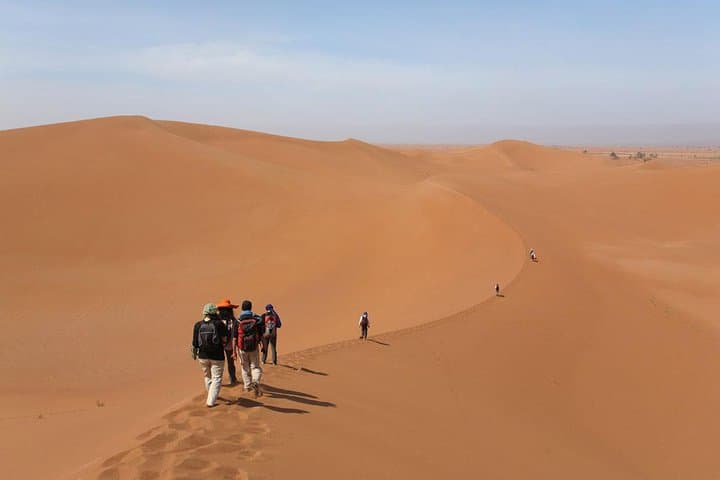
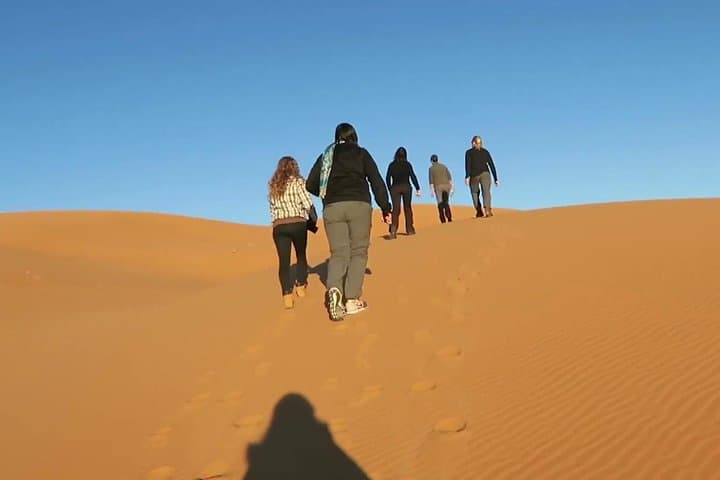
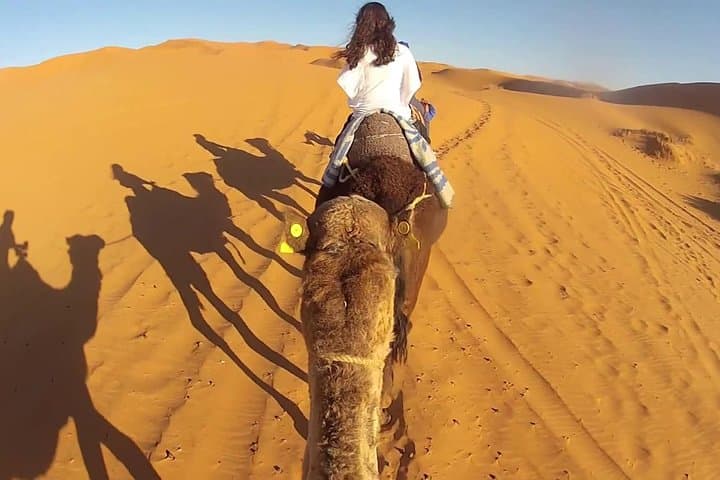
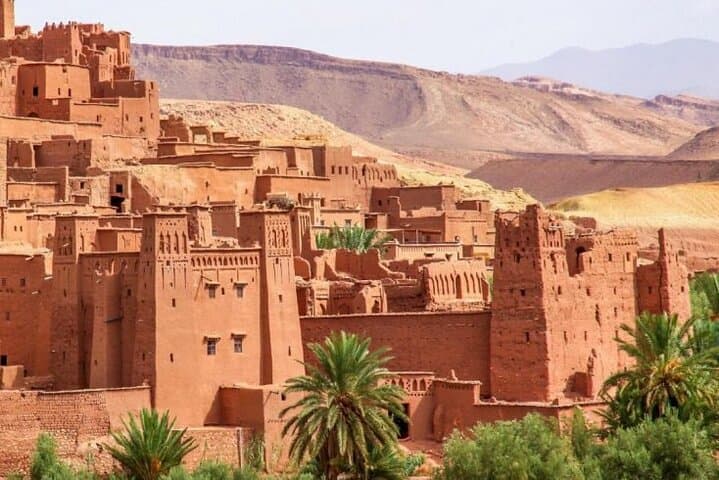
The day begins before dawn on the road out of Marrakech, headlights cutting through cool mountain air as the High Atlas climbs toward Tizi-n-Tichka. By midmorning the road opens and kasbahs appear like weathered watchmen; later, camel silhouettes ride the ridge of Erg Chebbi at sunset, the dunes breathing slow and deliberate as if daring you to climb them.
The day begins before dawn on the road out of Marrakech, headlights cutting through cool mountain air as the High Atlas climbs toward Tizi-n-Tichka. By midmorning the road opens and kasbahs appear like weathered watchmen; later, camel silhouettes ride the ridge of Erg Chebbi at sunset, the dunes breathing slow and deliberate as if daring you to climb them.
This route threads centuries of trade and film history: Ait Ben Haddou’s earthen towers guarded caravan routes and later framed Hollywood productions. Geologically, the tour moves from granite passes at 2,260 m to the wind-sculpted sand seas of the Sahara—Erg Chebbi’s dunes rise up to roughly 100–150 m and shift with fierce seasonal winds. Culture here is Berber and oasis-driven; towns grow around kasbahs, palm groves and khettaras (ancient underground irrigation channels) that sustained life on this arid edge.
Practically, expect long drives (day 1 ≈ 360 km, day 2 ≈ 280 km, day 3 ≈ 480 km) with photo and rest stops; a guided camel trek into the Merzouga dunes at sunset; and one night in a standard hotel and one in a Berber camp. Todra Gorge offers 300 m cliffs and short walks; the camel ride is gentle but wear closed-toe shoes and layers—the desert cools quickly after sunset. Carry plenty of water, sun protection and local cash for small purchases. Small-group size (up to 15) keeps the pace personal: bring a sense of patience for road travel and a readiness to walk the sand at sunrise—those moments repay the miles many times over.