THE ADVENTURE COLLECTIVE® · Independent discovery and booking for outdoor travel

A private four-day circuit from Marrakech to Fes that blends High Atlas passes, UNESCO Ait Ben Haddou, Todra Gorge walks and a sunset camel trek into the Erg Chebbi dunes. Ideal for travelers who want culture, geology and a night under the stars without group constraints.
A private four-day circuit from Marrakech to Fes that blends High Atlas passes, UNESCO Ait Ben Haddou, Todra Gorge walks and a sunset camel trek into the Erg Chebbi dunes. Ideal for travelers who want culture, geology and a night under the stars without group constraints.
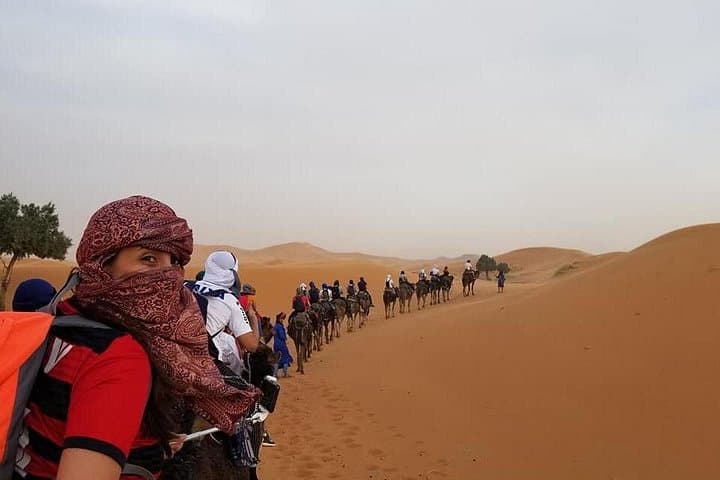
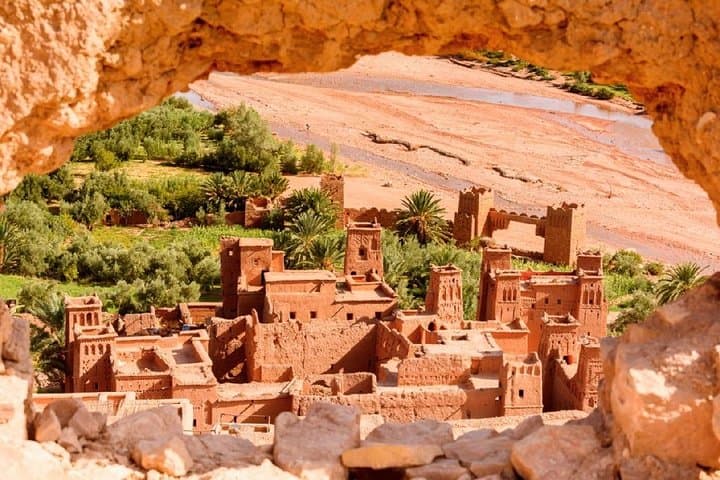
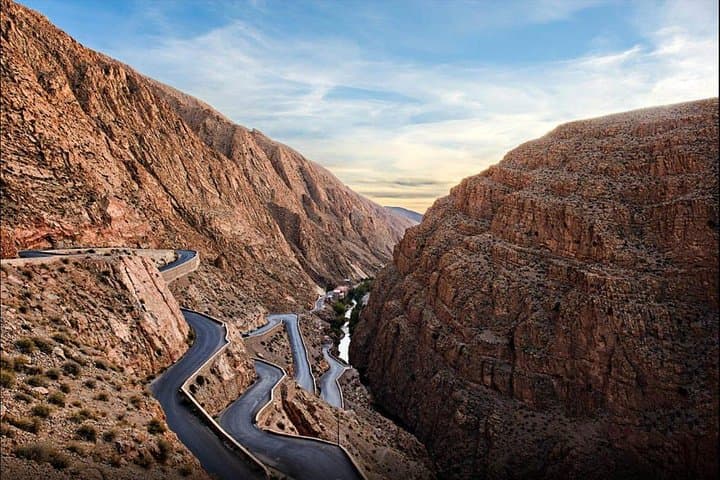
You crest Tizi n’Tichka at dawn and the Atlas passes its chill into the van — wind that seems intent on rewriting your itinerary’s pace. Over the next four days the landscape keeps changing: red kasbahs and the UNESCO walls of Ait Ben Haddou, the cinematic flatlands of Ouarzazate, the carved flanks of Todra Gorge, and finally the enormous, rolling ridgelines of Erg Chebbi where camels move like low waves.
Verified experiences and guided adventures in the surrounding area.
Operated by Marrakech First Trip · Merzouga, Drâa-Tafilalet
You crest Tizi n’Tichka at dawn and the Atlas passes its chill into the van — wind that seems intent on rewriting your itinerary’s pace. Over the next four days the landscape keeps changing: red kasbahs and the UNESCO walls of Ait Ben Haddou, the cinematic flatlands of Ouarzazate, the carved flanks of Todra Gorge, and finally the enormous, rolling ridgelines of Erg Chebbi where camels move like low waves.
This route follows ancient trade corridors across the High Atlas (Tizi n’Tichka sits near 2,260 m) into the Drâa-Tafilalet region where geology and human history meet. Ait Ben Haddou records the mud-brick architecture of caravan towns; Todra’s limestone walls, often 100–160 m high, are a reminder of tectonic uplift and water-carved incision. Local Berber culture remains central: oasis farming in Skoura and campfire music beneath a dry, glittering sky are part of the itinerary.
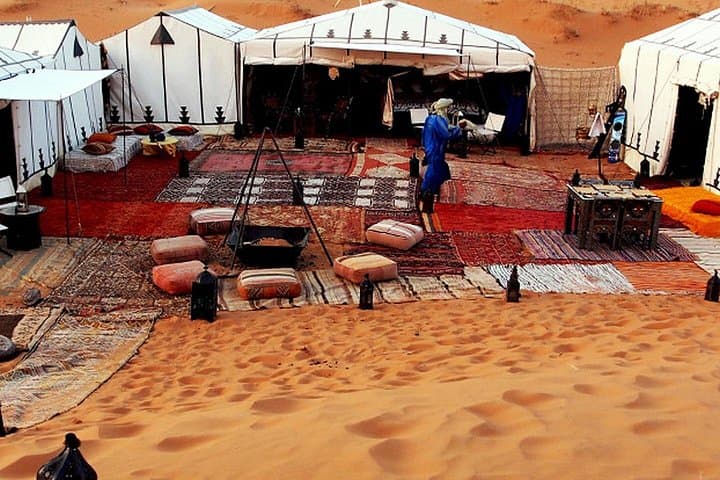
Practically, expect long drives broken by short walks and a 2-hour camel trek into the dunes timed for sunset. Nights in a desert camp can drop sharply in temperature, so layer. Roads through mountain passes are winding — the private driver-guide handles navigation and logistics, but bring cash for small purchases, extra water, and a camera with spare batteries. If you want quieter viewpoints, ask to arrive before the main groups; the private nature of the tour makes timing flexible. This is a travel experience built on contrasts — high passes, sheltering gorges, then the expansive, demanding quiet of the Sahara.
moderate.
4 days (approx. 96 hours).
Suitable for travelers comfortable with multiple long driving days, short walks (30–90 minutes) and a moderate camel trek; not physically demanding but requires stamina for travel days.
The itinerary includes about a 2-hour camel trek timed for sunset and sunrise; camels are steady and handlers assist mounting and dismounting.
Yes — the tour includes one night in a traditional Berber desert camp and other nights as specified in the itinerary, with meals per the schedule.
The tour uses an air-conditioned minivan or 4WD depending on group size and road conditions; the driver-guide chooses the best transport for mountain and desert stretches.
Children can travel but must be accompanied by an adult; the tour is not recommended for pregnant travelers or those with serious cardiovascular issues due to travel distances and remote locations.
The route follows historical trans-Saharan corridors; Ait Ben Haddou served as a fortified caravan stop and later as a film location highlighting regional architecture.
Erg Chebbi’s dunes are ecologically sensitive; stick to marked tracks, minimize campfire impact, and support local guides who practice low-impact tourism.
Marrakech First Trip operates guided outdoor trips and adventures with an emphasis on safety, stewardship, and memorable experiences.
You crest Tizi n’Tichka at dawn and the Atlas passes its chill into the van — wind that seems intent on rewriting your itinerary’s pace. Over the next four days the landscape keeps changing: red kasbahs and the UNESCO walls of Ait Ben Haddou, the cinematic flatlands of Ouarzazate, the carved flanks of Todra Gorge, and finally the enormous, rolling ridgelines of Erg Chebbi where camels move like low waves.
You crest Tizi n’Tichka at dawn and the Atlas passes its chill into the van — wind that seems intent on rewriting your itinerary’s pace. Over the next four days the landscape keeps changing: red kasbahs and the UNESCO walls of Ait Ben Haddou, the cinematic flatlands of Ouarzazate, the carved flanks of Todra Gorge, and finally the enormous, rolling ridgelines of Erg Chebbi where camels move like low waves.
This route follows ancient trade corridors across the High Atlas (Tizi n’Tichka sits near 2,260 m) into the Drâa-Tafilalet region where geology and human history meet. Ait Ben Haddou records the mud-brick architecture of caravan towns; Todra’s limestone walls, often 100–160 m high, are a reminder of tectonic uplift and water-carved incision. Local Berber culture remains central: oasis farming in Skoura and campfire music beneath a dry, glittering sky are part of the itinerary.
Practically, expect long drives broken by short walks and a 2-hour camel trek into the dunes timed for sunset. Nights in a desert camp can drop sharply in temperature, so layer. Roads through mountain passes are winding — the private driver-guide handles navigation and logistics, but bring cash for small purchases, extra water, and a camera with spare batteries. If you want quieter viewpoints, ask to arrive before the main groups; the private nature of the tour makes timing flexible. This is a travel experience built on contrasts — high passes, sheltering gorges, then the expansive, demanding quiet of the Sahara.