THE ADVENTURE COLLECTIVE® · Independent discovery and booking for outdoor travel

Cross the High Atlas, walk narrow gorges and ride camels into Erg Chebbi on this packed 3-day Marrakech-to-Fes itinerary. Expect long drives, dramatic geology and an overnight Sahara camp with sunset dunes and campfire music.
Cross the High Atlas, walk narrow gorges and ride camels into Erg Chebbi on this packed 3-day Marrakech-to-Fes itinerary. Expect long drives, dramatic geology and an overnight Sahara camp with sunset dunes and campfire music.
You leave Marrakech before sunrise, the city’s heat giving way to high mountain air as the minibus climbs the Tizi n’Tichka pass. The Atlas frames the road like a hard green spine, and by midday the ochre fortress of Ait Ben Haddou rises from the valley — mud-brick walls that have watched caravans and camera crews alike.
Verified experiences and guided adventures in the surrounding area.
Operated by Experience Serenity Sahara · Merzouga, Drâa-Tafilalet
You leave Marrakech before sunrise, the city’s heat giving way to high mountain air as the minibus climbs the Tizi n’Tichka pass. The Atlas frames the road like a hard green spine, and by midday the ochre fortress of Ait Ben Haddou rises from the valley — mud-brick walls that have watched caravans and camera crews alike.
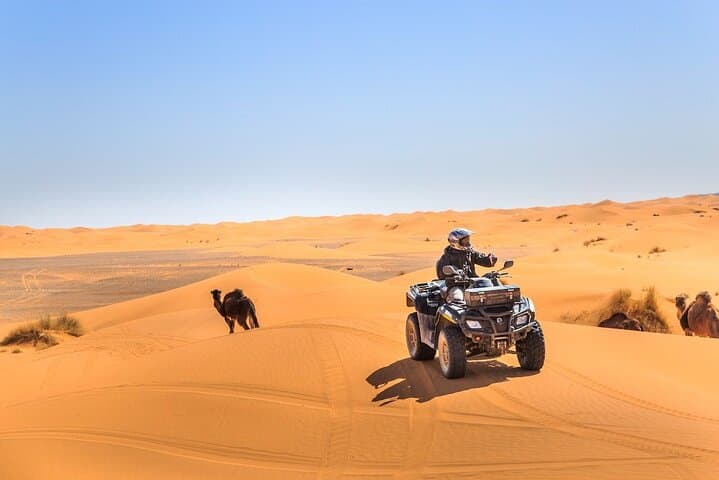
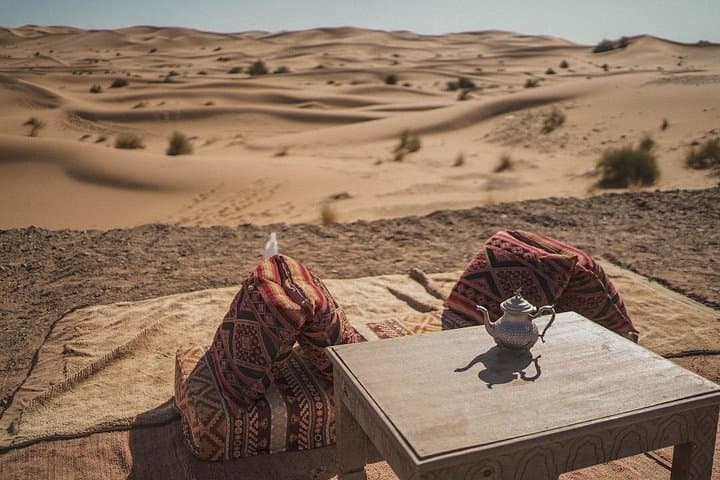
The route is a lesson in Morocco’s geology and culture: folded sedimentary ranges, river-cut gorges at Dades and Todra, and the palm-lined oases of the Ziz Valley. Berber kasbahs mark old trade routes; in Rissani the market still moves at a rhythm set by dates and camel caravans. At Merzouga, Erg Chebbi’s dunes take over — sand that shifts and breathes, swallowing footsteps and revealing new ridgelines with each wind.
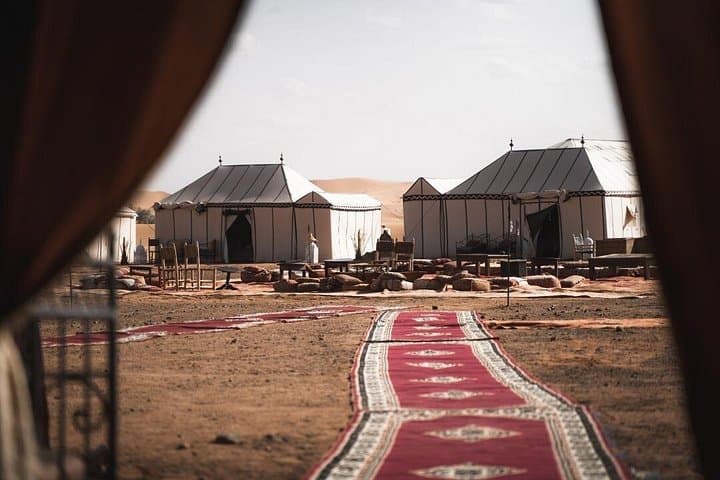
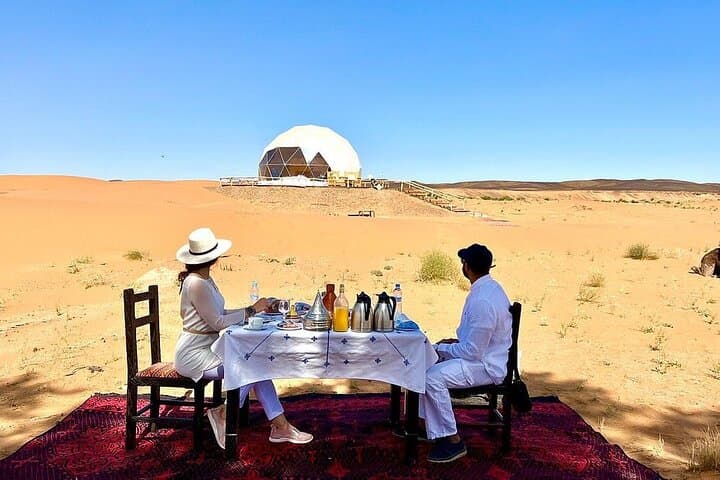
Practically, the trip balances long driving days with short on-foot experiences: a guided walk through Todra Gorge, a 45–90 minute camel trek to camp, and sunrise on the dunes. Camps offer hot meals, blankets and local music around a fire; nights are cold, days can be intensely hot. Expect narrow mountain passes, gravel desert tracks, and basic desert-camp facilities.
Bring layered clothing, sun protection, and a small daypack for essentials on camel rides. Hydrate often and plan for early starts to avoid midday heat. If you want photography tips, aim for golden hour on the dunes and look for contrasting light in the gorges.
This is a cultural and natural corridor — not a technical trek — ideal for travelers who want an immersive, manageable Sahara experience without heavy backpacking.
moderate.
3 days.
Suitable for reasonably fit travelers comfortable sitting for long road stretches, short walks, and a 45–90 minute camel ride.
The camel ride is gentle and suitable for most people; you’ll sit on a saddle for 45–90 minutes with rests and assistance mounting/dismounting.
Camps are comfortable but basic: private or shared tents, mattresses, blankets, meals and often shared sanitation—not luxury hotel standards unless a specific upgrade is booked.
The tour is advertised as suitable for all fitness levels, but mountain roads and desert sand can be uneven; contact the operator about mobility needs and pickup/drop-off points.
Tap water in Morocco is not consistently safe for visitors; use bottled water provided by the operator or bring a reliable filter or purification tablets.
The route follows ancient trans-Saharan caravan corridors; Ait Ben Haddou and Rissani were historic trade and cultural hubs linking sub-Saharan and Mediterranean worlds.
Dune ecosystems are fragile—stay on established routes, avoid disturbing vegetation, and follow camp waste protocols to reduce impact.
Experience Serenity Sahara operates guided outdoor trips and adventures with an emphasis on safety, stewardship, and memorable experiences.
You leave Marrakech before sunrise, the city’s heat giving way to high mountain air as the minibus climbs the Tizi n’Tichka pass. The Atlas frames the road like a hard green spine, and by midday the ochre fortress of Ait Ben Haddou rises from the valley — mud-brick walls that have watched caravans and camera crews alike.
You leave Marrakech before sunrise, the city’s heat giving way to high mountain air as the minibus climbs the Tizi n’Tichka pass. The Atlas frames the road like a hard green spine, and by midday the ochre fortress of Ait Ben Haddou rises from the valley — mud-brick walls that have watched caravans and camera crews alike.
The route is a lesson in Morocco’s geology and culture: folded sedimentary ranges, river-cut gorges at Dades and Todra, and the palm-lined oases of the Ziz Valley. Berber kasbahs mark old trade routes; in Rissani the market still moves at a rhythm set by dates and camel caravans. At Merzouga, Erg Chebbi’s dunes take over — sand that shifts and breathes, swallowing footsteps and revealing new ridgelines with each wind.
Practically, the trip balances long driving days with short on-foot experiences: a guided walk through Todra Gorge, a 45–90 minute camel trek to camp, and sunrise on the dunes. Camps offer hot meals, blankets and local music around a fire; nights are cold, days can be intensely hot. Expect narrow mountain passes, gravel desert tracks, and basic desert-camp facilities.
Bring layered clothing, sun protection, and a small daypack for essentials on camel rides. Hydrate often and plan for early starts to avoid midday heat. If you want photography tips, aim for golden hour on the dunes and look for contrasting light in the gorges.
This is a cultural and natural corridor — not a technical trek — ideal for travelers who want an immersive, manageable Sahara experience without heavy backpacking.