THE ADVENTURE COLLECTIVE® · Independent discovery and booking for outdoor travel

Cross the High Atlas, explore Ait Ben Haddou and Todra Gorge, then ride camels on Erg Chebbi before sleeping under a desert sky. This 3-day loop pairs dramatic landscapes with local Berber hospitality and practical, travel-ready logistics.
Cross the High Atlas, explore Ait Ben Haddou and Todra Gorge, then ride camels on Erg Chebbi before sleeping under a desert sky. This 3-day loop pairs dramatic landscapes with local Berber hospitality and practical, travel-ready logistics.
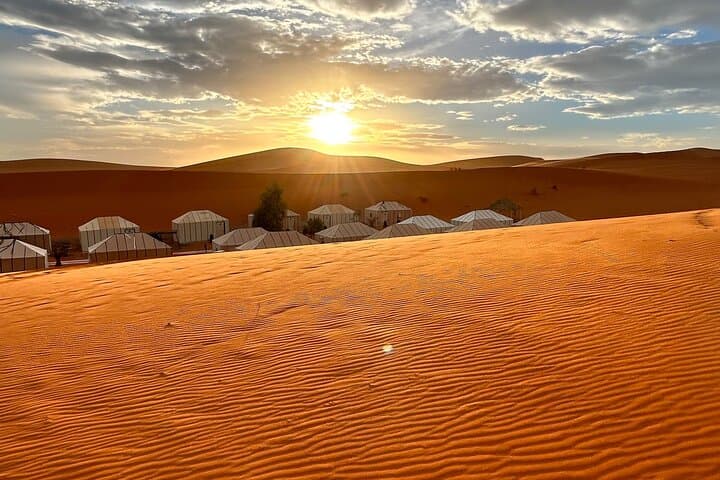
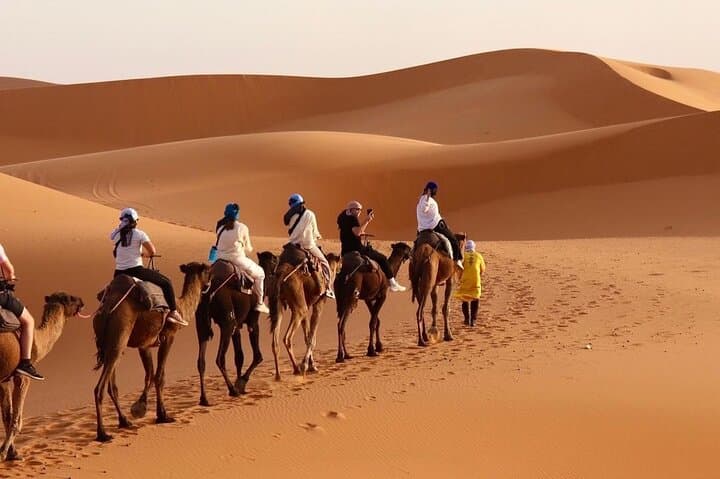
A wind-scoured ridge of sand blurs into a violet sunset as the guide calls for saddles — the caravan moves in patient single file across Erg Chebbi. The first morning opens on asphalt climbs through the High Atlas, where switchbacks and the Tizi n’Tichka pass (about 2,260 m) give way to ochre kasbahs and palm-lined river valleys.
Verified experiences and guided adventures in the surrounding area.
Operated by Marrakech Group Tour - Shared Desert Trips · Marrakech, Marrakech-Safi
A wind-scoured ridge of sand blurs into a violet sunset as the guide calls for saddles — the caravan moves in patient single file across Erg Chebbi. The first morning opens on asphalt climbs through the High Atlas, where switchbacks and the Tizi n’Tichka pass (about 2,260 m) give way to ochre kasbahs and palm-lined river valleys.
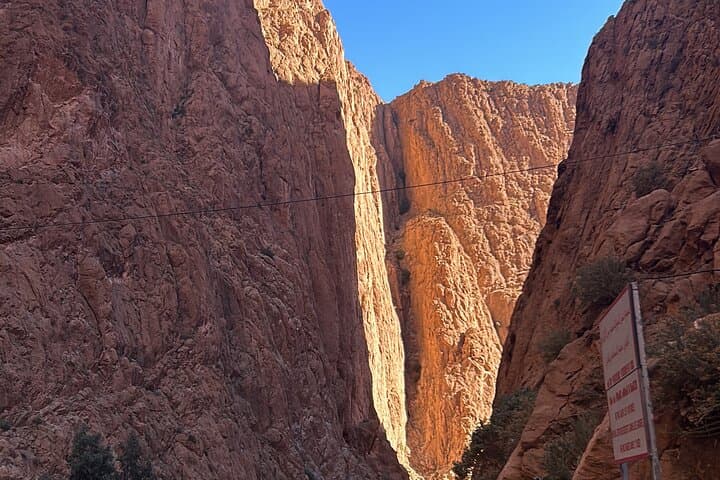
This three-day route threads Morocco’s living history: fortified ksars like Ait Ben Haddou that marked caravan routes, cedar forests where Barbary macaques still forage, and the fossil-rich limestone and sandstone that carved Todra Gorge. Culture arrives in details — ochre mud brick, Berber tea ritual, and the Bedouin rhythm of camp life beneath a sky thick with stars.
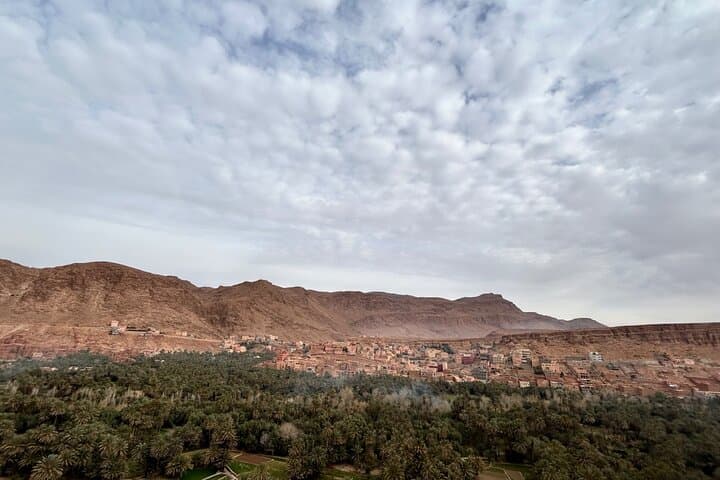
Expect varied terrain: long highway drives (Marrakech to Merzouga is ~560 km), narrow canyon walks, and the soft, yielding dunes ideal for a sunset camel trek and optional sand-boarding. Nights are spent in a traditional desert camp with shared facilities; daylight brings a brisk walk through oasis palms and photo stops in Rissani and the Ziz Valley.
Practical guidance: pace yourself for long vehicle transfers, carry sufficient water and sun protection, and bring warm layers for desert nights (temps can drop sharply). Footwear should handle gravel and sand. Reserve mornings for active exploration and late afternoon for dune time when light is richest. This itinerary balances culture, geology and pure desert and is suitable for travelers comfortable with multi-hour drives and basic camp accommodation.
moderate.
3 days (≈72 hours).
Suitable for travelers in average fitness who can manage multi-hour drives, short canyon walks, and a camel trek of an hour or more.
The camel trek is gentle and slow-paced (about 45–90 minutes depending on the segment); most people of average fitness can participate though mounting can be awkward for those with mobility limits.
Overnight is in a traditional desert camp; many camps offer private tents but expect basic facilities — confirm private tent options when booking.
Children can join, but infants must sit on laps and the operator advises against participation for pregnant travelers due to long drives and camel rides.
Service is patchy in remote stretches like Merzouga and parts of the Ziz Valley; withdraw cash in larger towns such as Marrakech, Errachidia or Midelt before the desert segment.
This corridor was part of trans-Saharan caravan routes; centuries-old kasbahs and ksars trace salt and spice trade networks between the Atlas and desert.
The Sahara’s dune systems and oases are fragile — conserve water, avoid driving on dunes, and choose camps that manage waste responsibly.
Marrakech Group Tour - Shared Desert Trips operates guided outdoor trips and adventures with an emphasis on safety, stewardship, and memorable experiences.
A wind-scoured ridge of sand blurs into a violet sunset as the guide calls for saddles — the caravan moves in patient single file across Erg Chebbi. The first morning opens on asphalt climbs through the High Atlas, where switchbacks and the Tizi n’Tichka pass (about 2,260 m) give way to ochre kasbahs and palm-lined river valleys.
A wind-scoured ridge of sand blurs into a violet sunset as the guide calls for saddles — the caravan moves in patient single file across Erg Chebbi. The first morning opens on asphalt climbs through the High Atlas, where switchbacks and the Tizi n’Tichka pass (about 2,260 m) give way to ochre kasbahs and palm-lined river valleys.
This three-day route threads Morocco’s living history: fortified ksars like Ait Ben Haddou that marked caravan routes, cedar forests where Barbary macaques still forage, and the fossil-rich limestone and sandstone that carved Todra Gorge. Culture arrives in details — ochre mud brick, Berber tea ritual, and the Bedouin rhythm of camp life beneath a sky thick with stars.
Expect varied terrain: long highway drives (Marrakech to Merzouga is ~560 km), narrow canyon walks, and the soft, yielding dunes ideal for a sunset camel trek and optional sand-boarding. Nights are spent in a traditional desert camp with shared facilities; daylight brings a brisk walk through oasis palms and photo stops in Rissani and the Ziz Valley.
Practical guidance: pace yourself for long vehicle transfers, carry sufficient water and sun protection, and bring warm layers for desert nights (temps can drop sharply). Footwear should handle gravel and sand. Reserve mornings for active exploration and late afternoon for dune time when light is richest. This itinerary balances culture, geology and pure desert and is suitable for travelers comfortable with multi-hour drives and basic camp accommodation.