THE ADVENTURE COLLECTIVE® · Independent discovery and booking for outdoor travel

Traverse High Atlas passes, explore Ait Benhaddou and Todra Gorge, then ride camels into Erg Chebbi for a night in a nomad-style desert camp. This three-day itinerary pairs cultural landmarks with raw desert landscapes and accessible adventure.
Traverse High Atlas passes, explore Ait Benhaddou and Todra Gorge, then ride camels into Erg Chebbi for a night in a nomad-style desert camp. This three-day itinerary pairs cultural landmarks with raw desert landscapes and accessible adventure.
Sunlight flakes off red mud walls as the coach climbs Tizi n'Tichka and the High Atlas folds into a horizon of serrated ridges. By day two the landscape opens into palm-lined gorges and crumbling kasbahs; by sunset Erg Chebbi's dunes throw long, orange shadows that dare you to climb them. A camel train eases you across soft crests, and at night a desert camp becomes a small constellation of canvas and conversation under cold, clear air.
Verified experiences and guided adventures in the surrounding area.
Operated by Atlas Discovery Tours · Merzouga, Drâa-Tafilalet
Sunlight flakes off red mud walls as the coach climbs Tizi n'Tichka and the High Atlas folds into a horizon of serrated ridges. By day two the landscape opens into palm-lined gorges and crumbling kasbahs; by sunset Erg Chebbi's dunes throw long, orange shadows that dare you to climb them. A camel train eases you across soft crests, and at night a desert camp becomes a small constellation of canvas and conversation under cold, clear air.
This route follows old caravan corridors — villages like Ait Benhaddou grew where trade and defense met, its earthen ksar preserved as UNESCO heritage and a frequent film location. Geologically, the Sahara here is living sand: wind, occasional flash flood, and seasonal rain shape dunes that can reach 150 meters. Culturally, Touareg and Amazigh music and hospitality are central; meals at camp often reflect centuries of trade in spices and dates.
Expect long drives broken by short hikes and visits: Todra Gorge's limestone walls, the rose fields of Kalaat M'Gouna, and the Dades Valley's sculpted cliffs. The camel ride to camp takes an hour or more depending on your dune destination; tents are traditional-style but comfortable.
Practical guidance: travel light for the camel, carry sun protection and layered clothing for cool nights, and bring sufficient water — the desert's dry air accelerates dehydration. Plan for early starts over mountain passes, and allow extra time for photo stops. This tour mixes cultural stops, geology, and genuine desert time — it’s immersive, straightforward, and physically accessible for most travelers.
moderate.
3 days (approx. 72 hours).
Suitable for travelers in average fitness—able to mount/dismount a camel and walk short distances over sand and rocky paths.
Camel rides to Erg Chebbi camp typically last 45–90 minutes depending on which dune you camp near; guides set a comfortable pace with rest stops.
Tents are nomad-style with sleeping mats or beds and basic linens—comfortable but rustic; some operators include shared toilets and washing facilities nearby.
Yes—this itinerary is listed as suitable for all fitness levels, but children should be supervised during camel rides and near dunes; infant seats may be available for vehicle portions.
Autumn and spring offer the most moderate daytime temperatures; winter has cool nights and summer can be extremely hot during the day.
The route follows historic caravan roads linking Marrakech and Sijilmasa; Ait Benhaddou served as a fortified trading settlement and later a film backdrop.
Dune ecosystems are fragile—stick to established tracks where possible, avoid disturbing vegetation, and minimize plastic and campfire impacts to protect scarce desert resources.
Atlas Discovery Tours operates guided outdoor trips and adventures with an emphasis on safety, stewardship, and memorable experiences.
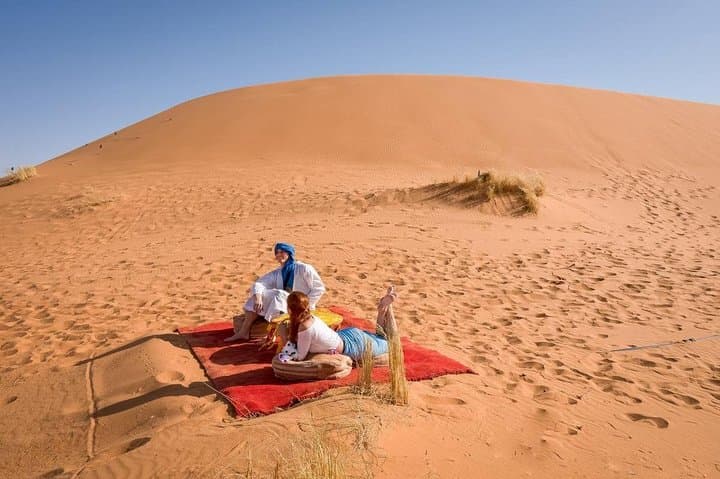
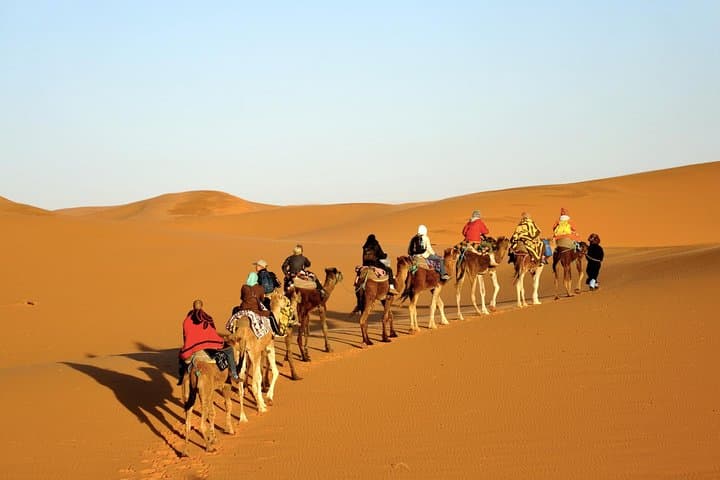
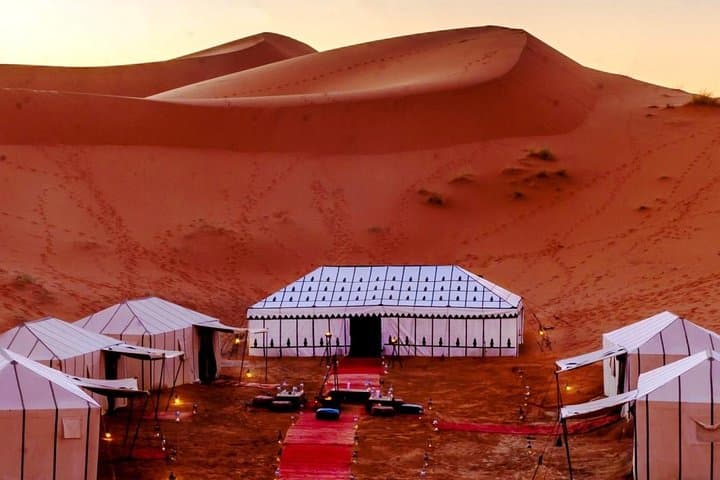
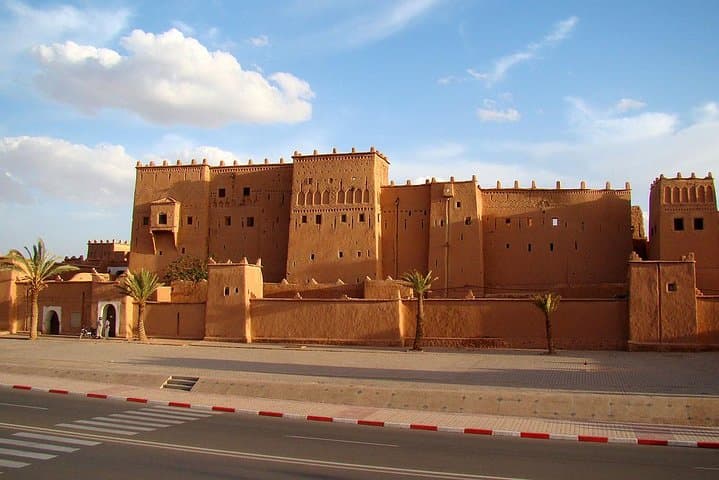
Sunlight flakes off red mud walls as the coach climbs Tizi n'Tichka and the High Atlas folds into a horizon of serrated ridges. By day two the landscape opens into palm-lined gorges and crumbling kasbahs; by sunset Erg Chebbi's dunes throw long, orange shadows that dare you to climb them. A camel train eases you across soft crests, and at night a desert camp becomes a small constellation of canvas and conversation under cold, clear air.
Sunlight flakes off red mud walls as the coach climbs Tizi n'Tichka and the High Atlas folds into a horizon of serrated ridges. By day two the landscape opens into palm-lined gorges and crumbling kasbahs; by sunset Erg Chebbi's dunes throw long, orange shadows that dare you to climb them. A camel train eases you across soft crests, and at night a desert camp becomes a small constellation of canvas and conversation under cold, clear air.
This route follows old caravan corridors — villages like Ait Benhaddou grew where trade and defense met, its earthen ksar preserved as UNESCO heritage and a frequent film location. Geologically, the Sahara here is living sand: wind, occasional flash flood, and seasonal rain shape dunes that can reach 150 meters. Culturally, Touareg and Amazigh music and hospitality are central; meals at camp often reflect centuries of trade in spices and dates.
Expect long drives broken by short hikes and visits: Todra Gorge's limestone walls, the rose fields of Kalaat M'Gouna, and the Dades Valley's sculpted cliffs. The camel ride to camp takes an hour or more depending on your dune destination; tents are traditional-style but comfortable.
Practical guidance: travel light for the camel, carry sun protection and layered clothing for cool nights, and bring sufficient water — the desert's dry air accelerates dehydration. Plan for early starts over mountain passes, and allow extra time for photo stops. This tour mixes cultural stops, geology, and genuine desert time — it’s immersive, straightforward, and physically accessible for most travelers.