
Marrakech to Fes: 3-Day Desert Odyssey through Ait Ben Haddou and Erg Chebbi
Cross the High Atlas, explore the UNESCO kasbah of Ait Ben Haddou, and sleep beneath Erg Chebbi’s dunes on this compact three-day journey from Marrakech to Fes. Expect long drives, short walks through villages, and a camel ride into a Berber camp.
An Adventure In Marrakech.
Cross the High Atlas, explore the UNESCO kasbah of Ait Ben Haddou, and sleep beneath Erg Chebbi’s dunes on this compact three-day journey from Marrakech to Fes. Expect long drives, short walks through villages, and a camel ride into a Berber camp.
Read the full experience
You climb out of Marrakech before dawn and the High Atlas unfolds like a changing map — ochre villages, switchbacks that crest the Tizi-n-Tichka at 2,260 m, and a thinning of pines into sun-baked rock.
You climb out of Marrakech before dawn and the High Atlas unfolds like a changing map — ochre villages, switchbacks that crest the Tizi-n-Tichka at 2,260 m, and a thinning of pines into sun-baked rock.
This three-day crossing threads Morocco’s geography and history: Ait Ben Haddou’s mud-brick kasbahs (UNESCO-listed and familiar to film crews), the palm-lined Ziz Valley, and the wind-sculpted Erg Chebbi where camels deliver you to a Berber camp beneath an enormous desert sky. Geologically, the route moves from folded Atlas ranges into the gravel plains and aeolian dunes of southeastern Morocco; culturally it follows caravan and trade corridors where Amazigh (Berber) life and Islamic architecture overlap.
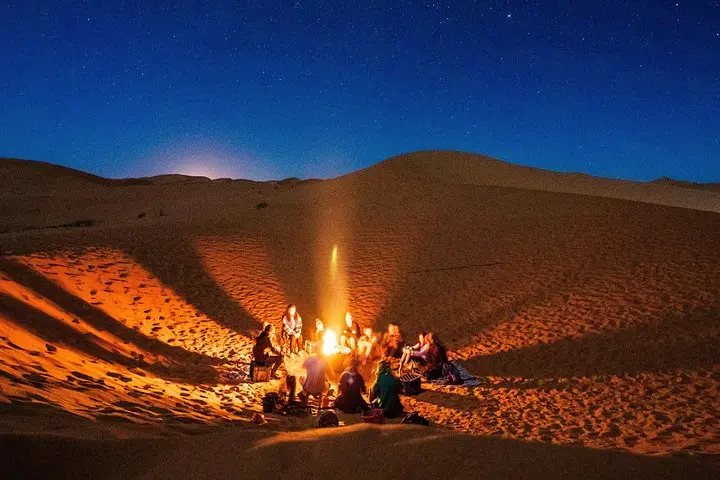
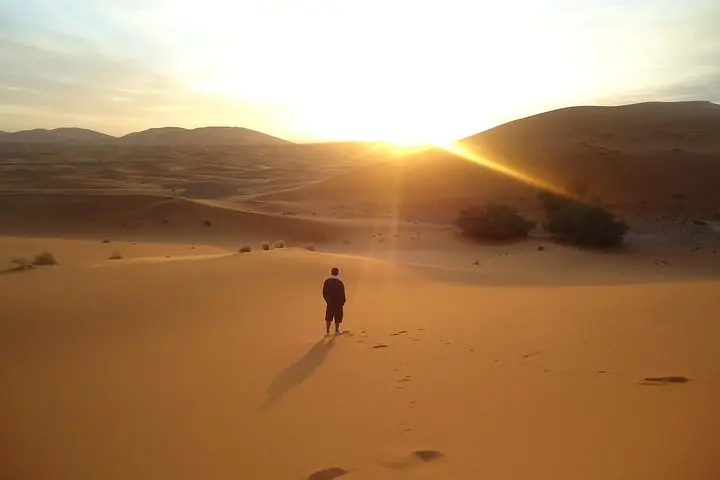
Expect long stretches by comfortable air‑conditioned vehicle, short village walks, a sunset at Dades Gorge, and a camel-led transfer into dunes for a night under canvas with dinner and a star-lit campfire. Sunrise over Erg Chebbi is the payoff — dunes that rise sharply from the plain and shift with every wind.
Practical edge: carry layered clothing for large diurnal temperature swings, sun protection, and at least 2–3 liters of water per day. Footwear should handle sandy slopes and rough village streets. Motion-sickness remedies help on mountain passes and long drives. Respect local customs in villages and tipping norms for guides and camel handlers. The trip is heavy on scenery and cultural stops, light on technical challenge — it’s an immersive introduction to Morocco’s southern landscapes and nomadic-influenced hospitality.
Frequently asked questions
Expect most of each day spent in a comfortable air‑conditioned vehicle; the route covers several hundred kilometers with scenic stops and short walks.
Camps are basic but comfortable — private or shared Berber tents with mattresses, communal dining, and simple wash facilities; expect primitive conditions compared with hotels.
Camel rides are gentle but require balance getting on and off; handlers assist and the rides are typically short (30–60 minutes) between hotel and camp.
Moderate — no technical skills needed, but participants should manage uneven ground, sand walking, and several hours of travel each day.
About This Experience
3t Travel operates guided outdoor trips and adventures with an emphasis on safety, stewardship, and memorable experiences.
Adventure tips
Recommended gear
- Sun hat and UV sunglasses: Protects against intense desert sun during dune walks and panoramic stops.
- Insulated midlayer or fleece: Desert nights and high passes can drop sharply in temperature after sunset.
- Sturdy walking shoes or light hiking boots: Good grip for village streets, rocky viewpoints, and walking on sand slopes.
- Reusable 1–2L water bottle with filter or purifier: Keeps you hydrated between stops and reduces single‑use plastic in remote areas.
Photos of the experience
Related adventures & guides
Read the full experience
You climb out of Marrakech before dawn and the High Atlas unfolds like a changing map — ochre villages, switchbacks that crest the Tizi-n-Tichka at 2,260 m, and a thinning of pines into sun-baked rock.
You climb out of Marrakech before dawn and the High Atlas unfolds like a changing map — ochre villages, switchbacks that crest the Tizi-n-Tichka at 2,260 m, and a thinning of pines into sun-baked rock.
This three-day crossing threads Morocco’s geography and history: Ait Ben Haddou’s mud-brick kasbahs (UNESCO-listed and familiar to film crews), the palm-lined Ziz Valley, and the wind-sculpted Erg Chebbi where camels deliver you to a Berber camp beneath an enormous desert sky. Geologically, the route moves from folded Atlas ranges into the gravel plains and aeolian dunes of southeastern Morocco; culturally it follows caravan and trade corridors where Amazigh (Berber) life and Islamic architecture overlap.
Expect long stretches by comfortable air‑conditioned vehicle, short village walks, a sunset at Dades Gorge, and a camel-led transfer into dunes for a night under canvas with dinner and a star-lit campfire. Sunrise over Erg Chebbi is the payoff — dunes that rise sharply from the plain and shift with every wind.
Practical edge: carry layered clothing for large diurnal temperature swings, sun protection, and at least 2–3 liters of water per day. Footwear should handle sandy slopes and rough village streets. Motion-sickness remedies help on mountain passes and long drives. Respect local customs in villages and tipping norms for guides and camel handlers. The trip is heavy on scenery and cultural stops, light on technical challenge — it’s an immersive introduction to Morocco’s southern landscapes and nomadic-influenced hospitality.
Make a day of it nearby.
Verified experiences and guided adventures in the surrounding area.