THE ADVENTURE COLLECTIVE® · Independent discovery and booking for outdoor travel

A full-day private drive from Marrakech to Essaouira that pairs an argan cooperative visit with independent time in a fortified Atlantic port. Expect a 2½-hour drive, panoramic views, wind-swept beaches, and a medina filled with woodwork and markets.
A full-day private drive from Marrakech to Essaouira that pairs an argan cooperative visit with independent time in a fortified Atlantic port. Expect a 2½-hour drive, panoramic views, wind-swept beaches, and a medina filled with woodwork and markets.
You pull away from Marrakech at first light and the road rolls west through argan forest; the trees lean into the wind as if daring you toward the sea.
Verified experiences and guided adventures in the surrounding area.
Operated by Morocco SM Tours · Essaouira, Marrakesh-Safi
You pull away from Marrakech at first light and the road rolls west through argan forest; the trees lean into the wind as if daring you toward the sea.
After roughly 2½ hours on the coastal road you arrive at a women’s argan cooperative where the slow, manual grind of kernels and the sweet, nutty scent of fresh oil tell the story of a local craft. The minivan then climbs to a panoramic pullout—Essaouira unfurls below, white-washed roofs and the blue Atlantic pushing up against the Portuguese ramparts.
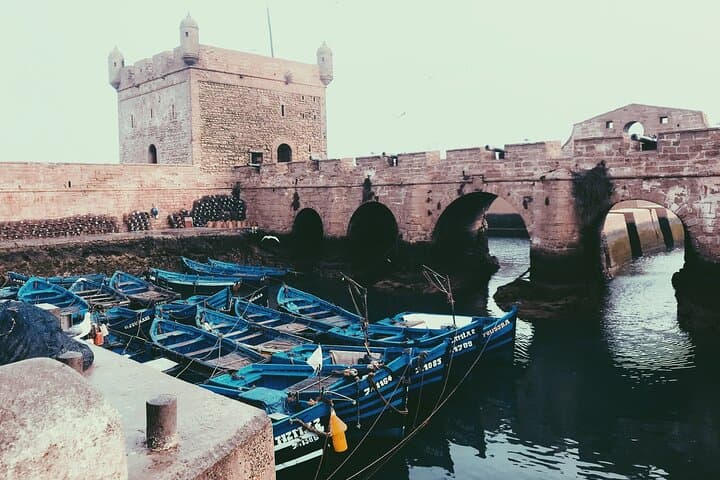
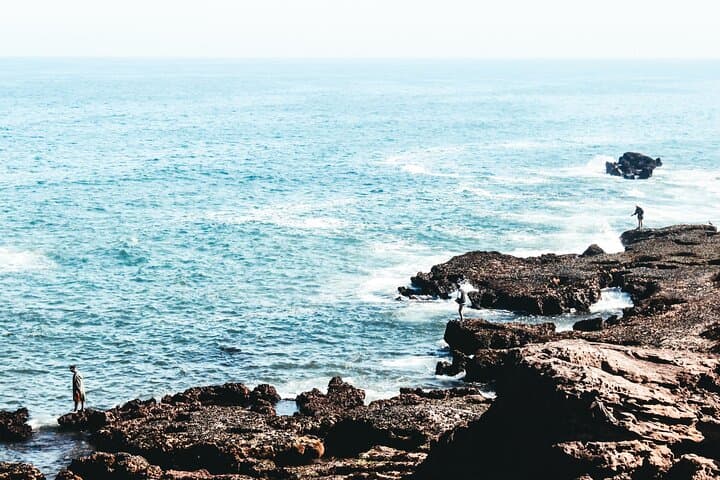
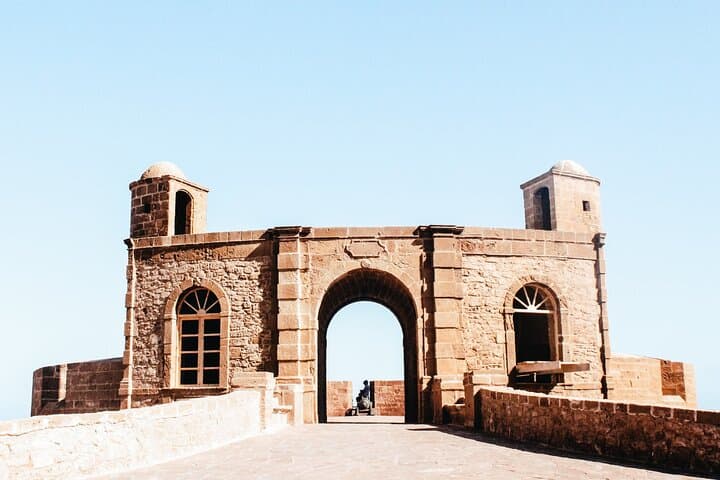
Essaouira (formerly Mogador) carries measurable history: a fortified 16th-century port shaped by Portuguese engineers, later a 19th-century trading hub. Geologically the coastline is broad sands and weathered rock; constant Atlantic winds have sculpted dunes and made the bay a playground for sailors.
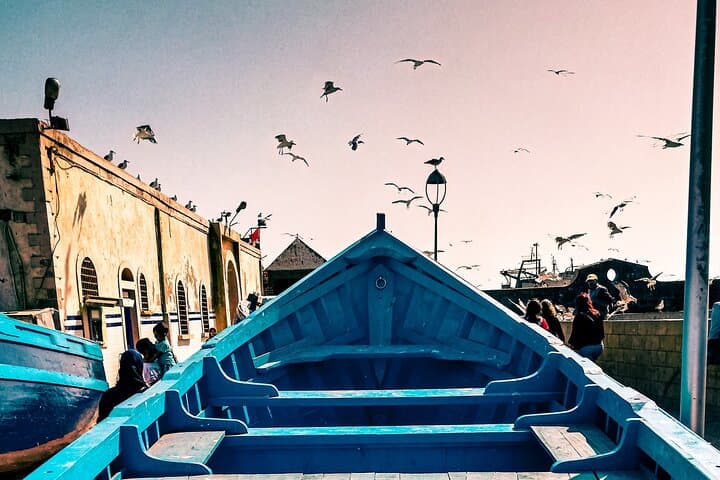
Culturally the city is compact and tactile: a fishing port where boats lean like colorful teeth, a medina of tight alleys and woodworkers’ shops, and a market where argan oil and carved thuya wood are sold by family-run stalls. The wind gives the place personality—kitesurfers and gulls claim the horizon.
Practical guidance: this is a full-day outing (about nine hours) with hotel pickup and transport in an air-conditioned minivan. Expect 2–3 hours of driving each way, two or more hours for unguided exploration, uneven cobbles, and strong coastal wind. Bring layered clothing, sturdy shoes, sunscreen, and cash for cooperatives and small purchases. If you plan to swim, check local conditions—the Atlantic can be deceptively choppy. The trip pairs low exertion with high cultural payoff, perfect for travelers wanting a stretch of seaside Morocco without the overnight logistics.
easy.
9–9.5 hours.
Light fitness; able to walk for short periods on uneven cobblestones and climb stairs in the medina.
Plan on about 2 to 2½ hours each way depending on traffic and stops; the total excursion is roughly nine hours including exploration time.
Lunch is not included—visitors can choose from seaside restaurants, market stalls, or cafes in the medina; bring cash for small vendors.
Yes—there’s a wide sandy beach, but the Atlantic can be windy and have strong currents; check local conditions and swim near lifeguarded or busy areas after lunch.
Yes—this private tour accommodates travelers of all ages; the itinerary notes stroller access and infant seats are available, but expect walking on uneven surfaces in the medina.
Essaouira—once called Mogador—was fortified by Portuguese designers in the 16th century and later developed as an international trading port; its medina is recognized for its historic urban layout.
The argan ecosystem is endemic and cooperatives aim to sustainably harvest kernels; visitors should avoid taking argan seeds or disturbing trees and support reputable cooperatives.
Morocco SM Tours operates guided outdoor trips and adventures with an emphasis on safety, stewardship, and memorable experiences.
You pull away from Marrakech at first light and the road rolls west through argan forest; the trees lean into the wind as if daring you toward the sea.
You pull away from Marrakech at first light and the road rolls west through argan forest; the trees lean into the wind as if daring you toward the sea.
After roughly 2½ hours on the coastal road you arrive at a women’s argan cooperative where the slow, manual grind of kernels and the sweet, nutty scent of fresh oil tell the story of a local craft. The minivan then climbs to a panoramic pullout—Essaouira unfurls below, white-washed roofs and the blue Atlantic pushing up against the Portuguese ramparts.
Essaouira (formerly Mogador) carries measurable history: a fortified 16th-century port shaped by Portuguese engineers, later a 19th-century trading hub. Geologically the coastline is broad sands and weathered rock; constant Atlantic winds have sculpted dunes and made the bay a playground for sailors.
Culturally the city is compact and tactile: a fishing port where boats lean like colorful teeth, a medina of tight alleys and woodworkers’ shops, and a market where argan oil and carved thuya wood are sold by family-run stalls. The wind gives the place personality—kitesurfers and gulls claim the horizon.
Practical guidance: this is a full-day outing (about nine hours) with hotel pickup and transport in an air-conditioned minivan. Expect 2–3 hours of driving each way, two or more hours for unguided exploration, uneven cobbles, and strong coastal wind. Bring layered clothing, sturdy shoes, sunscreen, and cash for cooperatives and small purchases. If you plan to swim, check local conditions—the Atlantic can be deceptively choppy. The trip pairs low exertion with high cultural payoff, perfect for travelers wanting a stretch of seaside Morocco without the overnight logistics.