THE ADVENTURE COLLECTIVE® · Independent discovery and booking for outdoor travel

Cross the High Atlas on a private day trip from Marrakech to the UNESCO-listed Ait Benhaddou and film hub Ouarzazate. Expect high mountain passes, mud-brick ksars, and a full day of scenic driving and short cultural walks.
Cross the High Atlas on a private day trip from Marrakech to the UNESCO-listed Ait Benhaddou and film hub Ouarzazate. Expect high mountain passes, mud-brick ksars, and a full day of scenic driving and short cultural walks.
You leave Marrakech before the city fully wakes, the minibus slipping into orchard-lined valleys as the High Atlas rises like a wall ahead. Tizi n'Tichka squeezes the road through serrated passes at 2,269 m; hairpin turns frame villages with flat-roofed houses and terraced fields. The air thins, the rocks change from red to ochre, and the landscape exhales into semi-desert as you descend toward the film-ready clay ramparts of Ait Benhaddou.
Verified experiences and guided adventures in the surrounding area.
Operated by Morocco Tours Services · Ouarzazate, Drâa-Tafilalet
You leave Marrakech before the city fully wakes, the minibus slipping into orchard-lined valleys as the High Atlas rises like a wall ahead. Tizi n'Tichka squeezes the road through serrated passes at 2,269 m; hairpin turns frame villages with flat-roofed houses and terraced fields. The air thins, the rocks change from red to ochre, and the landscape exhales into semi-desert as you descend toward the film-ready clay ramparts of Ait Benhaddou.
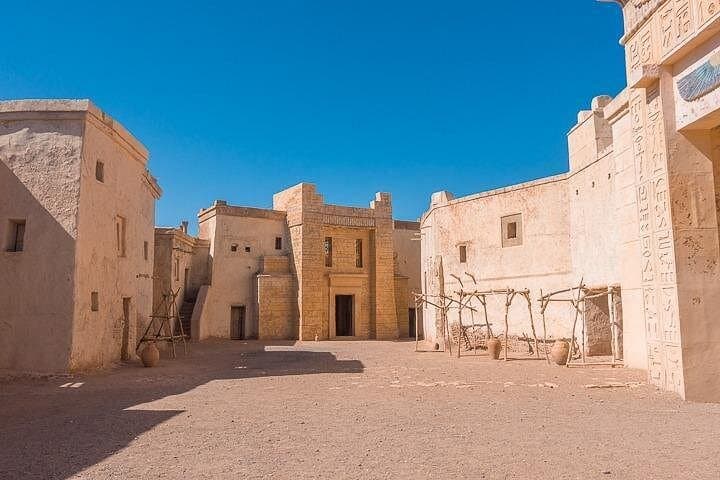
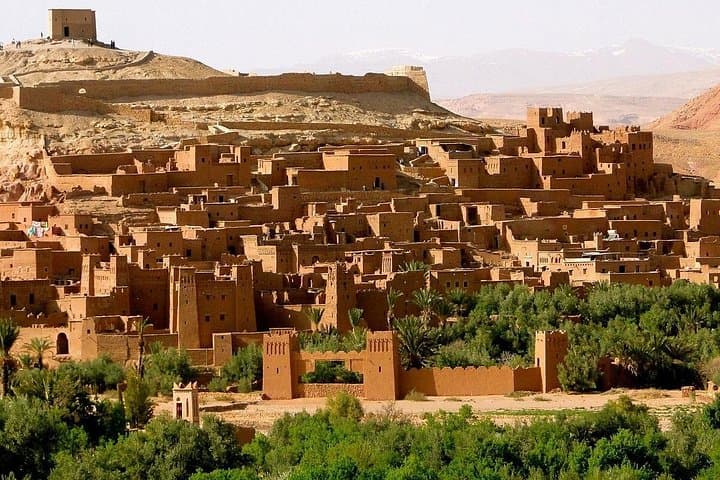
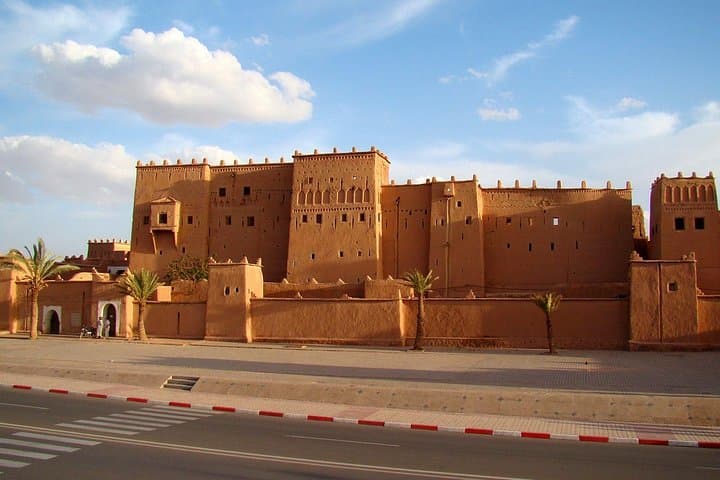
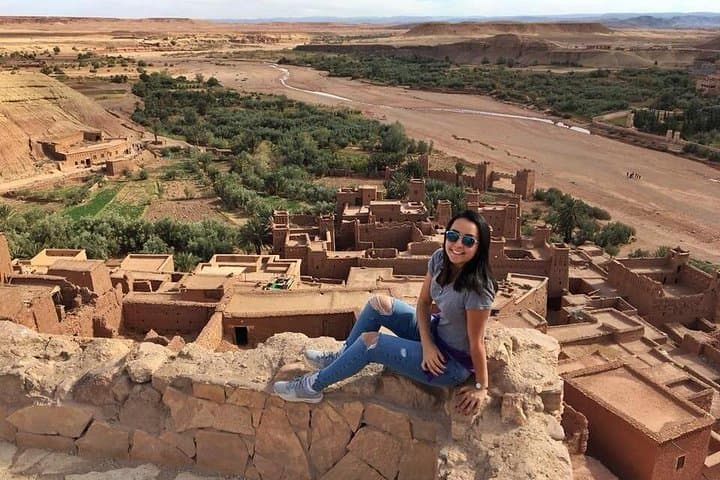
Ait Benhaddou is a compact ksar of mud-brick towers and winding alleys—a living example of pre-Saharan architecture and a former caravan stop on the trans-Saharan trade routes. Nearby Ouarzazate grew around a kasbah and later a film industry: Atlas Studios and Taourirt Kasbah reveal the area’s dual history as both a local seat of power and North African Hollywood.
Geology here tells the transition from folded mountain limestone to eroded red clay plains; the route crosses river gorges and salt flats, and the villages reflect Berber life centered on water access and terraced agriculture.
Practically, expect a long but easy day mostly by vehicle with short walks at sites. Bring sun protection, a scarf for dust, cash for small-entry guides, and comfortable shoes for uneven ksar alleys. Start early to avoid midday heat and to catch the best light for photos—Ait Benhaddou’s walls glow late afternoon. The trip is accessible to most travelers but involves several hours in transit; plan for a full-day return to Marrakech.
easy.
6–9 hours.
Suitable for most fitness levels; long periods in vehicle with short, easy walks at sites.
Expect roughly 3–4 hours each way depending on stops and traffic; total trip time is typically 6–9 hours.
Entry to the ksar is free; guided walks inside often require a small local guide fee paid on-site (around €1–€3).
Yes—this private day trip is rated easy and suitable for all ages; it involves extended vehicle time but only short, low-impact walks.
Most tours include a stop for lunch but not all meals; confirm with the operator—bringing snacks and cash for lunch options is wise.
Ait Benhaddou began as a fortified caravan stop on trans-Saharan trade routes; Ouarzazate later developed into a regional administrative center and international film hub.
Earthen architecture is vulnerable to erosion and tourism pressure; stick to paths, avoid climbing fragile walls, and use local guides to support community stewardship.
Morocco Tours Services operates guided outdoor trips and adventures with an emphasis on safety, stewardship, and memorable experiences.
You leave Marrakech before the city fully wakes, the minibus slipping into orchard-lined valleys as the High Atlas rises like a wall ahead. Tizi n'Tichka squeezes the road through serrated passes at 2,269 m; hairpin turns frame villages with flat-roofed houses and terraced fields. The air thins, the rocks change from red to ochre, and the landscape exhales into semi-desert as you descend toward the film-ready clay ramparts of Ait Benhaddou.
You leave Marrakech before the city fully wakes, the minibus slipping into orchard-lined valleys as the High Atlas rises like a wall ahead. Tizi n'Tichka squeezes the road through serrated passes at 2,269 m; hairpin turns frame villages with flat-roofed houses and terraced fields. The air thins, the rocks change from red to ochre, and the landscape exhales into semi-desert as you descend toward the film-ready clay ramparts of Ait Benhaddou.
Ait Benhaddou is a compact ksar of mud-brick towers and winding alleys—a living example of pre-Saharan architecture and a former caravan stop on the trans-Saharan trade routes. Nearby Ouarzazate grew around a kasbah and later a film industry: Atlas Studios and Taourirt Kasbah reveal the area’s dual history as both a local seat of power and North African Hollywood.
Geology here tells the transition from folded mountain limestone to eroded red clay plains; the route crosses river gorges and salt flats, and the villages reflect Berber life centered on water access and terraced agriculture.
Practically, expect a long but easy day mostly by vehicle with short walks at sites. Bring sun protection, a scarf for dust, cash for small-entry guides, and comfortable shoes for uneven ksar alleys. Start early to avoid midday heat and to catch the best light for photos—Ait Benhaddou’s walls glow late afternoon. The trip is accessible to most travelers but involves several hours in transit; plan for a full-day return to Marrakech.