THE ADVENTURE COLLECTIVE® · Independent discovery and booking for outdoor travel

Drive over the High Atlas from Marrakech to the storied Kasbah of Ait Ben Haddou, then visit Ouarzazate’s film studios. This full-day tour pairs dramatic mountain roads with guided cultural exploration of an iconic fortified village.
Drive over the High Atlas from Marrakech to the storied Kasbah of Ait Ben Haddou, then visit Ouarzazate’s film studios. This full-day tour pairs dramatic mountain roads with guided cultural exploration of an iconic fortified village.
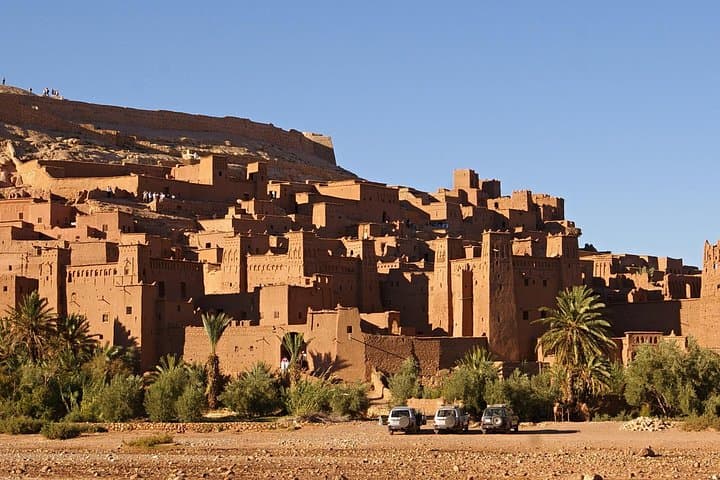
A long highway unwinds from the ochre alleys of Marrakech, climbing toward the High Atlas where air thins and the road curves like a ribbon across sun-baked slopes. Windows frame Berber villages clinging to hillsides, occasional mule tracks winding toward pale stone houses. By midmorning the minibus descends into a river valley and the mud-brick walls of Ait Ben Haddou appear—stacked towers and narrow lanes rising from the plain as if built to challenge the desert.
Verified experiences and guided adventures in the surrounding area.
Operated by Amodou Tours · Ait Ben Haddou, Drâa-Tafilalet
A long highway unwinds from the ochre alleys of Marrakech, climbing toward the High Atlas where air thins and the road curves like a ribbon across sun-baked slopes. Windows frame Berber villages clinging to hillsides, occasional mule tracks winding toward pale stone houses. By midmorning the minibus descends into a river valley and the mud-brick walls of Ait Ben Haddou appear—stacked towers and narrow lanes rising from the plain as if built to challenge the desert.
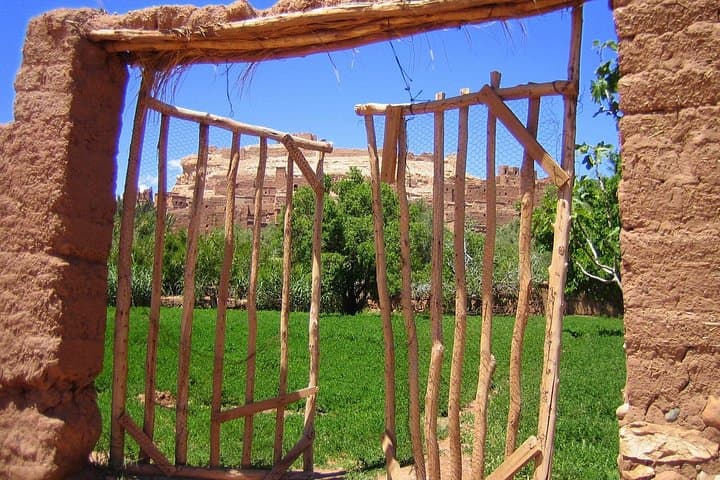
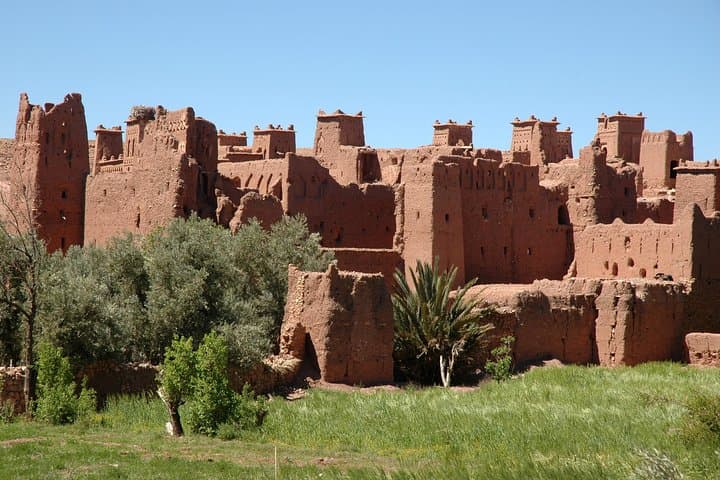
The kasbah is centuries old, a fortified village that grew where caravans paused between Marrakech and the Sahara. Geologically, the area sits on red clay deposits and alluvial fans carved by seasonal torrents; structures are compacted earth and palm-timber beams, which is why filmmakers favor its film-friendly, timeless profiles. Nearby Ouarzazate developed as a film-production hub in the 20th century, with studios and sets that tell a parallel story of modern storytelling grafted onto traditional architecture.
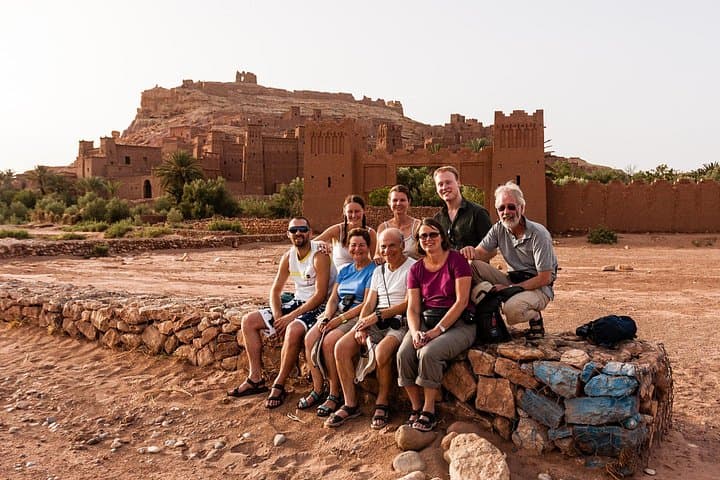
The guided visit moves at a practical pace: alleyways, a small kasbah museum, and viewpoints over the riverbed. Expect dusty paths, uneven steps and strong sun. Travel time from Marrakech is roughly 3–4 hours each way, making for an 8–10 hour day. Guides translate local history and point out film locations while you photograph façades and market stalls.
Bring layered clothing for altitude swings, sun protection, and small bills for tea or gratuities. Start early to avoid afternoon heat and to catch softer light on the adobe walls. The trip is culturally rich, straightforward to book, and gives a compact cross-section of Atlas highland life and cinematic landscapes.
easy.
8–10 hours.
Suitable for most fitness levels; involves short walks on uneven ground and stair-like alleys.
Expect approximately 3–4 hours each way across the High Atlas depending on traffic and stops.
No—walking in Ait Ben Haddou involves short, uneven sections and steps but no technical climbing.
Guided entry of the site is included in most tours, but check the operator’s specifics for museum or studio admissions in Ouarzazate.
Yes; the itinerary is family-friendly, though parents should watch children on narrow alleys and steps.
Ait Ben Haddou thrived as a caravan stop on trans-Saharan routes; its compact earthen architecture reflects centuries of trade and local building techniques.
The site is protected as an example of traditional earthen construction and is subject to conservation efforts that limit intrusive development; visitors should stick to marked paths and avoid touching fragile walls.
Amodou Tours operates guided outdoor trips and adventures with an emphasis on safety, stewardship, and memorable experiences.
A long highway unwinds from the ochre alleys of Marrakech, climbing toward the High Atlas where air thins and the road curves like a ribbon across sun-baked slopes. Windows frame Berber villages clinging to hillsides, occasional mule tracks winding toward pale stone houses. By midmorning the minibus descends into a river valley and the mud-brick walls of Ait Ben Haddou appear—stacked towers and narrow lanes rising from the plain as if built to challenge the desert.
A long highway unwinds from the ochre alleys of Marrakech, climbing toward the High Atlas where air thins and the road curves like a ribbon across sun-baked slopes. Windows frame Berber villages clinging to hillsides, occasional mule tracks winding toward pale stone houses. By midmorning the minibus descends into a river valley and the mud-brick walls of Ait Ben Haddou appear—stacked towers and narrow lanes rising from the plain as if built to challenge the desert.
The kasbah is centuries old, a fortified village that grew where caravans paused between Marrakech and the Sahara. Geologically, the area sits on red clay deposits and alluvial fans carved by seasonal torrents; structures are compacted earth and palm-timber beams, which is why filmmakers favor its film-friendly, timeless profiles. Nearby Ouarzazate developed as a film-production hub in the 20th century, with studios and sets that tell a parallel story of modern storytelling grafted onto traditional architecture.
The guided visit moves at a practical pace: alleyways, a small kasbah museum, and viewpoints over the riverbed. Expect dusty paths, uneven steps and strong sun. Travel time from Marrakech is roughly 3–4 hours each way, making for an 8–10 hour day. Guides translate local history and point out film locations while you photograph façades and market stalls.
Bring layered clothing for altitude swings, sun protection, and small bills for tea or gratuities. Start early to avoid afternoon heat and to catch softer light on the adobe walls. The trip is culturally rich, straightforward to book, and gives a compact cross-section of Atlas highland life and cinematic landscapes.