THE ADVENTURE COLLECTIVE® · Independent discovery and booking for outdoor travel

This full-day loop from Marrakech pairs the rocky Agafay Desert with Lake Takerkoust and a guided 1.5-hour walk around the mountain village of Imlil. Expect varied terrain, local cuisine, and clear views of the High Atlas and Jbel Toubkal on a well-paced day trip.
This full-day loop from Marrakech pairs the rocky Agafay Desert with Lake Takerkoust and a guided 1.5-hour walk around the mountain village of Imlil. Expect varied terrain, local cuisine, and clear views of the High Atlas and Jbel Toubkal on a well-paced day trip.
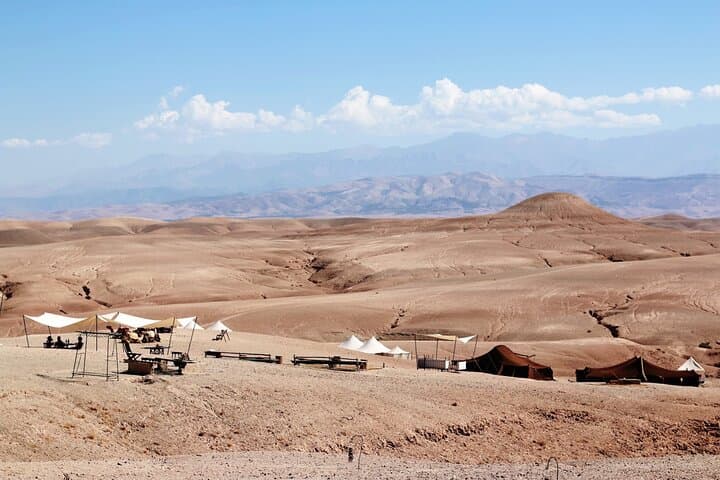
You leave the ochre pulse of Marrakech before dawn and the road opens into stony hills that smell of dust and thyme. Agafay’s lunar slopes rise and fall like wind-sculpted waves, with the High Atlas pinning the horizon and Jbel Toubkal often capped in winter snow.
Verified experiences and guided adventures in the surrounding area.
Operated by Toubkal Guide · Marrakech, Marrakech-Safi
You leave the ochre pulse of Marrakech before dawn and the road opens into stony hills that smell of dust and thyme. Agafay’s lunar slopes rise and fall like wind-sculpted waves, with the High Atlas pinning the horizon and Jbel Toubkal often capped in winter snow.
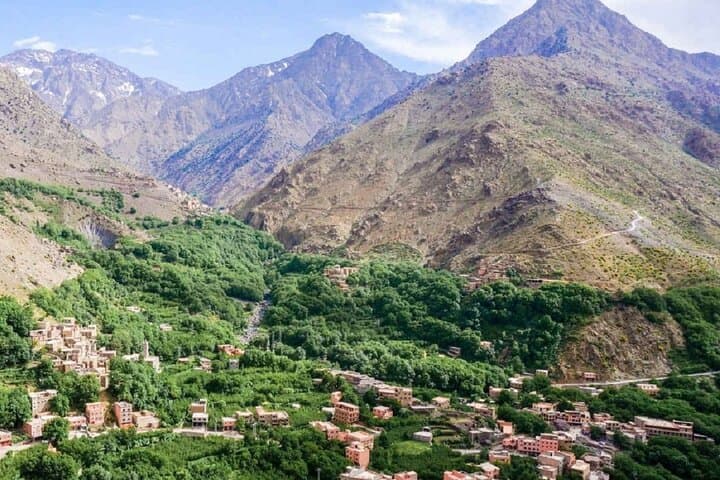
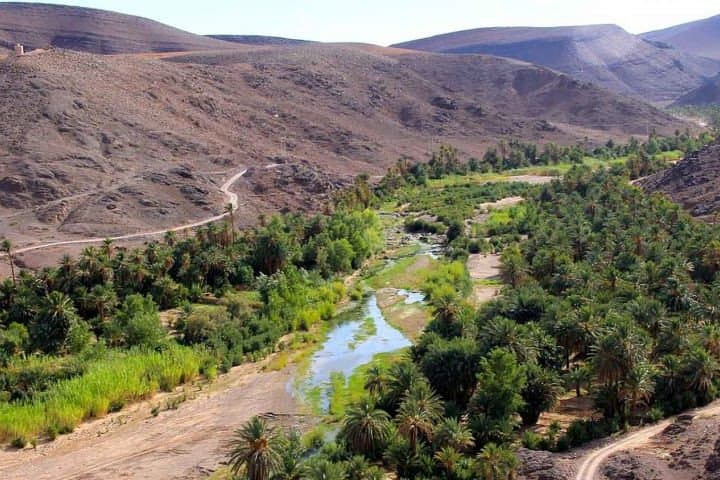
The route stitches together distinct landscapes: the barren, granite-strewn Agafay where quad tracks cut bright scars; the placid sweep of Lake Takerkoust, reflecting sky and barley fields; and the narrow lanes leading up to Imlil, a Berber village perched below steep valleys. These places sit on routes that once linked mountain hamlets and Marrakech’s markets, and the Atlas itself is a young, uplifted spine of folded rock and scree carved by seasonal torrents.
Culture here is immediate — you’ll sip mint tea offered by hosts whose families farm terraces and herd goats, and if you go on a Saturday you’ll find Asni’s weekly souk, tradespeople and tapestry sellers trading in voices shaped by the mountains.
Practical side: the day is long — expect about seven hours including drives and a 1.5-hour guided walk around Imlil with uneven trails and some short climbs. Wear sturdy shoes, sun protection, and layers; bring cash for market purchases and tips. The trip runs year-round, but light changes everything — winter brings snowbacked peaks, summer brings clear desert heat.
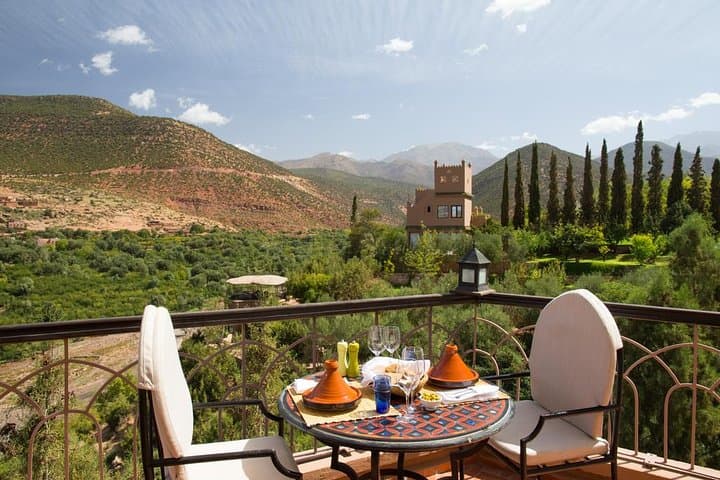
Plan pickup from your Marrakech riad, carry at least 1–1.5 liters of water, and leave room for a tagine lunch at a local guesthouse. This is a compact crash course in Atlas geology, Berber life, and accessible mountain walking.
moderate.
7 hours.
Light to moderate fitness; able to walk 1–2 hours on uneven terrain and manage short climbs.
The scheduled walk is about 1.5 hours on mostly well-marked footpaths with short climbs and views over the Mizane Valley.
Yes — a local guesthouse lunch typically serves tajine or couscous, with vegetarian options available if requested in advance.
The trip is generally family-friendly but the mountain walk involves uneven ground; less-mobile travelers can often stay in the village while others walk.
Bring some cash (Moroccan dirham) for the market, small purchases, and tipping; major hotels accept cards but rural stalls often do not.
The Atlas Mountains have long been home to Berber communities whose terraces and trading routes linked rural valleys to Marrakech’s markets for centuries.
Water levels at Lake Takerkoust and grazing pressures in foothill valleys are sensitive; stick to marked paths, avoid single-use plastics, and support local guides and guesthouses.
Toubkal Guide operates guided outdoor trips and adventures with an emphasis on safety, stewardship, and memorable experiences.
You leave the ochre pulse of Marrakech before dawn and the road opens into stony hills that smell of dust and thyme. Agafay’s lunar slopes rise and fall like wind-sculpted waves, with the High Atlas pinning the horizon and Jbel Toubkal often capped in winter snow.
You leave the ochre pulse of Marrakech before dawn and the road opens into stony hills that smell of dust and thyme. Agafay’s lunar slopes rise and fall like wind-sculpted waves, with the High Atlas pinning the horizon and Jbel Toubkal often capped in winter snow.
The route stitches together distinct landscapes: the barren, granite-strewn Agafay where quad tracks cut bright scars; the placid sweep of Lake Takerkoust, reflecting sky and barley fields; and the narrow lanes leading up to Imlil, a Berber village perched below steep valleys. These places sit on routes that once linked mountain hamlets and Marrakech’s markets, and the Atlas itself is a young, uplifted spine of folded rock and scree carved by seasonal torrents.
Culture here is immediate — you’ll sip mint tea offered by hosts whose families farm terraces and herd goats, and if you go on a Saturday you’ll find Asni’s weekly souk, tradespeople and tapestry sellers trading in voices shaped by the mountains.
Practical side: the day is long — expect about seven hours including drives and a 1.5-hour guided walk around Imlil with uneven trails and some short climbs. Wear sturdy shoes, sun protection, and layers; bring cash for market purchases and tips. The trip runs year-round, but light changes everything — winter brings snowbacked peaks, summer brings clear desert heat.
Plan pickup from your Marrakech riad, carry at least 1–1.5 liters of water, and leave room for a tagine lunch at a local guesthouse. This is a compact crash course in Atlas geology, Berber life, and accessible mountain walking.