THE ADVENTURE COLLECTIVE® · Independent discovery and booking for outdoor travel

Step out of Marrakech for a calm camel ride across the rocky Agafay Desert, then relax with a traditional Moroccan lunch under desert sky. A short drive from the city, this easy half‑day trip pairs steady camel travel with regional flavors and Atlas views.
Step out of Marrakech for a calm camel ride across the rocky Agafay Desert, then relax with a traditional Moroccan lunch under desert sky. A short drive from the city, this easy half‑day trip pairs steady camel travel with regional flavors and Atlas views.
You leave Marrakech behind and the city’s heat and horns give way to an open, stony plain. The Agafay Desert spreads low and honest—a hamada of crushed rock that shimmers under the sun, with the High Atlas mountains cutting a distant, serrated horizon. A single camel rises and falls beneath you; its steady gait sets the rhythm as the wind scours the ground and the desert dares you to slow down and look.
Verified experiences and guided adventures in the surrounding area.
Operated by mountains desert tours · Marrakech, Marrakech-Safi
You leave Marrakech behind and the city’s heat and horns give way to an open, stony plain. The Agafay Desert spreads low and honest—a hamada of crushed rock that shimmers under the sun, with the High Atlas mountains cutting a distant, serrated horizon. A single camel rises and falls beneath you; its steady gait sets the rhythm as the wind scours the ground and the desert dares you to slow down and look.
Geology here is about bedrock and broken basalt rather than Sahara dunes: flat, moonlike expanses scored by seasonal washes. Historically this area lay along local grazing routes and near seasonal camps used by Amazigh (Berber) families; today small desert camps recreate that hospitality for visitors. Cultural notes: tea is the ritual—mint and sugar offered as welcome—and tajine is the slow, savory centerpiece of any shared meal.
Expect a gentle, one-hour camel ride across uneven, rocky terrain followed by a shaded desert lunch with Moroccan salad, tajine, and fruit. Guides typically speak multiple languages, provide nomadic dress for photos, and handle transport from Marrakech in air-conditioned vehicles. Practical guidance: wear sturdy, closed-toe shoes and sun protection, bring a light layer for late-afternoon breezes, and carry cash for tips or small purchases.
This experience is accessible for most travelers, rich with landscape contrasts and local flavor. Time your visit for late afternoon to catch cooler light and a longer, softer sunset over the plateaus.
easy.
5 hours.
Suitable for most fitness levels; requires ability to mount a camel and sit for about an hour.
The camel portion is about one hour, paced to be steady and suitable for beginners with rest stops as needed.
Yes—pick up and drop off in Marrakech are provided via air‑conditioned vehicle as part of the tour.
Most operators can adapt the meal for common restrictions if notified in advance—report allergies or preferences when booking.
Children can participate but infants may need to sit on laps; organizers often have guidelines by age and weight—check during booking.
Agafay is a stone hamada rather than sandy Sahara; historically it functioned as seasonal grazing land and a crossroads for Amazigh communities below the Atlas.
Water is scarce—minimize single‑use plastics and follow guide instructions about waste; support camps that employ local staff and source food locally.
mountains desert tours operates guided outdoor trips and adventures with an emphasis on safety, stewardship, and memorable experiences.
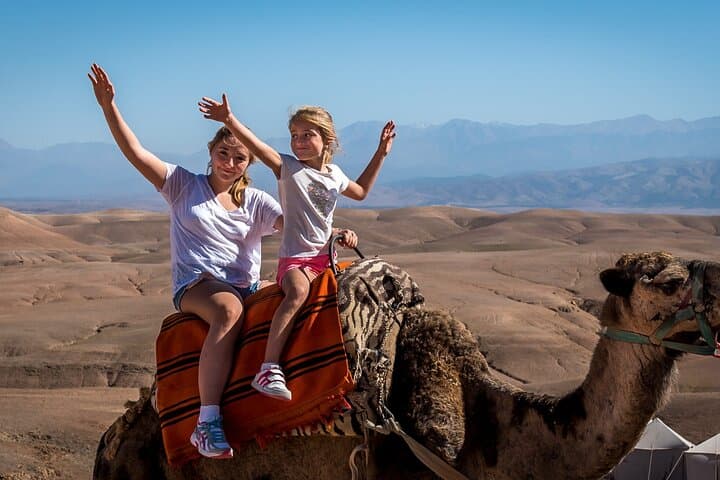
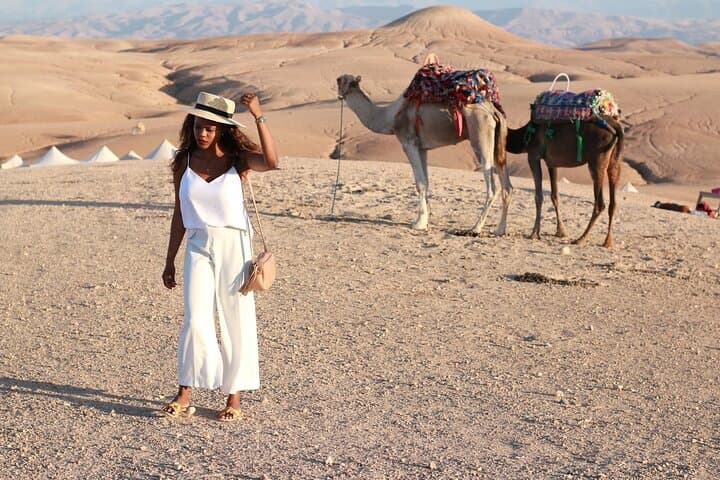
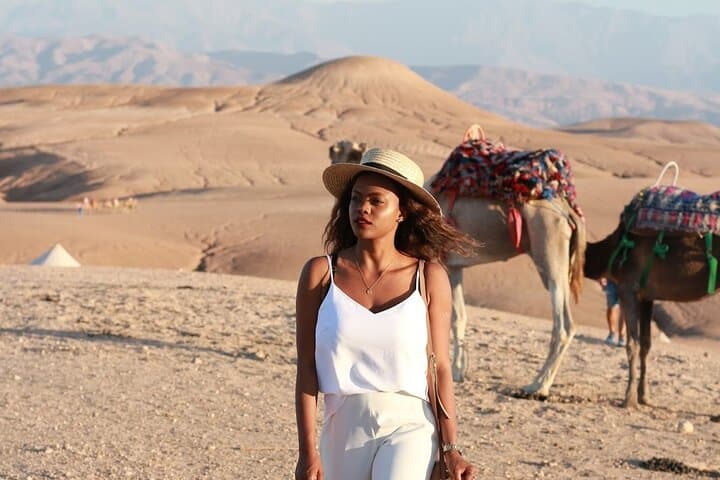
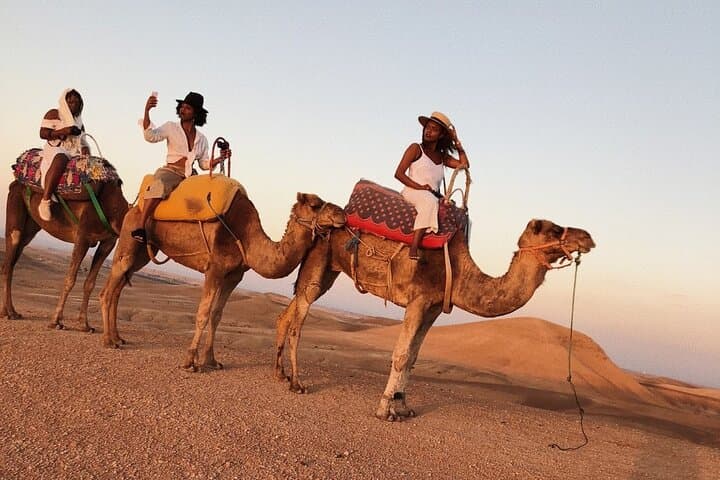
You leave Marrakech behind and the city’s heat and horns give way to an open, stony plain. The Agafay Desert spreads low and honest—a hamada of crushed rock that shimmers under the sun, with the High Atlas mountains cutting a distant, serrated horizon. A single camel rises and falls beneath you; its steady gait sets the rhythm as the wind scours the ground and the desert dares you to slow down and look.
You leave Marrakech behind and the city’s heat and horns give way to an open, stony plain. The Agafay Desert spreads low and honest—a hamada of crushed rock that shimmers under the sun, with the High Atlas mountains cutting a distant, serrated horizon. A single camel rises and falls beneath you; its steady gait sets the rhythm as the wind scours the ground and the desert dares you to slow down and look.
Geology here is about bedrock and broken basalt rather than Sahara dunes: flat, moonlike expanses scored by seasonal washes. Historically this area lay along local grazing routes and near seasonal camps used by Amazigh (Berber) families; today small desert camps recreate that hospitality for visitors. Cultural notes: tea is the ritual—mint and sugar offered as welcome—and tajine is the slow, savory centerpiece of any shared meal.
Expect a gentle, one-hour camel ride across uneven, rocky terrain followed by a shaded desert lunch with Moroccan salad, tajine, and fruit. Guides typically speak multiple languages, provide nomadic dress for photos, and handle transport from Marrakech in air-conditioned vehicles. Practical guidance: wear sturdy, closed-toe shoes and sun protection, bring a light layer for late-afternoon breezes, and carry cash for tips or small purchases.
This experience is accessible for most travelers, rich with landscape contrasts and local flavor. Time your visit for late afternoon to catch cooler light and a longer, softer sunset over the plateaus.