THE ADVENTURE COLLECTIVE® · Independent discovery and booking for outdoor travel

Escape the city for a full day on Morocco’s southern Atlantic coast. This guided excursion pairs Crocoparc and a Kasbah viewpoint with a marina lunch and a chance to visit an argan cooperative.
Escape the city for a full day on Morocco’s southern Atlantic coast. This guided excursion pairs Crocoparc and a Kasbah viewpoint with a marina lunch and a chance to visit an argan cooperative.
You leave Marrakech before dawn and watch the atlas foothills recede as the road opens toward the Atlantic. The sun climbs higher and the landscape shifts from red ochre plains to low scrub and cork oak, the air subtly salty by the time you reach Agadir’s broad bay.
Verified experiences and guided adventures in the surrounding area.
Operated by CLICK EXCURSIONS · Agadir, Souss-Massa
You leave Marrakech before dawn and watch the atlas foothills recede as the road opens toward the Atlantic. The sun climbs higher and the landscape shifts from red ochre plains to low scrub and cork oak, the air subtly salty by the time you reach Agadir’s broad bay.
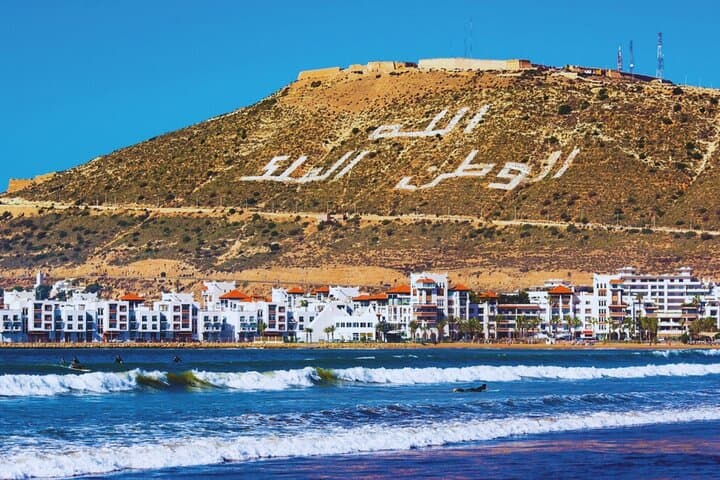
Agadir’s name has Phoenician and Berber roots and nods to its role as a fortified store-village; the ruined Kasbah Oufella on a 236-meter ridge still marks that strategic past, a raw silhouette against the sea. Geologically the coast is recent—soft sedimentary beds carved by wind and the Atlantic’s tides. Culture here blends Amazigh (Berber) traditions with fishing-town rhythms: argan cooperatives, lively souks, and a compact museum preserving local jewellery, pottery and woodcraft.
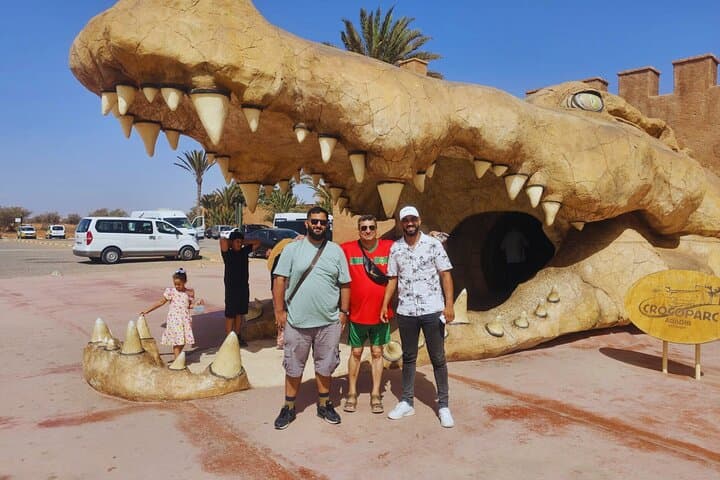
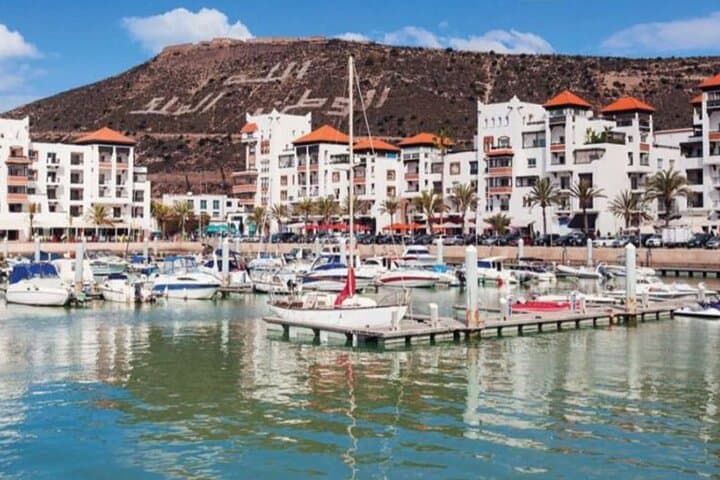
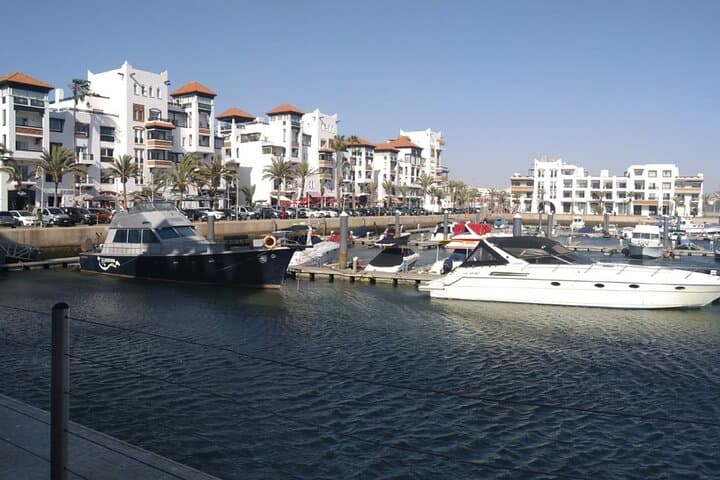
Stops typically include Crocoparc — a managed Nile crocodile park — the Kasbah viewpoint, a marina-side lunch, the long sweep of Agadir Beach, the Valley of the Birds and an argan cooperative. Each site gives a different texture: the zoo’s geothermal pools, the Kasbah’s wind-honed stone, the busy harbor and low dunes where the ocean pushes in and out.
Practicalities: expect a long day (approximately 3–4 hours each way by road, depending on traffic), an early start and several short walks on uneven surfaces. Bring sunscreen, a refillable water bottle, comfortable shoes for the Kasbah and beach, and some cash for small purchases. The tour is accessible for most fitness levels but includes brief climbs and steps. Time your visit to avoid midday heat in summer and listen to your guide for local etiquette at cooperatives and religious sites.
easy.
12 hours.
Suitable for most fitness levels; requires short walks and stair/climb at the Kasbah and boardwalks.
Yes — the tour includes hotel pickup and drop-off; confirm your pickup point at booking.
Lunch is typically not included; the itinerary stops at the marina where you can purchase fresh fish and local dishes.
The vehicle and several sites are accessible, but expect uneven terrain at the Kasbah and some steps at attractions.
Admission is generally not included; check the tour provider’s details and bring cash or card for entry fees.
Agadir was rebuilt after the devastating 1960 earthquake; the Kasbah Oufella overlooks a modern grid city whose seaside development accelerated in the late 20th century.
Argan trees are protected in the region and local cooperatives promote sustainable harvests; visitors should avoid disturbing wildlife enclosures and support certified cooperatives.
CLICK EXCURSIONS operates guided outdoor trips and adventures with an emphasis on safety, stewardship, and memorable experiences.
You leave Marrakech before dawn and watch the atlas foothills recede as the road opens toward the Atlantic. The sun climbs higher and the landscape shifts from red ochre plains to low scrub and cork oak, the air subtly salty by the time you reach Agadir’s broad bay.
You leave Marrakech before dawn and watch the atlas foothills recede as the road opens toward the Atlantic. The sun climbs higher and the landscape shifts from red ochre plains to low scrub and cork oak, the air subtly salty by the time you reach Agadir’s broad bay.
Agadir’s name has Phoenician and Berber roots and nods to its role as a fortified store-village; the ruined Kasbah Oufella on a 236-meter ridge still marks that strategic past, a raw silhouette against the sea. Geologically the coast is recent—soft sedimentary beds carved by wind and the Atlantic’s tides. Culture here blends Amazigh (Berber) traditions with fishing-town rhythms: argan cooperatives, lively souks, and a compact museum preserving local jewellery, pottery and woodcraft.
Stops typically include Crocoparc — a managed Nile crocodile park — the Kasbah viewpoint, a marina-side lunch, the long sweep of Agadir Beach, the Valley of the Birds and an argan cooperative. Each site gives a different texture: the zoo’s geothermal pools, the Kasbah’s wind-honed stone, the busy harbor and low dunes where the ocean pushes in and out.
Practicalities: expect a long day (approximately 3–4 hours each way by road, depending on traffic), an early start and several short walks on uneven surfaces. Bring sunscreen, a refillable water bottle, comfortable shoes for the Kasbah and beach, and some cash for small purchases. The tour is accessible for most fitness levels but includes brief climbs and steps. Time your visit to avoid midday heat in summer and listen to your guide for local etiquette at cooperatives and religious sites.