THE ADVENTURE COLLECTIVE® · Independent discovery and booking for outdoor travel

Lift off at dawn for a calm, low-altitude sweep over palm groves and red dust plains, then refuel with a traditional Berber breakfast. This early-morning balloon flight from Marrakech pairs cinematic light with a short, accessible adventure for most travelers.
Lift off at dawn for a calm, low-altitude sweep over palm groves and red dust plains, then refuel with a traditional Berber breakfast. This early-morning balloon flight from Marrakech pairs cinematic light with a short, accessible adventure for most travelers.
Before dawn, the balloon field outside Marrakech feels like a quiet workshop—crews unfurl fabric, burners hiss, and the desert air holds a chill that the coming sun will burn off.
Verified experiences and guided adventures in the surrounding area.
Operated by Morocco Guide Smile · Marrakech, Marrakech-Safi
Before dawn, the balloon field outside Marrakech feels like a quiet workshop—crews unfurl fabric, burners hiss, and the desert air holds a chill that the coming sun will burn off.
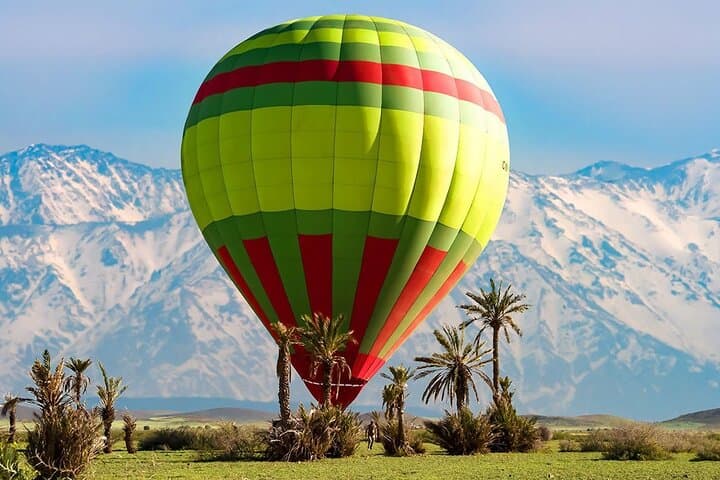
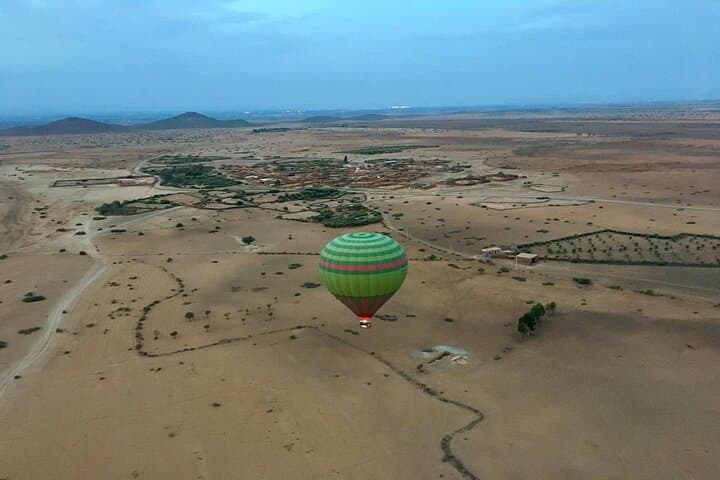
Passengers board baskets as the horizon brightens, lifting gently over palm groves, red dust plains and small villages. The flight typically covers 9–15 miles (15–25 km) depending on winds, offering wide, low-angle views where irrigation lines and orchards sketch living maps below. Pilots use thermal layers and prevailing morning breezes to navigate; the ride is serene, the silence interrupted only by short bursts of flame and the occasional murmur from other baskets.
This landscape sits on the edge of the Haouz plain, shaped by alluvial sediments and centuries of human irrigation—small-scale agriculture and Berber settlements have long defined the area. The cultural rhythm is present on the ground: painted kasbahs, date palms, and ancient caravan routes that hint at Marrakech's role as a crossroads.
Practically, expect a very early pickup from central Marrakech and a 30–60 minute drive to the launch site. Flights run at sunrise for calm air; the whole experience (transfer, prep, flight and breakfast) is about 4–5 hours. Dress in layers—the air is cool aloft but warms fast—but wear sturdy, flat shoes for uneven ground during launch and landing.
After landing, crews often celebrate with a traditional Berber breakfast in a tent and a brief certificate ceremony. Weather can cancel flights; operators prioritize safety and refund policies usually allow cancellation for poor conditions.
easy.
4–5 hours.
Suitable for most fitness levels; must be able to stand for the flight and climb in/out of a basket with assisted steps.
The airborne portion usually lasts about 45–60 minutes; the full tour including transfers, setup and breakfast is around 4–5 hours.
Flights are commonly canceled for unsafe winds or low visibility; reputable operators will refund or reschedule when conditions prevent flying.
Many operators allow children; infants are often permitted with specialized seats—confirm age limits and safety provisions when booking.
Hot-air ballooning is generally low-impact, but it's not recommended for people with serious heart or mobility issues; check operator guidelines for any weight limits.
The Haouz plain around Marrakech has been cultivated for centuries; nearby kasbahs and irrigation systems reflect traditional Berber and Moroccan agricultural practices.
Stay on designated paths during launch and pick-up to avoid trampling fragile soils; reputable operators follow local land-use agreements and limit ground disturbance.
Morocco Guide Smile operates guided outdoor trips and adventures with an emphasis on safety, stewardship, and memorable experiences.
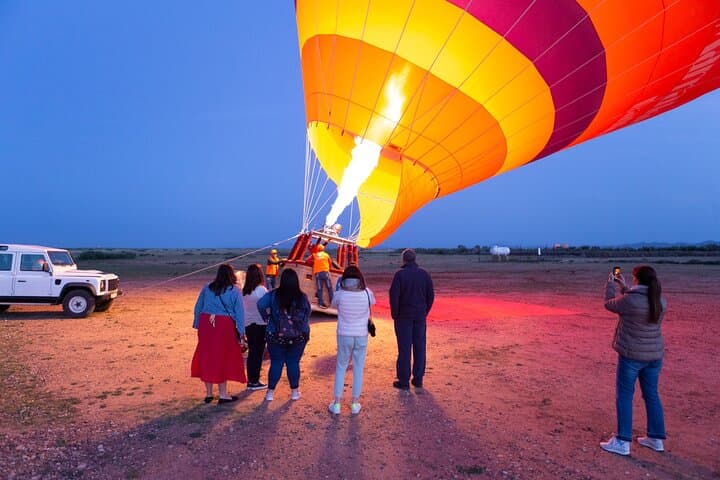
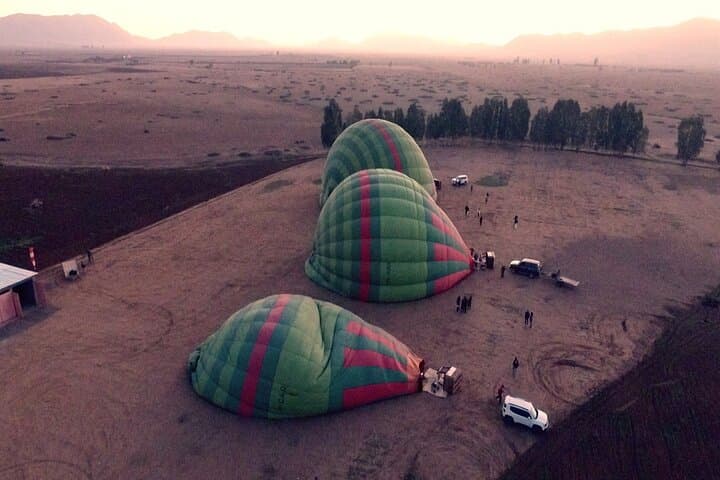
Before dawn, the balloon field outside Marrakech feels like a quiet workshop—crews unfurl fabric, burners hiss, and the desert air holds a chill that the coming sun will burn off.
Before dawn, the balloon field outside Marrakech feels like a quiet workshop—crews unfurl fabric, burners hiss, and the desert air holds a chill that the coming sun will burn off.
Passengers board baskets as the horizon brightens, lifting gently over palm groves, red dust plains and small villages. The flight typically covers 9–15 miles (15–25 km) depending on winds, offering wide, low-angle views where irrigation lines and orchards sketch living maps below. Pilots use thermal layers and prevailing morning breezes to navigate; the ride is serene, the silence interrupted only by short bursts of flame and the occasional murmur from other baskets.
This landscape sits on the edge of the Haouz plain, shaped by alluvial sediments and centuries of human irrigation—small-scale agriculture and Berber settlements have long defined the area. The cultural rhythm is present on the ground: painted kasbahs, date palms, and ancient caravan routes that hint at Marrakech's role as a crossroads.
Practically, expect a very early pickup from central Marrakech and a 30–60 minute drive to the launch site. Flights run at sunrise for calm air; the whole experience (transfer, prep, flight and breakfast) is about 4–5 hours. Dress in layers—the air is cool aloft but warms fast—but wear sturdy, flat shoes for uneven ground during launch and landing.
After landing, crews often celebrate with a traditional Berber breakfast in a tent and a brief certificate ceremony. Weather can cancel flights; operators prioritize safety and refund policies usually allow cancellation for poor conditions.