THE ADVENTURE COLLECTIVE® · Independent discovery and booking for outdoor travel

Turn an Agadir transfer into a full-day exploration of Marrakech: a three‑hour drive through the Atlas, then independent time in the medina to visit Bahia Palace, Jardin Majorelle, Palais Badii and Jemaa el‑Fnaa. Practical advice for timing, fees and pacing helps you make the most of the long day.
Turn an Agadir transfer into a full-day exploration of Marrakech: a three‑hour drive through the Atlas, then independent time in the medina to visit Bahia Palace, Jardin Majorelle, Palais Badii and Jemaa el‑Fnaa. Practical advice for timing, fees and pacing helps you make the most of the long day.
You step into the car at dawn in Agadir and the road unfurls toward the High Atlas—three hours of rising slopes, ochre villages and a single 15-minute stop to stretch legs before Marrakech pushes into view.
Verified experiences and guided adventures in the surrounding area.
Operated by Agharass Tours · Marrakech, Marrakesh-Safi
You step into the car at dawn in Agadir and the road unfurls toward the High Atlas—three hours of rising slopes, ochre villages and a single 15-minute stop to stretch legs before Marrakech pushes into view.
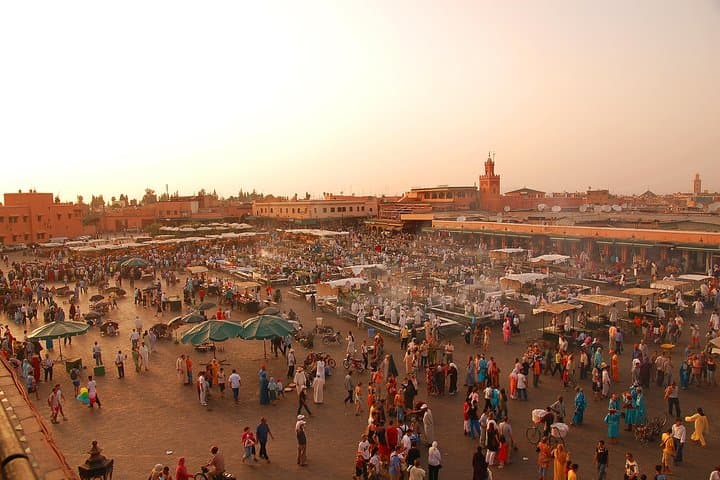
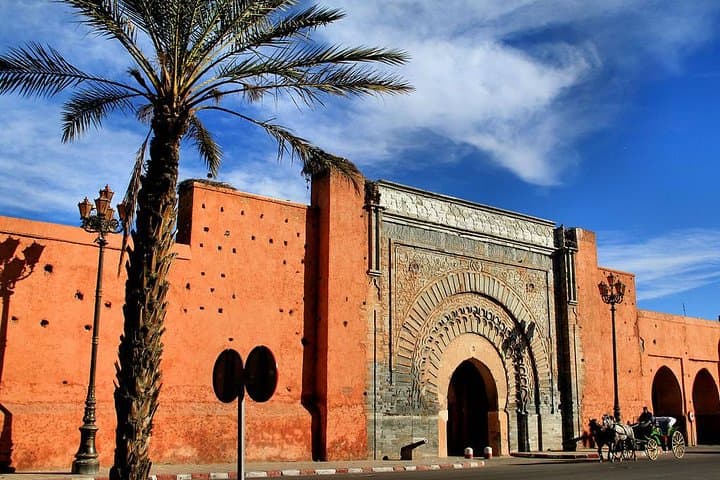
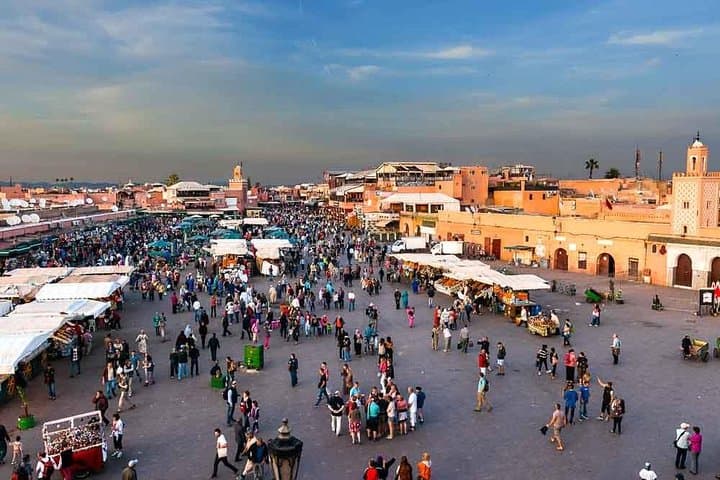
The city arrives like a change in temperature: minaret silhouettes against a blue sky, the Koutoubia’s tower keeping time over red-walled streets. Spend the day at your own pace: Bahia Palace’s carved cedar and painted ceilings, the blue cool of Jardin Majorelle, the tiled courtyards of Palais Badii, and the relentless energy of Jemaa el-Fnaa with its storytellers and market lanes.
Marrakech was founded in the 11th century by the Almoravids; its medina grew around trade routes and remains organized by craft in souks that still use traditional dyeing and metalwork techniques. Geologically, the Atlas foothills you cross are young fold mountains that cast shadow and sudden relief—look for terraced fields and river valleys as you drive.
Practical edge: the driver provides a city map and drop-off; entrance fees for major sites (Bahia, Majorelle, Badii) are separate. Expect a long day—8–12 hours—so pace visits and conserve water. Wear comfortable walking shoes for cobbled lanes, carry modest clothing for mosque-adjacent sites, and leave large bags at your hotel or in the vehicle. Timing matters: mornings and late afternoons are cooler and less crowded in the medina. With planning, this shore excursion converts a long transfer into a concentrated dive into Marrakech’s architectural, cultural and sensory highlights.
moderate.
8–12 hours.
Should be able to handle several hours of walking and standing with occasional cobbled or uneven surfaces.
Expect roughly a three‑hour drive each way along the route through the Atlas foothills, with a short 15‑minute comfort stop en route.
No; entrance fees for Bahia Palace, Jardin Majorelle and Palais Badii are paid on site—bring Moroccan dirham or a card where accepted.
This excursion is independent once you arrive: the driver provides a map and drop‑off/pick‑up but you explore the city on your own.
The transfer is by private vehicle and suitable for all fitness levels, but the medina has uneven surfaces and crowded streets that can be challenging for limited mobility or very young children.
Founded in the 11th century by the Almoravids, Marrakech developed as a trade and imperial hub; its medina retains organized souks and historic palaces reflecting Andalusian and Berber influences.
Local initiatives focus on water conservation and limiting waste in the medina; visitors are encouraged to minimize single‑use plastics and respect historic sites.
Agharass Tours operates guided outdoor trips and adventures with an emphasis on safety, stewardship, and memorable experiences.
You step into the car at dawn in Agadir and the road unfurls toward the High Atlas—three hours of rising slopes, ochre villages and a single 15-minute stop to stretch legs before Marrakech pushes into view.
You step into the car at dawn in Agadir and the road unfurls toward the High Atlas—three hours of rising slopes, ochre villages and a single 15-minute stop to stretch legs before Marrakech pushes into view.
The city arrives like a change in temperature: minaret silhouettes against a blue sky, the Koutoubia’s tower keeping time over red-walled streets. Spend the day at your own pace: Bahia Palace’s carved cedar and painted ceilings, the blue cool of Jardin Majorelle, the tiled courtyards of Palais Badii, and the relentless energy of Jemaa el-Fnaa with its storytellers and market lanes.
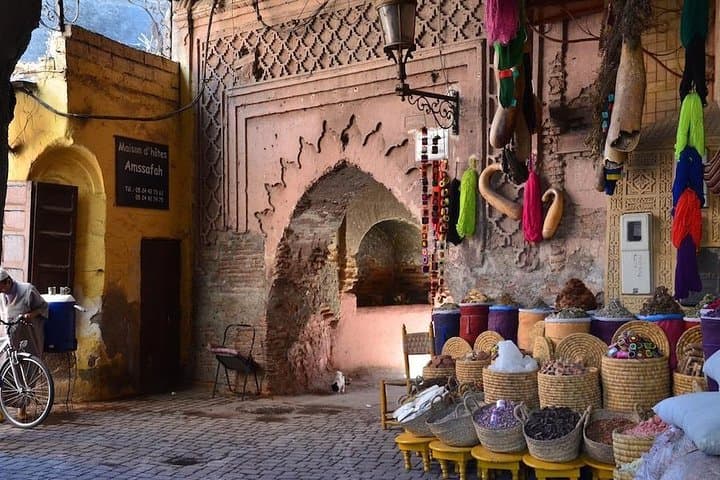
Marrakech was founded in the 11th century by the Almoravids; its medina grew around trade routes and remains organized by craft in souks that still use traditional dyeing and metalwork techniques. Geologically, the Atlas foothills you cross are young fold mountains that cast shadow and sudden relief—look for terraced fields and river valleys as you drive.
Practical edge: the driver provides a city map and drop-off; entrance fees for major sites (Bahia, Majorelle, Badii) are separate. Expect a long day—8–12 hours—so pace visits and conserve water. Wear comfortable walking shoes for cobbled lanes, carry modest clothing for mosque-adjacent sites, and leave large bags at your hotel or in the vehicle. Timing matters: mornings and late afternoons are cooler and less crowded in the medina. With planning, this shore excursion converts a long transfer into a concentrated dive into Marrakech’s architectural, cultural and sensory highlights.