THE ADVENTURE COLLECTIVE® · Independent discovery and booking for outdoor travel

Explore El Badi’s ruins, Bahia Palace’s ornate salons, and the Mellah’s historic lanes on a concise 2.5‑hour walking tour through Marrakech’s imperial heart. Perfect for travelers wanting concentrated culture, easy walking, and morning light for photographs.
Explore El Badi’s ruins, Bahia Palace’s ornate salons, and the Mellah’s historic lanes on a concise 2.5‑hour walking tour through Marrakech’s imperial heart. Perfect for travelers wanting concentrated culture, easy walking, and morning light for photographs.
You step out from the medina’s shaded alleys into a sunlit courtyard and the city seems to inhale around you—orange trees, the cry of distant vendors, and storks perched on ancient ramparts. This 2.5-hour walking tour threads three of Marrakech’s most evocative sites: the ruined grandeur of El Badi Palace, the refined rooms and patios of the 19th‑century Bahia Palace, and the narrow lanes of the Mellah, the historic Jewish quarter.
Verified experiences and guided adventures in the surrounding area.
Operated by Abdul - WalKinKech · Marrakech, Marrakesh-Safi
You step out from the medina’s shaded alleys into a sunlit courtyard and the city seems to inhale around you—orange trees, the cry of distant vendors, and storks perched on ancient ramparts. This 2.5-hour walking tour threads three of Marrakech’s most evocative sites: the ruined grandeur of El Badi Palace, the refined rooms and patios of the 19th‑century Bahia Palace, and the narrow lanes of the Mellah, the historic Jewish quarter.
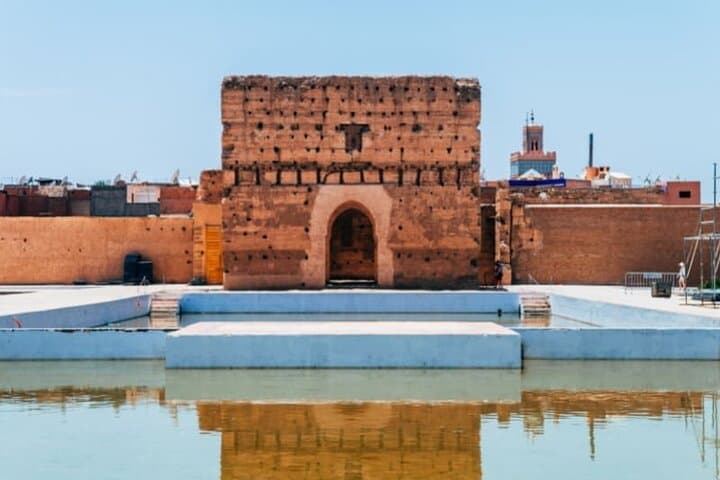
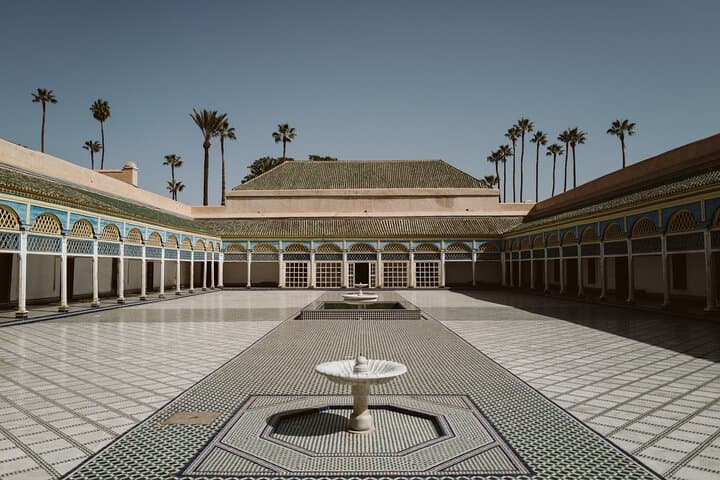
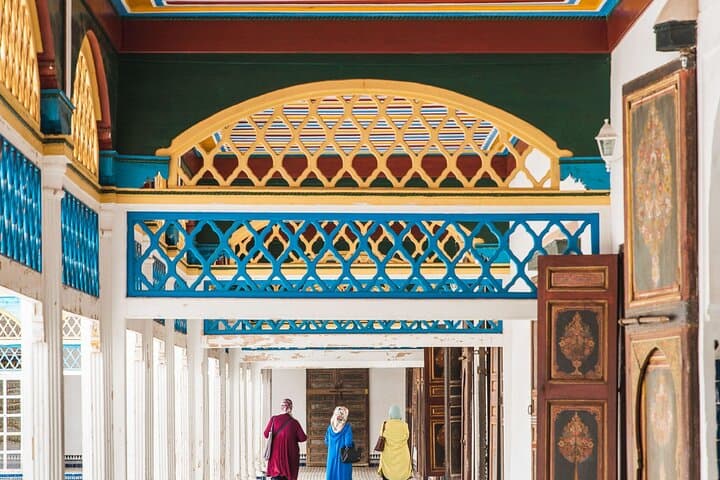
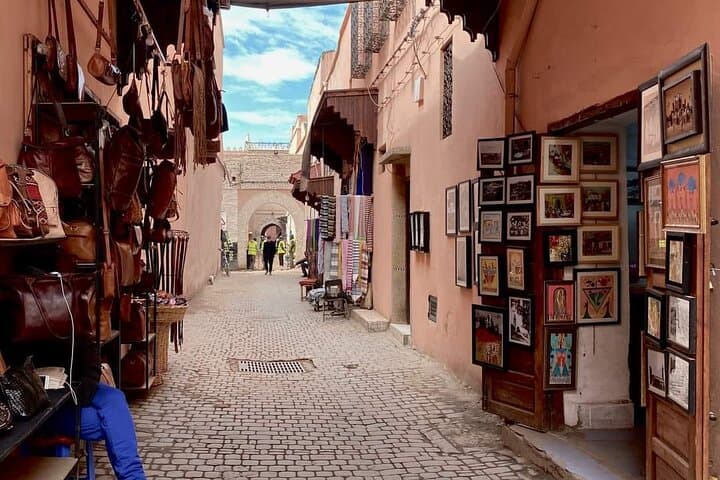
El Badi, raised by Sultan Ahmed al‑Mansour in the 16th century, presents broad courtyards, deep reflective pools and walls that host nesting storks—an archeological stage of Morocco’s imperial ambitions. Bahia offers the opposite: intimate salons, carved cedar, and geometric zellij that illustrate late‑precolonial craftsmanship. The Mellah reveals social history in its synagogues, markets and the nearby Jewish cemetery, telling stories of community and trade layered over centuries.
Practically, expect roughly 2–3 km of mostly flat walking on cobbles and paved courtyards with short flights of stairs in palaces—easy terrain but uneven underfoot. Bring sun protection, a refillable water bottle, and modest clothing for indoor spaces. The synagogue may be closed on Saturdays and public holidays; check opening times ahead. Aim for morning slots to avoid heat and peak crowds and plan time for photography without blocking narrow alleys.
This route balances cultural depth with manageable effort: ideal for travelers who want concentrated history, architectural detail, and the sensory pulse of Marrakech without a full‑day commitment.
easy.
2–3 hours.
Suitable for most fitness levels; requires light walking on uneven urban surfaces and short flights of stairs.
The tour runs approximately 150 minutes (about 2.5 hours), covering three main sites with short walking intervals between them.
Yes—it's physically easy; infants must sit on laps and infant seats are available on request.
This tour lists admission included for the main sites (El Badi, Bahia, and specified Mellah attractions). Confirm on booking details for any exceptions.
Some synagogues and Jewish heritage sites may be closed on Saturdays and Jewish holidays; check operating hours before your visit.
El Badi dates to the 16th century under Sultan Ahmad al‑Mansour; Bahia is a late 19th‑century palace built for Si Moussa and his family, while the Mellah was established in the 16th century as Marrakech’s Jewish quarter.
High visitor numbers stress fragile plaster, woodwork and tile; stick to paths, avoid touching ornate surfaces, and support local guides and conservation fees when asked.
Abdul - WalKinKech operates guided outdoor trips and adventures with an emphasis on safety, stewardship, and memorable experiences.
You step out from the medina’s shaded alleys into a sunlit courtyard and the city seems to inhale around you—orange trees, the cry of distant vendors, and storks perched on ancient ramparts. This 2.5-hour walking tour threads three of Marrakech’s most evocative sites: the ruined grandeur of El Badi Palace, the refined rooms and patios of the 19th‑century Bahia Palace, and the narrow lanes of the Mellah, the historic Jewish quarter.
You step out from the medina’s shaded alleys into a sunlit courtyard and the city seems to inhale around you—orange trees, the cry of distant vendors, and storks perched on ancient ramparts. This 2.5-hour walking tour threads three of Marrakech’s most evocative sites: the ruined grandeur of El Badi Palace, the refined rooms and patios of the 19th‑century Bahia Palace, and the narrow lanes of the Mellah, the historic Jewish quarter.
El Badi, raised by Sultan Ahmed al‑Mansour in the 16th century, presents broad courtyards, deep reflective pools and walls that host nesting storks—an archeological stage of Morocco’s imperial ambitions. Bahia offers the opposite: intimate salons, carved cedar, and geometric zellij that illustrate late‑precolonial craftsmanship. The Mellah reveals social history in its synagogues, markets and the nearby Jewish cemetery, telling stories of community and trade layered over centuries.
Practically, expect roughly 2–3 km of mostly flat walking on cobbles and paved courtyards with short flights of stairs in palaces—easy terrain but uneven underfoot. Bring sun protection, a refillable water bottle, and modest clothing for indoor spaces. The synagogue may be closed on Saturdays and public holidays; check opening times ahead. Aim for morning slots to avoid heat and peak crowds and plan time for photography without blocking narrow alleys.
This route balances cultural depth with manageable effort: ideal for travelers who want concentrated history, architectural detail, and the sensory pulse of Marrakech without a full‑day commitment.