THE ADVENTURE COLLECTIVE® · Independent discovery and booking for outdoor travel

Combine a calm camel trek through Marrakech’s famed Palmeraie with a heart-pumping quad ride across rocky desert tracks. This half-day tour pairs cultural stops with raw open-air riding—ideal for travelers who want variety and local insight in one outing.
Combine a calm camel trek through Marrakech’s famed Palmeraie with a heart-pumping quad ride across rocky desert tracks. This half-day tour pairs cultural stops with raw open-air riding—ideal for travelers who want variety and local insight in one outing.
You step out of an air-conditioned minivan into the wash of warm Moroccan sun and the sharp scent of palm sap. Around you, the Palmeraie spreads in regimented rows—green lines against ochre soil—while a string of camels waits, patient and steady. The first half of the outing is a measured camel trek: two hours across shaded palm tracks and low, rocky terraces where the ground is firm and the pace is deliberate.
Verified experiences and guided adventures in the surrounding area.
Operated by Deep South Travel Marrakech · Marrakech, Marrakech-Safi
You step out of an air-conditioned minivan into the wash of warm Moroccan sun and the sharp scent of palm sap. Around you, the Palmeraie spreads in regimented rows—green lines against ochre soil—while a string of camels waits, patient and steady. The first half of the outing is a measured camel trek: two hours across shaded palm tracks and low, rocky terraces where the ground is firm and the pace is deliberate.
The region’s history is visible in small ways: irrigation channels and date palms planted by generations of Berber growers, and a living culture where mint tea remains central. Geologically the Palmeraie sits on alluvial soils fed by the Tensift watershed; you’ll notice sandier patches as the trail reaches more exposed, rocky jiblet lands used for quad routes.
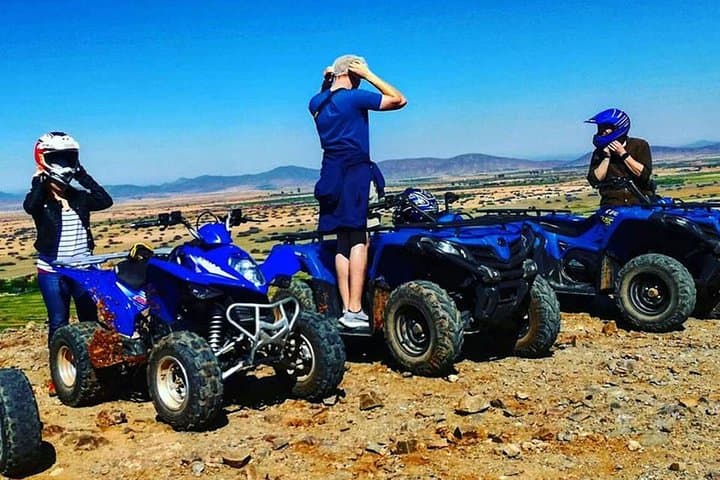
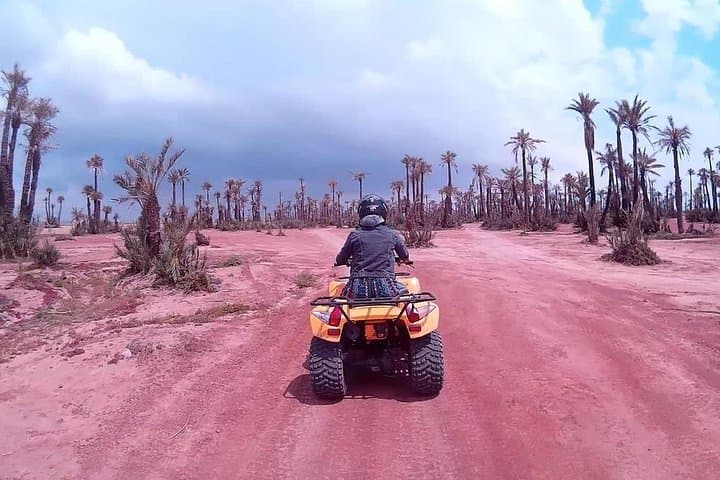
After a pause at a local Berber house for mint tea and simple pastries, the tone changes—helmets on, quads idling—then you’re into a two-hour ride through arroyos, hard-packed sand, and short climbs over rubble-strewn tracks. It’s an easy-to-moderate technical experience: no big elevations, but expect jolts, sudden dust gusts, and tight turns.
Practical notes: helmets and goggles are included; closed-toe shoes and a light jacket in winter are recommended. Bring water, sunscreen, and a camera with a fast shutter—the light is best in morning or late afternoon. The operator provides hotel transfer; groups are small (max 15) and the activity suits most fitness levels. Follow guides’ directions, stay on designated tracks to protect palms and irrigation channels, and leave no waste—this is an oasis that depends on careful use.
moderate.
4 hours.
Suitable for most people with reasonable mobility; some stamina for two hours riding and two hours on a quad is helpful.
Yes—hotel/riad pickup and drop-off in Marrakech are included in the tour price.
Helmets and goggles are supplied for the quad portion; wear closed-toe shoes and comfortable clothing.
The operator recommends against pregnant travelers and advises checking age/height limits; children may be restricted—confirm at booking.
Shared tours run up to 15 people; full refund available if you cancel at least 24 hours before departure.
The Palmeraie has been an irrigated palm oasis for centuries, shaped by Berber agriculture and modern development that brought tourism and leisure riding.
Water is scarce—stay on established trails to avoid damaging irrigation channels and avoid littering; prefer operators that support local families.
Deep South Travel Marrakech operates guided outdoor trips and adventures with an emphasis on safety, stewardship, and memorable experiences.
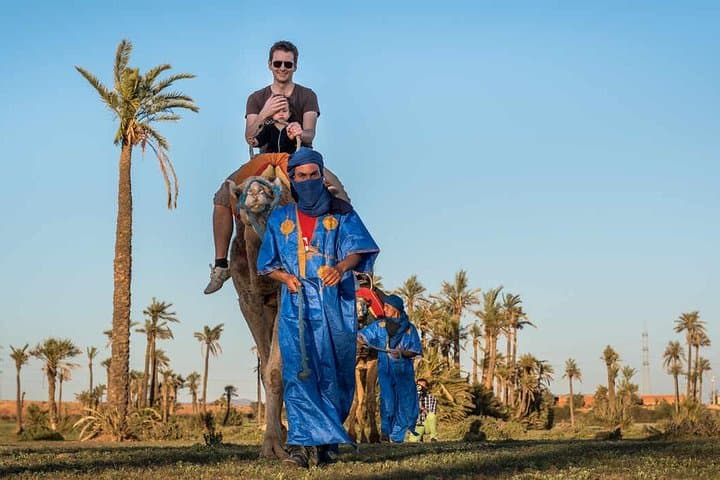
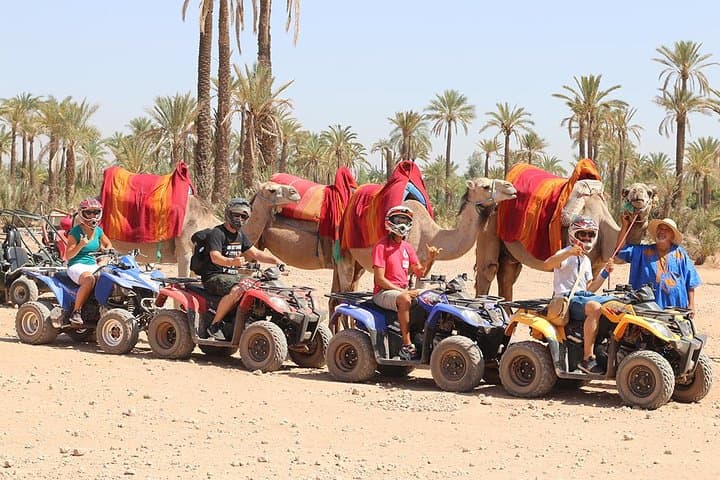
You step out of an air-conditioned minivan into the wash of warm Moroccan sun and the sharp scent of palm sap. Around you, the Palmeraie spreads in regimented rows—green lines against ochre soil—while a string of camels waits, patient and steady. The first half of the outing is a measured camel trek: two hours across shaded palm tracks and low, rocky terraces where the ground is firm and the pace is deliberate.
You step out of an air-conditioned minivan into the wash of warm Moroccan sun and the sharp scent of palm sap. Around you, the Palmeraie spreads in regimented rows—green lines against ochre soil—while a string of camels waits, patient and steady. The first half of the outing is a measured camel trek: two hours across shaded palm tracks and low, rocky terraces where the ground is firm and the pace is deliberate.
The region’s history is visible in small ways: irrigation channels and date palms planted by generations of Berber growers, and a living culture where mint tea remains central. Geologically the Palmeraie sits on alluvial soils fed by the Tensift watershed; you’ll notice sandier patches as the trail reaches more exposed, rocky jiblet lands used for quad routes.
After a pause at a local Berber house for mint tea and simple pastries, the tone changes—helmets on, quads idling—then you’re into a two-hour ride through arroyos, hard-packed sand, and short climbs over rubble-strewn tracks. It’s an easy-to-moderate technical experience: no big elevations, but expect jolts, sudden dust gusts, and tight turns.
Practical notes: helmets and goggles are included; closed-toe shoes and a light jacket in winter are recommended. Bring water, sunscreen, and a camera with a fast shutter—the light is best in morning or late afternoon. The operator provides hotel transfer; groups are small (max 15) and the activity suits most fitness levels. Follow guides’ directions, stay on designated tracks to protect palms and irrigation channels, and leave no waste—this is an oasis that depends on careful use.