THE ADVENTURE COLLECTIVE® · Independent discovery and booking for outdoor travel

Ride camels under long palms just outside Marrakech for a half-day that blends easy desert tracks, Berber hospitality, and mint tea. Learn what to expect, how to prepare, and why timing and sunscreen matter.
Ride camels under long palms just outside Marrakech for a half-day that blends easy desert tracks, Berber hospitality, and mint tea. Learn what to expect, how to prepare, and why timing and sunscreen matter.
You leave the Medina’s narrow alleys behind and, within twenty minutes of city traffic, the landscape opens to a fan of palms. The sun filters through long fronds, the sand underfoot shifts to packed tracks, and the camel caravan settles into an easy sway — a slow, deliberate rhythm that pushes you forward through the Palmerie of Marrakech.
Verified experiences and guided adventures in the surrounding area.
Operated by Morocco Sahara Desert Travel · Marrakech, Marrakech-Safi
You leave the Medina’s narrow alleys behind and, within twenty minutes of city traffic, the landscape opens to a fan of palms. The sun filters through long fronds, the sand underfoot shifts to packed tracks, and the camel caravan settles into an easy sway — a slow, deliberate rhythm that pushes you forward through the Palmerie of Marrakech.
The Palmeraie grew from centuries of oasis agriculture; date palms were planted and irrigated by traditional khettara channels that still shape the fields. Geologically the area is a broad alluvial plain at roughly 450 m elevation, where sandy soils and shallow groundwater support dense palm stands rather than rocky peaks. Culture arrives in small gestures: Berber scarves offered for photos, a steaming cup of mint tea at the end of the ride, and handlers who know the animals’ moods.
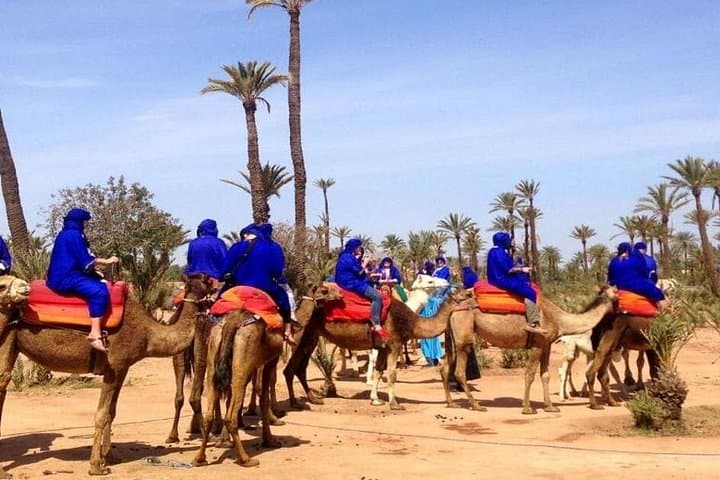
Expect one hour in the saddle along mostly flat, sandy tracks with occasional low dunes and irrigated groves — the camel’s height and movement demand stable footing when mounting and dismounting. The tour includes hotel pickup and drop-off by air-conditioned minivan, a Berber scarf option, and mint tea afterward; group sizes may reach 15.
Practical guidance: time your ride for early morning or late afternoon to avoid mid-day heat, bring sun protection and a water bottle, and wear closed-toe shoes for stable mounting. Listen to handlers for safe mounting technique and keep belongings secured; cameras are welcome but keep straps around your neck. Respect the animals and pick operators who treat camels humanely — a calm camel makes for a better ride and a better story.
moderate.
2 hours (includes transport; 1 hour ride).
Basic balance and moderate mobility are required — riders should be able to mount and remain seated on a moving camel for an hour.
The advertised activity includes a 1-hour camel ride, with the full tour taking about 2 hours including hotel pickup and transfer time.
Children are allowed but must be accompanied by an adult; infants are required to sit on an adult’s lap and infant seats are available if requested.
Yes — the tour lists hotel pickup and drop-off in Marrakech by air-conditioned minivan; confirm your pickup point when booking.
Wear closed-toe shoes and sun protection; bring a refillable water bottle and a camera with a strap. Light layers are useful for morning or evening rides.
The Palmeraie developed as a working oasis with date palms fed by traditional irrigation; over time parts were adapted for leisure uses like camel rides.
Water management is crucial here — stick to established tracks to avoid trampling understory and choose operators that prioritize humane camel care and low-impact routing.
Morocco Sahara Desert Travel operates guided outdoor trips and adventures with an emphasis on safety, stewardship, and memorable experiences.
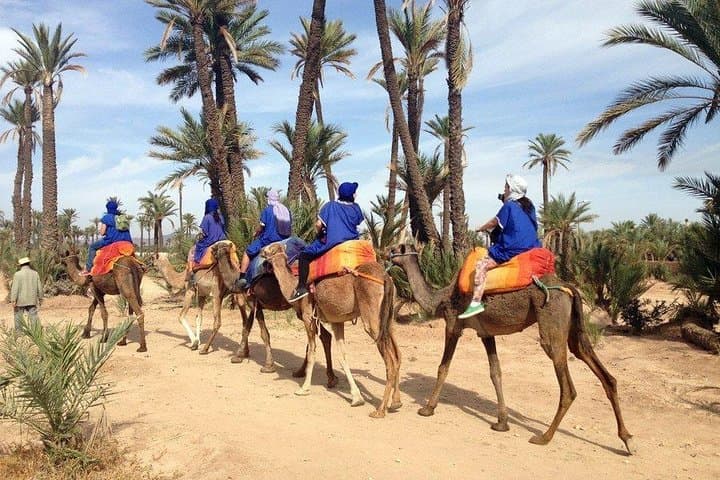
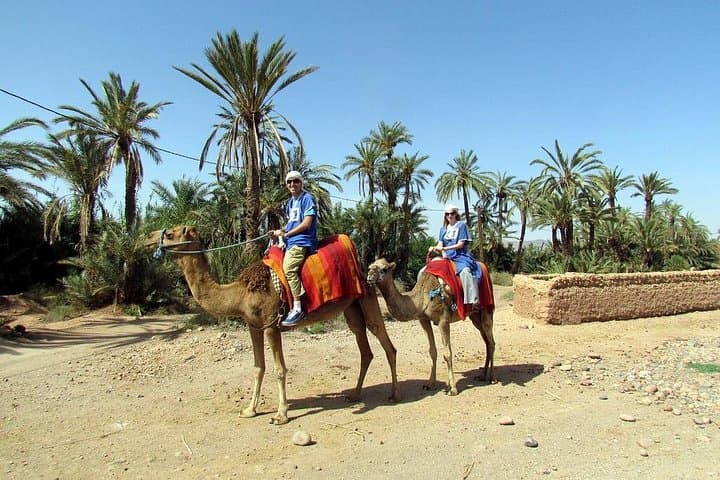
You leave the Medina’s narrow alleys behind and, within twenty minutes of city traffic, the landscape opens to a fan of palms. The sun filters through long fronds, the sand underfoot shifts to packed tracks, and the camel caravan settles into an easy sway — a slow, deliberate rhythm that pushes you forward through the Palmerie of Marrakech.
You leave the Medina’s narrow alleys behind and, within twenty minutes of city traffic, the landscape opens to a fan of palms. The sun filters through long fronds, the sand underfoot shifts to packed tracks, and the camel caravan settles into an easy sway — a slow, deliberate rhythm that pushes you forward through the Palmerie of Marrakech.
The Palmeraie grew from centuries of oasis agriculture; date palms were planted and irrigated by traditional khettara channels that still shape the fields. Geologically the area is a broad alluvial plain at roughly 450 m elevation, where sandy soils and shallow groundwater support dense palm stands rather than rocky peaks. Culture arrives in small gestures: Berber scarves offered for photos, a steaming cup of mint tea at the end of the ride, and handlers who know the animals’ moods.
Expect one hour in the saddle along mostly flat, sandy tracks with occasional low dunes and irrigated groves — the camel’s height and movement demand stable footing when mounting and dismounting. The tour includes hotel pickup and drop-off by air-conditioned minivan, a Berber scarf option, and mint tea afterward; group sizes may reach 15.
Practical guidance: time your ride for early morning or late afternoon to avoid mid-day heat, bring sun protection and a water bottle, and wear closed-toe shoes for stable mounting. Listen to handlers for safe mounting technique and keep belongings secured; cameras are welcome but keep straps around your neck. Respect the animals and pick operators who treat camels humanely — a calm camel makes for a better ride and a better story.