THE ADVENTURE COLLECTIVE® · Independent discovery and booking for outdoor travel

Kick up sand in Marrakech’s Palmeraie on a half-day quad tour that moves from shaded palm lanes to open dunes and Berber village stops. Expect 2–3 hours of guided, all-terrain riding with hotel pickup and local insights along the way.
Kick up sand in Marrakech’s Palmeraie on a half-day quad tour that moves from shaded palm lanes to open dunes and Berber village stops. Expect 2–3 hours of guided, all-terrain riding with hotel pickup and local insights along the way.
The engine thumps to life and the palm canopy opens like a gate; dust lifts as riders sweep out of Marrakech toward the Palmeraie, a 10 km stretch of cultivated palms that gives way to rolling sand and sculpted dunes. On a half-day quad tour, the landscape alternates between shaded palm lanes, open flats, and wind-swept rises where the dunes dare you to push the throttle harder.
Verified experiences and guided adventures in the surrounding area.
Operated by First Marrakech Tours · Marrakech, Marrakech-Safi
The engine thumps to life and the palm canopy opens like a gate; dust lifts as riders sweep out of Marrakech toward the Palmeraie, a 10 km stretch of cultivated palms that gives way to rolling sand and sculpted dunes. On a half-day quad tour, the landscape alternates between shaded palm lanes, open flats, and wind-swept rises where the dunes dare you to push the throttle harder.
The Palmeraie has existed for centuries as an irrigated oasis built from traditional khettara channels; its palms and small farms supported caravan traffic and the city’s expansion. Geologically, the area sits on alluvial fans from the High Atlas, and the nearby Tensift River still traces that mountain-fed route across the plain, carving soft terraces and supplying palm groves and small settlements.
Culturally, the route brushes past Berber hamlets where mint tea is offered as a customary pause—an immediate, human scale to the high-energy ride. Guides typically explain farming, local life, and the palm grove’s role in Marrakech’s microclimate.
Practical guidance: expect 2–3 hours of riding, moderate physical involvement to handle uneven sand and occasional dunes, and full safety gear provided. Wear closed-toe shoes, bring sun protection and a daypack with water. Morning departures are cooler; late afternoons cast longer shadows and sharpen the dunes’ contours for photography. Operators commonly include hotel pickup and a bilingual guide; they caution against participation for pregnant guests or those with spinal or serious heart conditions. Follow the guide’s routing to limit erosion and respect private plots—sticking to tracks keeps this fragile oasis intact for future rides.
moderate.
2–3 hours.
Suitable for people with average fitness; expect short bursts of core and arm engagement to control the quad on uneven sand.
Yes; most operators include hotel pickup and drop-off from central Marrakech addresses—confirm your pickup point when booking.
Operators typically limit youth passengers and advise against participation for pregnant guests or those with spinal or serious heart conditions; disclose medical issues when booking.
No formal experience is needed; guides provide instruction and safety briefings, but riders should be comfortable with basic throttle and brake control.
Tours generally operate in light wind and clear conditions; cancellation and refund policies vary—many offer full refund if canceled 24 hours in advance.
The Palmeraie developed over centuries using ancient irrigation techniques (khettaras) to sustain date palms and small-scale farming that supported Marrakech.
Stay on designated tracks to avoid destabilizing dunes and trampling cultivated plots; local guides help minimize impact and support community-based tourism.
First Marrakech Tours operates guided outdoor trips and adventures with an emphasis on safety, stewardship, and memorable experiences.
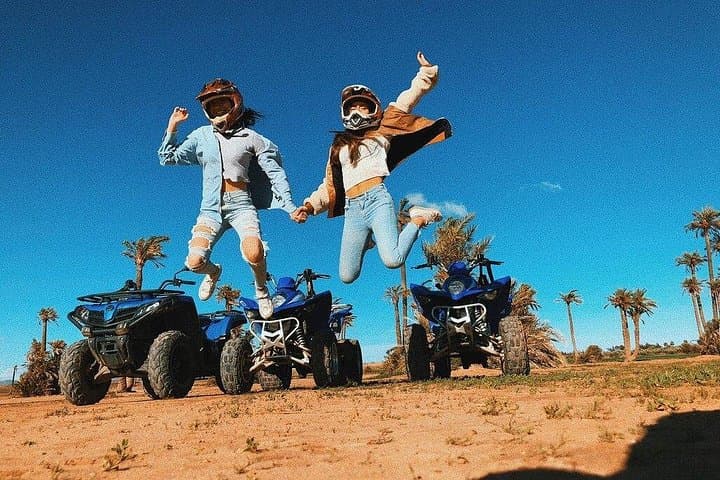
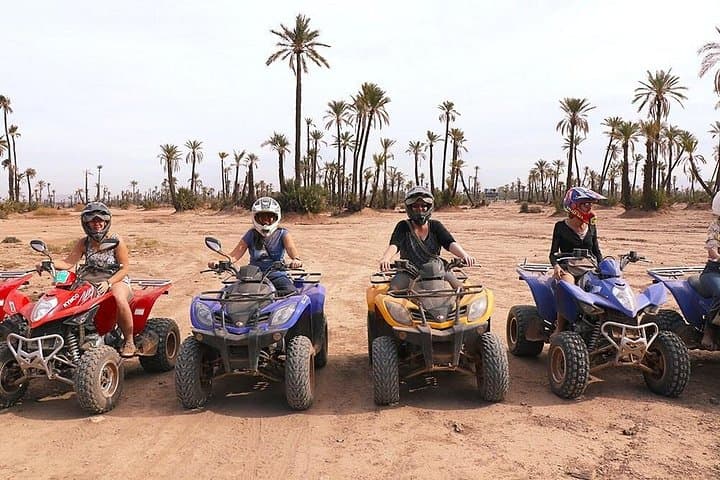
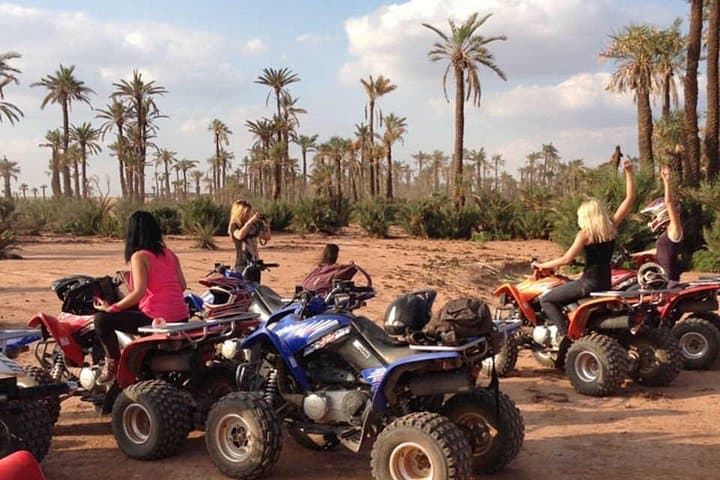
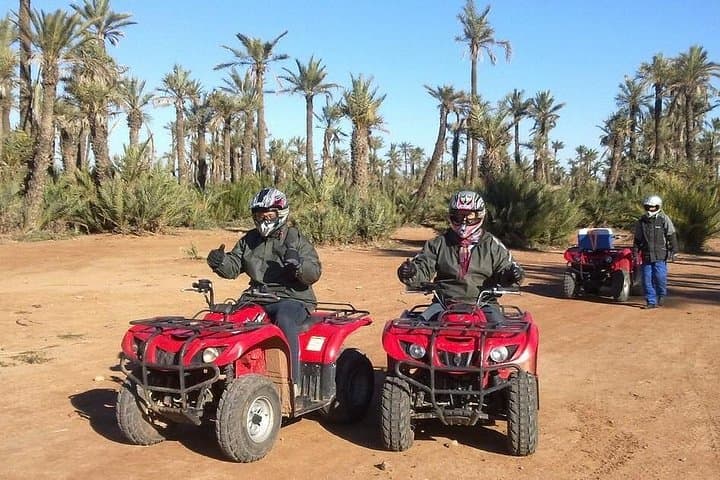
The engine thumps to life and the palm canopy opens like a gate; dust lifts as riders sweep out of Marrakech toward the Palmeraie, a 10 km stretch of cultivated palms that gives way to rolling sand and sculpted dunes. On a half-day quad tour, the landscape alternates between shaded palm lanes, open flats, and wind-swept rises where the dunes dare you to push the throttle harder.
The engine thumps to life and the palm canopy opens like a gate; dust lifts as riders sweep out of Marrakech toward the Palmeraie, a 10 km stretch of cultivated palms that gives way to rolling sand and sculpted dunes. On a half-day quad tour, the landscape alternates between shaded palm lanes, open flats, and wind-swept rises where the dunes dare you to push the throttle harder.
The Palmeraie has existed for centuries as an irrigated oasis built from traditional khettara channels; its palms and small farms supported caravan traffic and the city’s expansion. Geologically, the area sits on alluvial fans from the High Atlas, and the nearby Tensift River still traces that mountain-fed route across the plain, carving soft terraces and supplying palm groves and small settlements.
Culturally, the route brushes past Berber hamlets where mint tea is offered as a customary pause—an immediate, human scale to the high-energy ride. Guides typically explain farming, local life, and the palm grove’s role in Marrakech’s microclimate.
Practical guidance: expect 2–3 hours of riding, moderate physical involvement to handle uneven sand and occasional dunes, and full safety gear provided. Wear closed-toe shoes, bring sun protection and a daypack with water. Morning departures are cooler; late afternoons cast longer shadows and sharpen the dunes’ contours for photography. Operators commonly include hotel pickup and a bilingual guide; they caution against participation for pregnant guests or those with spinal or serious heart conditions. Follow the guide’s routing to limit erosion and respect private plots—sticking to tracks keeps this fragile oasis intact for future rides.