THE ADVENTURE COLLECTIVE® · Independent discovery and booking for outdoor travel

Ride a camel through Marrakech’s Palmeraie at sunrise or sunset and pause for traditional Moroccan mint tea in a Berber tent. This 1–2 hour private experience combines gentle desert scenery, local culture, and easy logistics for first-time visitors.
Ride a camel through Marrakech’s Palmeraie at sunrise or sunset and pause for traditional Moroccan mint tea in a Berber tent. This 1–2 hour private experience combines gentle desert scenery, local culture, and easy logistics for first-time visitors.
A low sun gilds the rows of date palms as your camel pads out from the palm grove’s shaded lanes, the city’s red roofs shrinking behind you. The animal’s steady sway sets a slow rhythm; palms lean in as if to watch you pass. Small dirt tracks thread between clumps of date palms and scrub, and the town’s distant call to prayer punctuates the late-afternoon air.
Verified experiences and guided adventures in the surrounding area.
Operated by Exotic Lines Travels · Marrakech, Marrakech-Safi
A low sun gilds the rows of date palms as your camel pads out from the palm grove’s shaded lanes, the city’s red roofs shrinking behind you. The animal’s steady sway sets a slow rhythm; palms lean in as if to watch you pass. Small dirt tracks thread between clumps of date palms and scrub, and the town’s distant call to prayer punctuates the late-afternoon air.
The Palmeraie of Marrakech has been irrigated and managed for centuries, its irrigation khettaras and hand-tended palms reflecting a long human relationship with scarce water. Geologically, you’re on the northern edge of the Haouz plain, where alluvial soils let palms root deeply while the High Atlas rises to the south.
Culturally, the ride threads through living Berber villages that preserve 16th–17th-century layouts and traditional crafts; the tea break in a Berber tent is as much a social pause as a refreshment. Locals will often serve sweet mint tea and local flatbread, an invitation to slow down and listen.
Practical guidance: the standard experience lasts about 60–120 minutes, often timed for sunrise or sunset when heat and light are gentlest. Wear closed-toe shoes and a hat, and expect uneven sandy tracks and low camel saddles. Carry a fully charged phone or camera and a small amount of cash for tips. If you’re sensitive to motion, choose the shorter ride; operators supply bottled water and private transfers are commonly included. Respect local customs—ask before photographing residents—and stick to designated trails to protect roots and fragile irrigation channels. This is an accessible, photo-rich way to step away from the medina and into Marrakech’s working landscape.
easy.
1–2 hours.
Suitable for most fitness levels; ability to mount a camel and remain seated for up to an hour is required.
The standard ride is 60 minutes, but tours often list 60–120 minutes including transfer and the tea break.
Private air-conditioned pickup and drop-off are typically included—confirm pickup point when booking.
Yes. Infants may sit on an adult’s lap; operators often provide infant seats and recommend supervising small children closely.
No—rides are designed for beginners with handlers guiding the animals; tell staff if you have mobility concerns.
The Palmeraie has been cultivated for centuries using traditional irrigation methods; surrounding Berber settlements retain local crafts and communal life dating back to early modern periods.
Water is a limiting resource in the Haouz plain—stay on established tracks, avoid littering, and support operators who protect irrigation channels and palm roots.
Exotic Lines Travels operates guided outdoor trips and adventures with an emphasis on safety, stewardship, and memorable experiences.
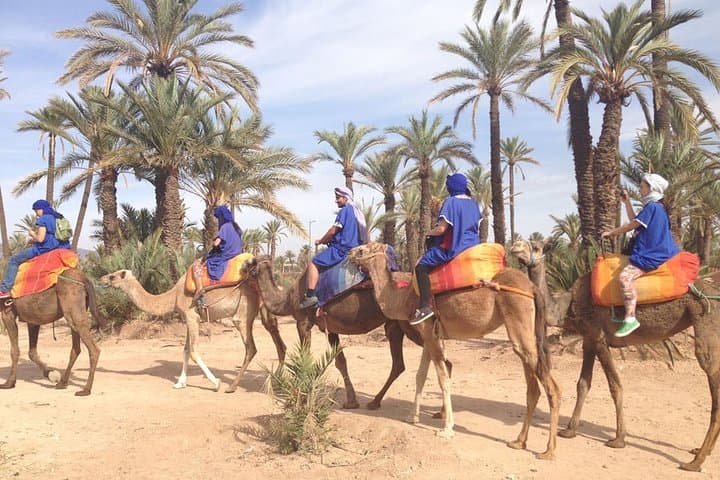
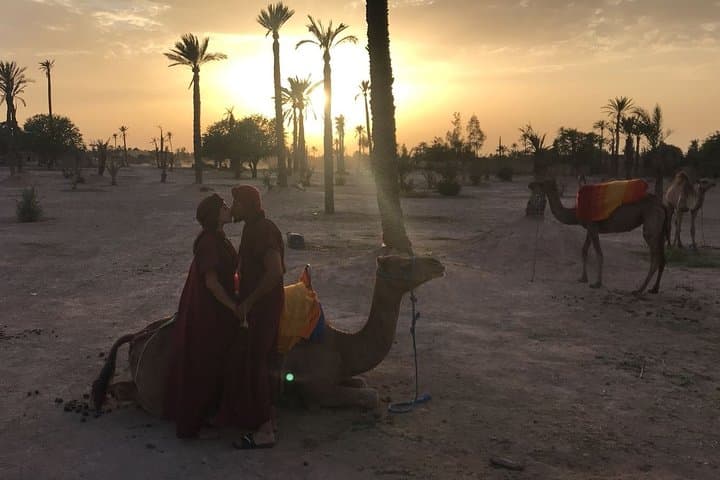
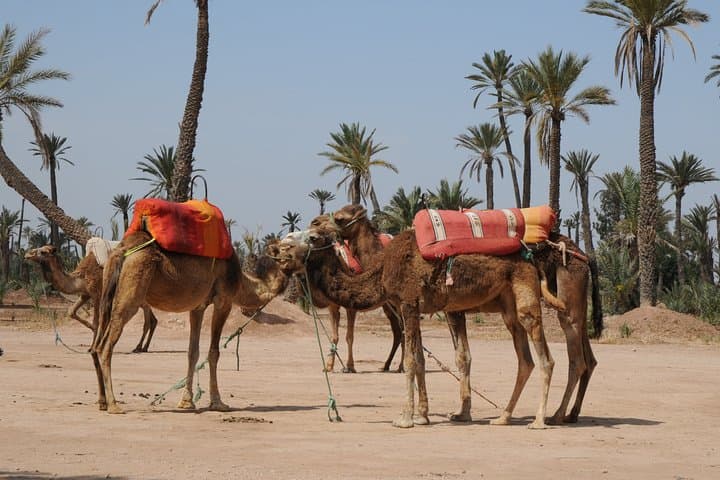
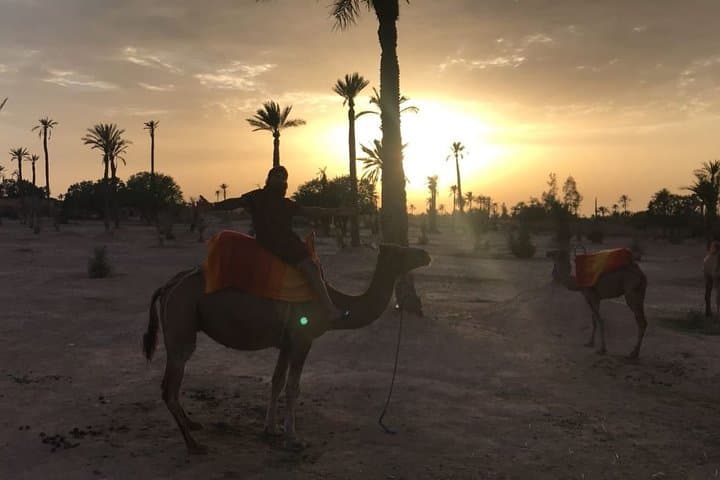
A low sun gilds the rows of date palms as your camel pads out from the palm grove’s shaded lanes, the city’s red roofs shrinking behind you. The animal’s steady sway sets a slow rhythm; palms lean in as if to watch you pass. Small dirt tracks thread between clumps of date palms and scrub, and the town’s distant call to prayer punctuates the late-afternoon air.
A low sun gilds the rows of date palms as your camel pads out from the palm grove’s shaded lanes, the city’s red roofs shrinking behind you. The animal’s steady sway sets a slow rhythm; palms lean in as if to watch you pass. Small dirt tracks thread between clumps of date palms and scrub, and the town’s distant call to prayer punctuates the late-afternoon air.
The Palmeraie of Marrakech has been irrigated and managed for centuries, its irrigation khettaras and hand-tended palms reflecting a long human relationship with scarce water. Geologically, you’re on the northern edge of the Haouz plain, where alluvial soils let palms root deeply while the High Atlas rises to the south.
Culturally, the ride threads through living Berber villages that preserve 16th–17th-century layouts and traditional crafts; the tea break in a Berber tent is as much a social pause as a refreshment. Locals will often serve sweet mint tea and local flatbread, an invitation to slow down and listen.
Practical guidance: the standard experience lasts about 60–120 minutes, often timed for sunrise or sunset when heat and light are gentlest. Wear closed-toe shoes and a hat, and expect uneven sandy tracks and low camel saddles. Carry a fully charged phone or camera and a small amount of cash for tips. If you’re sensitive to motion, choose the shorter ride; operators supply bottled water and private transfers are commonly included. Respect local customs—ask before photographing residents—and stick to designated trails to protect roots and fragile irrigation channels. This is an accessible, photo-rich way to step away from the medina and into Marrakech’s working landscape.