THE ADVENTURE COLLECTIVE® · Independent discovery and booking for outdoor travel

Ride a camel through Marrakech’s historic Palmeraie, a shaded ribbon of palms planted during the Almoravid era. The hour-long loop ends with traditional mint tea under the trees—an easy, photo-friendly way to connect with Morocco’s oasis culture.
Ride a camel through Marrakech’s historic Palmeraie, a shaded ribbon of palms planted during the Almoravid era. The hour-long loop ends with traditional mint tea under the trees—an easy, photo-friendly way to connect with Morocco’s oasis culture.
You step out of the vehicle into a clutch of palms where shade moves like a slow tide and the trunks lean in as if to watch you pass.
Verified experiences and guided adventures in the surrounding area.
Operated by Marrakech Tours Excursions · Marrakech, Marrakesh-Safi
You step out of the vehicle into a clutch of palms where shade moves like a slow tide and the trunks lean in as if to watch you pass.
The Palmeraie, planted in large part during the Almoravid era, stretches north of Marrakech with groves that turned arid ground into working oasis through irrigation channels and careful planting. The soil here is sandy with hidden pockets of clay and the palms—date and fan varieties—hold a deep green that contrasts with ochre tracks cut by wind and camel hooves.
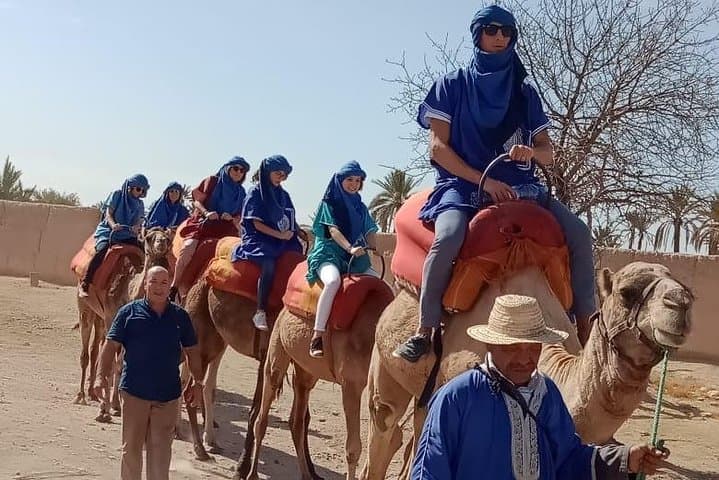
Camels have been part of North African life for centuries: their pace hums to the rhythm of long-distance trade and local movement. After a short orientation you’ll choose a camel for a gentle, hour-long loop through shaded alleys. Guides provide Tuareg-style scarves for sun protection and, at the end, a cup of Moroccan mint tea served under palms—a moment of local hospitality and ritual.
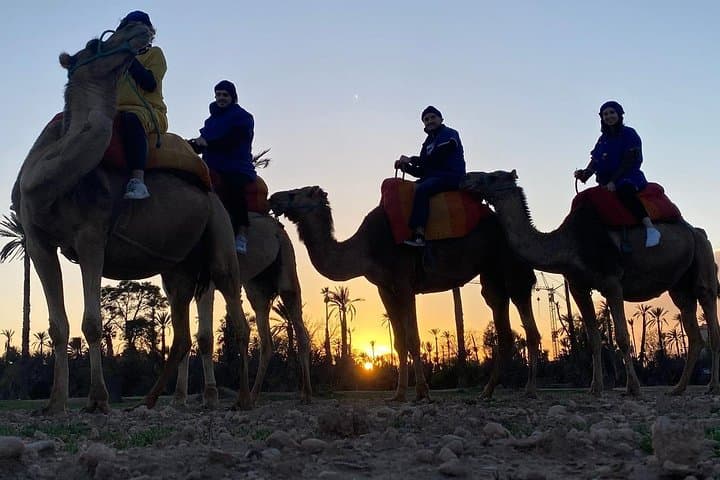
Practical guidance: rides are low-impact but require basic balance and mobility; avoid if pregnant or with spinal/heart conditions. Best times are early morning or late afternoon when heat is lower and light is soft for photos. Bring sun protection, closed shoes, and water; camera straps help while mounting. Expect sandy, uneven ground and a slow, swaying pace rather than a vigorous trek.
This experience is straightforward and culturally keyed—an accessible way to feel Morocco’s desert-edge landscape while learning a little about irrigation history, local craft, and the quiet manner of animals that have carried people across these lands for generations.
easy.
2 hours.
Basic mobility and a moderate level of fitness recommended; you should be able to climb on and off a low mounting platform and walk short distances.
The total activity time is about two hours, including transfer; the camel ride itself is roughly one hour.
Infant seats are available for pickups, but check operator age/weight limits for riding; children should be supervised and able to sit steadily on a camel.
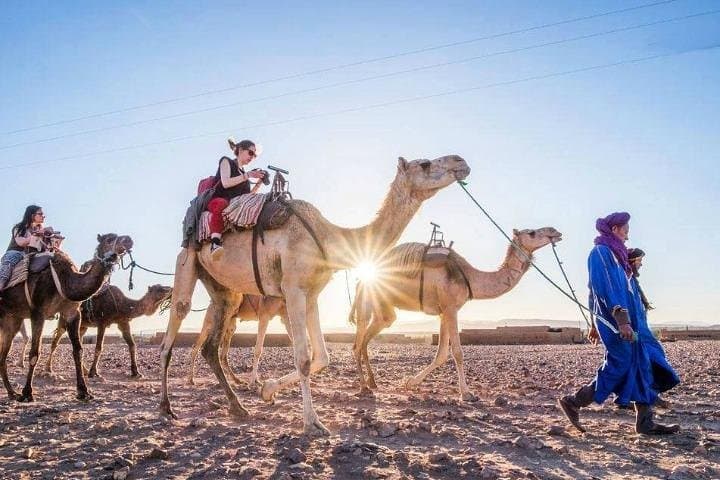
Yes—guides welcome photos and will often pause for picture opportunities; a strap or secure case is recommended for cameras and phones.
Not recommended for pregnant travelers or those with spinal, neck or serious heart conditions; moderate fitness is advised.
The Palmeraie expanded under the Almoravid period; palms were planted to stabilize soils and create irrigated groves that supported local settlements.
Water use is the biggest local issue—respect marked paths, avoid disturbing wildlife, and support operators that practice minimal-impact animal care.
Marrakech Tours Excursions operates guided outdoor trips and adventures with an emphasis on safety, stewardship, and memorable experiences.
You step out of the vehicle into a clutch of palms where shade moves like a slow tide and the trunks lean in as if to watch you pass.
You step out of the vehicle into a clutch of palms where shade moves like a slow tide and the trunks lean in as if to watch you pass.
The Palmeraie, planted in large part during the Almoravid era, stretches north of Marrakech with groves that turned arid ground into working oasis through irrigation channels and careful planting. The soil here is sandy with hidden pockets of clay and the palms—date and fan varieties—hold a deep green that contrasts with ochre tracks cut by wind and camel hooves.
Camels have been part of North African life for centuries: their pace hums to the rhythm of long-distance trade and local movement. After a short orientation you’ll choose a camel for a gentle, hour-long loop through shaded alleys. Guides provide Tuareg-style scarves for sun protection and, at the end, a cup of Moroccan mint tea served under palms—a moment of local hospitality and ritual.
Practical guidance: rides are low-impact but require basic balance and mobility; avoid if pregnant or with spinal/heart conditions. Best times are early morning or late afternoon when heat is lower and light is soft for photos. Bring sun protection, closed shoes, and water; camera straps help while mounting. Expect sandy, uneven ground and a slow, swaying pace rather than a vigorous trek.
This experience is straightforward and culturally keyed—an accessible way to feel Morocco’s desert-edge landscape while learning a little about irrigation history, local craft, and the quiet manner of animals that have carried people across these lands for generations.