THE ADVENTURE COLLECTIVE® · Independent discovery and booking for outdoor travel

A full-day escape from Marrakech into the Middle Atlas to see Morocco’s tallest cascades. Hike olive-scented trails, watch Barbary macaques, and take an optional boat close to the base of Ouzoud Waterfalls.
A full-day escape from Marrakech into the Middle Atlas to see Morocco’s tallest cascades. Hike olive-scented trails, watch Barbary macaques, and take an optional boat close to the base of Ouzoud Waterfalls.
You arrive on the high road out of Marrakech as the Middle Atlas rises and the air sharpens; olive terraces and scattered stone houses slide past the minibus window. At Ouzoud the river gathers itself and dares the cliff’s edge — a vertical thread of white that breaks into spray and rainbows. The path winds through groves and terraces to lookout platforms where the falls push mist across your face and Barbary macaques watch from worn rock ledges.
Verified experiences and guided adventures in the surrounding area.
Operated by Explore Morocco Magic · Ouzoud, Marrakech-Safi
You arrive on the high road out of Marrakech as the Middle Atlas rises and the air sharpens; olive terraces and scattered stone houses slide past the minibus window. At Ouzoud the river gathers itself and dares the cliff’s edge — a vertical thread of white that breaks into spray and rainbows. The path winds through groves and terraces to lookout platforms where the falls push mist across your face and Barbary macaques watch from worn rock ledges.
Geology here is simple and honest: hard limestone and ancient terraces carve the valley, and seasonal runoff swells the cascades. Local Berber communities have farmed olives and ground grain in these gullies for generations; you’ll notice old stone mills and small cafés clinging to steps above the water. Guides commonly point out the mills and explain traditional life, making the walk part natural history, part cultural encounter.
Practical guidance: allow 4–5 hours onsite for viewpoints, a short trail down to the base, optional boat rides near the plunges, and a relaxed lunch on a terrace. Trails include packed dirt, stairs, and some slick rock—sturdy shoes with grip help. Bring a water bottle, sunscreen, and a light rain layer; mist from the falls can chill a camera and a walker. Keep distance from macaques, secure loose items, and respect local vendors.
Timing matters: mornings are cooler and less crowded; late afternoon softens the light for photos. Whether you go for the plunge views, the boat’s spray, or the village hospitality, Ouzoud reads as both a landscape and a living place — vivid, approachable, and uncommonly immediate.
moderate.
10 hours (full day, including transit).
Suitable for most fitness levels but requires comfortable walking on stairs and uneven trails; be prepared for short steep sections.
Yes—most operators include hotel pick-up and drop-off by air-conditioned minibus; confirm your pickup point when booking.
Boat rides are often optional and may incur a small extra fee paid locally—confirm when booking and at the site.
There is no formal national-park entrance fee for Ouzoud, but local access or parking contributions and small fees for some viewpoints or boats may apply.
Barbary macaques are frequently visible; they are wild—observe at a distance and do not feed or touch them to avoid aggressive behavior.
Local Berber communities have farmed olives and operated small mills in the Ouzoud valley for centuries; the name ‘Ouzoud’ relates to the region’s olive groves.
Stay on marked paths, don't feed wildlife, and carry out trash; tourism supports local livelihoods but increased foot traffic necessitates responsible behavior.
Explore Morocco Magic operates guided outdoor trips and adventures with an emphasis on safety, stewardship, and memorable experiences.
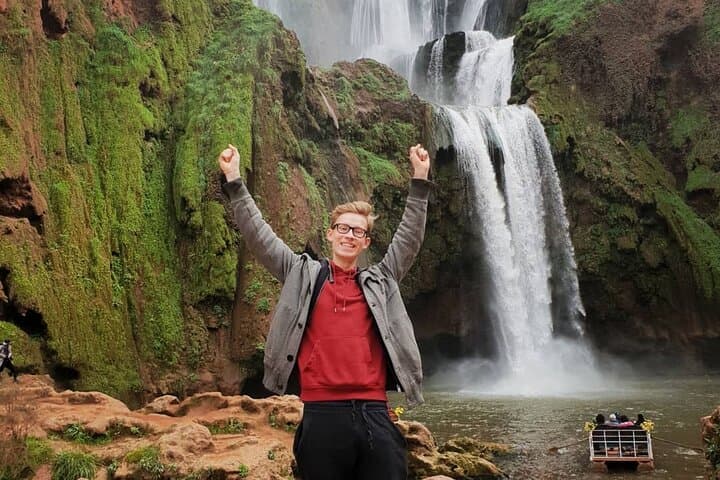
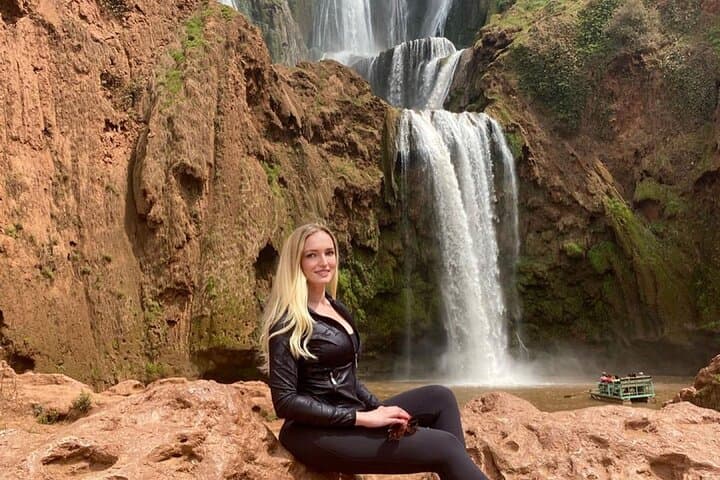
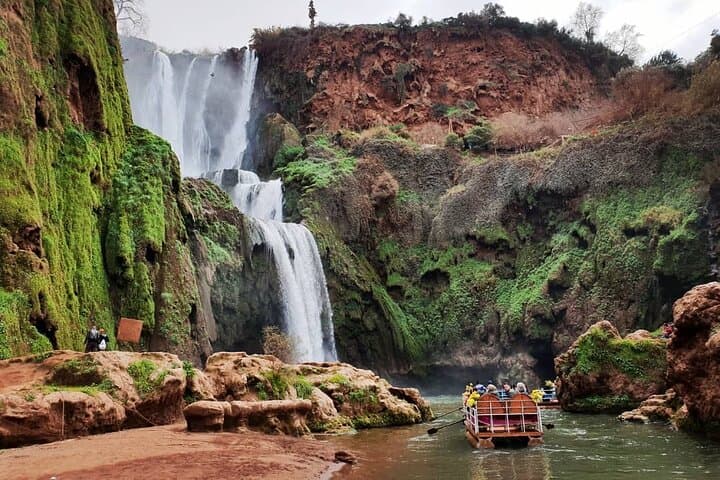
You arrive on the high road out of Marrakech as the Middle Atlas rises and the air sharpens; olive terraces and scattered stone houses slide past the minibus window. At Ouzoud the river gathers itself and dares the cliff’s edge — a vertical thread of white that breaks into spray and rainbows. The path winds through groves and terraces to lookout platforms where the falls push mist across your face and Barbary macaques watch from worn rock ledges.
You arrive on the high road out of Marrakech as the Middle Atlas rises and the air sharpens; olive terraces and scattered stone houses slide past the minibus window. At Ouzoud the river gathers itself and dares the cliff’s edge — a vertical thread of white that breaks into spray and rainbows. The path winds through groves and terraces to lookout platforms where the falls push mist across your face and Barbary macaques watch from worn rock ledges.
Geology here is simple and honest: hard limestone and ancient terraces carve the valley, and seasonal runoff swells the cascades. Local Berber communities have farmed olives and ground grain in these gullies for generations; you’ll notice old stone mills and small cafés clinging to steps above the water. Guides commonly point out the mills and explain traditional life, making the walk part natural history, part cultural encounter.
Practical guidance: allow 4–5 hours onsite for viewpoints, a short trail down to the base, optional boat rides near the plunges, and a relaxed lunch on a terrace. Trails include packed dirt, stairs, and some slick rock—sturdy shoes with grip help. Bring a water bottle, sunscreen, and a light rain layer; mist from the falls can chill a camera and a walker. Keep distance from macaques, secure loose items, and respect local vendors.
Timing matters: mornings are cooler and less crowded; late afternoon softens the light for photos. Whether you go for the plunge views, the boat’s spray, or the village hospitality, Ouzoud reads as both a landscape and a living place — vivid, approachable, and uncommonly immediate.