THE ADVENTURE COLLECTIVE® · Independent discovery and booking for outdoor travel

A full-day escape from Marrakech to North Africa’s largest cascading falls. Hike rim trails, watch Barbary macaques, and enjoy riverside tagine with views of the multi-tiered plunge pools.
A full-day escape from Marrakech to North Africa’s largest cascading falls. Hike rim trails, watch Barbary macaques, and enjoy riverside tagine with views of the multi-tiered plunge pools.
You arrive before the crowd; the road from Marrakech unwinds through ochre hills and patchwork olive groves until the valley drops away and the falls begin to announce themselves — a thunderous ribbon of water throwing mist into a green bowl. Walk the village paths and the sound of falling water will follow you like a companion, the current daring you to reach the lip and peer over.
Verified experiences and guided adventures in the surrounding area.
Operated by Desertbrise Travel · Ouzoud, Béni Mellal-Khénifra
You arrive before the crowd; the road from Marrakech unwinds through ochre hills and patchwork olive groves until the valley drops away and the falls begin to announce themselves — a thunderous ribbon of water throwing mist into a green bowl. Walk the village paths and the sound of falling water will follow you like a companion, the current daring you to reach the lip and peer over.
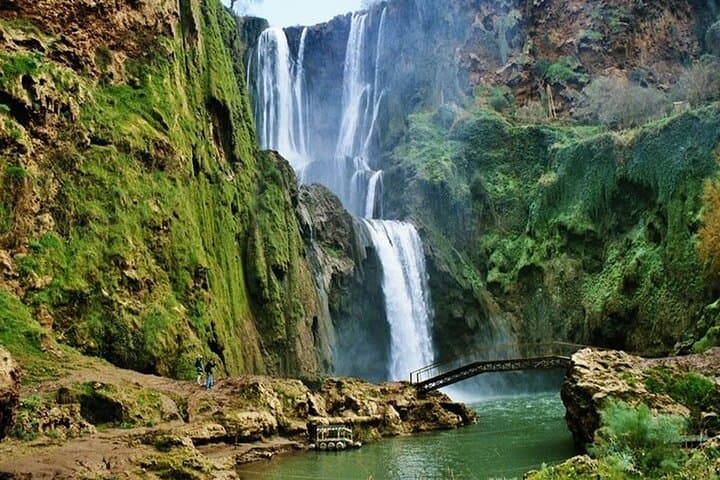
Geologically the Ouzoud Falls slice through Miocene-era sandstone and marl, creating multiple tiers and plunge pools. The area’s terraces and ancient water mills reflect a working landscape shaped by Berber communities for centuries; local families still mill olives and grow figs in orchards that spill toward the river.
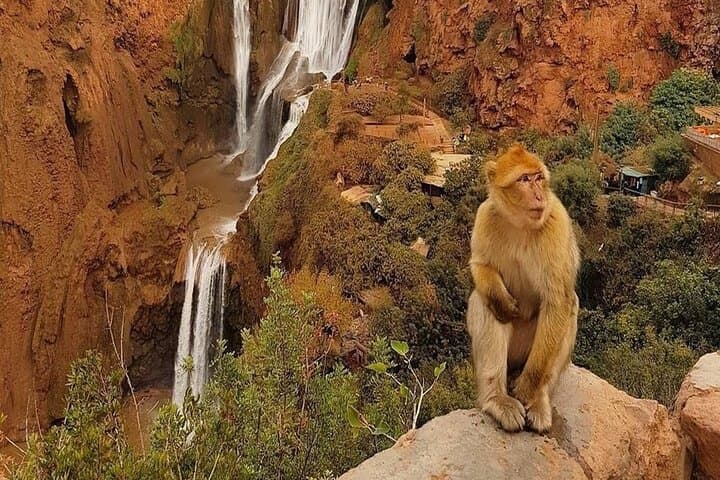
Culture is immediate: cafés perch on cliffs serving tagines and mint tea while children wave from footbridges. Barbary macaques patrol the stonework, opportunistic and used to visitors; they are part of the scene but not tame. Conservation efforts are informal — local guides and small businesses depend on respectful tourism.
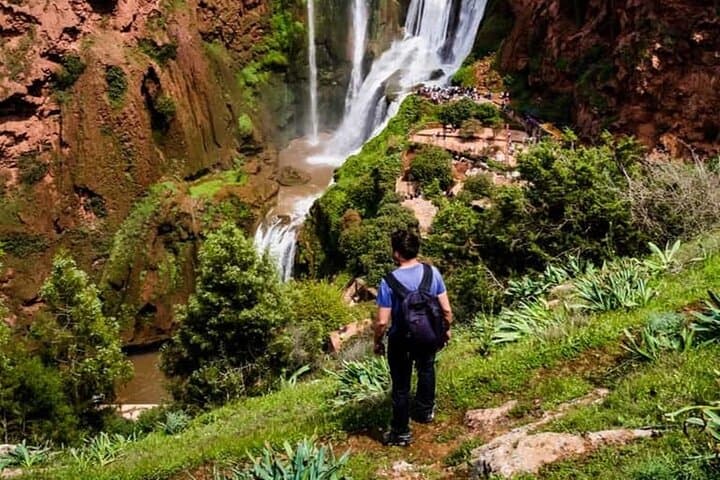
Practical guidance: expect a 2–3 hour hike if you explore both base and rim, with uneven stone paths and stair sections. Wear grippy shoes and bring a light rain shell; spray from the falls can cool the air even on hot days. Plan for a relaxed lunch at a riverside café and allow time for photos and short side-hikes among olive groves. If you prefer a guided experience, local guides offer history, safe viewpoints, and route options to avoid crowded terraces. Morning departures from Marrakech avoid the heat and give the best light for rainbows in the mist.
moderate.
8 hours (full day).
Moderate fitness recommended — able to walk 2–3 hours over uneven terrain with stair sections.
The transfer is about 2–2.5 hours each way depending on traffic and stops, making this a full-day outing.
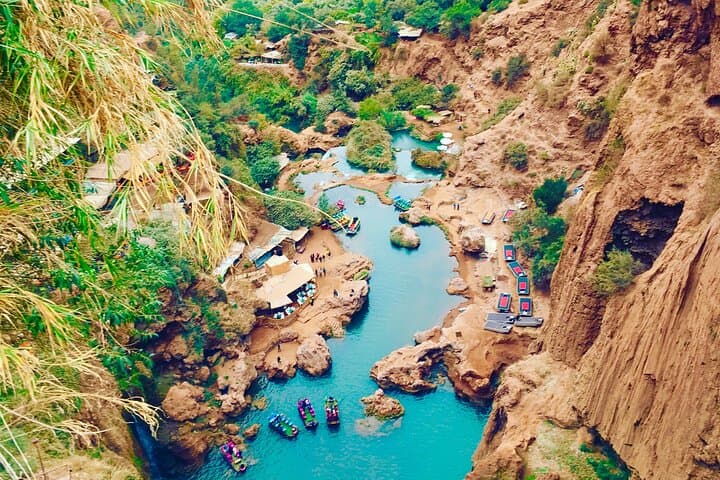
Many day-trip logistics include transport only; café lunches and any optional boat/boat imitation at the base are usually extra—confirm with the operator.
The main paths have many steps; children and older travelers can enjoy viewpoints and cafés, but steep sections may be challenging without mobility support.
Barbary macaques are commonly seen near the falls but are wild — do not feed or chase them; keep a respectful distance for safety.
The falls sit within a landscape long-managed by Berber communities; traditional water mills and terraced orchards reflect centuries of agricultural use.
Visitor pressure has local impacts—stick to marked paths, avoid feeding wildlife, and hire local guides to support community stewardship.
Desertbrise Travel operates guided outdoor trips and adventures with an emphasis on safety, stewardship, and memorable experiences.
You arrive before the crowd; the road from Marrakech unwinds through ochre hills and patchwork olive groves until the valley drops away and the falls begin to announce themselves — a thunderous ribbon of water throwing mist into a green bowl. Walk the village paths and the sound of falling water will follow you like a companion, the current daring you to reach the lip and peer over.
You arrive before the crowd; the road from Marrakech unwinds through ochre hills and patchwork olive groves until the valley drops away and the falls begin to announce themselves — a thunderous ribbon of water throwing mist into a green bowl. Walk the village paths and the sound of falling water will follow you like a companion, the current daring you to reach the lip and peer over.
Geologically the Ouzoud Falls slice through Miocene-era sandstone and marl, creating multiple tiers and plunge pools. The area’s terraces and ancient water mills reflect a working landscape shaped by Berber communities for centuries; local families still mill olives and grow figs in orchards that spill toward the river.
Culture is immediate: cafés perch on cliffs serving tagines and mint tea while children wave from footbridges. Barbary macaques patrol the stonework, opportunistic and used to visitors; they are part of the scene but not tame. Conservation efforts are informal — local guides and small businesses depend on respectful tourism.
Practical guidance: expect a 2–3 hour hike if you explore both base and rim, with uneven stone paths and stair sections. Wear grippy shoes and bring a light rain shell; spray from the falls can cool the air even on hot days. Plan for a relaxed lunch at a riverside café and allow time for photos and short side-hikes among olive groves. If you prefer a guided experience, local guides offer history, safe viewpoints, and route options to avoid crowded terraces. Morning departures from Marrakech avoid the heat and give the best light for rainbows in the mist.