THE ADVENTURE COLLECTIVE® · Independent discovery and booking for outdoor travel

Head east from Marrakech into the Ourika Valley for a day of waterfalls, Berber villages, pottery demonstrations and a short camel ride. This eight-hour excursion blends easy hikes with cultural stops and local lunch.
Head east from Marrakech into the Ourika Valley for a day of waterfalls, Berber villages, pottery demonstrations and a short camel ride. This eight-hour excursion blends easy hikes with cultural stops and local lunch.
The road drops out of Marrakech and the red city recedes; olive groves and terraced fields slide past the van’s windows, and the High Atlas frames the horizon like a low, patient wall. Arriving in the Ourika Valley, the air sharpens with river mist and the steady clack of village life — goats moving, pottery at the wheel, tea steaming in shaded courtyards.
Verified experiences and guided adventures in the surrounding area.
Operated by Trekking in Morocco · Setti Fatma, Marrakesh-Safi
The road drops out of Marrakech and the red city recedes; olive groves and terraced fields slide past the van’s windows, and the High Atlas frames the horizon like a low, patient wall. Arriving in the Ourika Valley, the air sharpens with river mist and the steady clack of village life — goats moving, pottery at the wheel, tea steaming in shaded courtyards.
This day trip centers on Setti Fatma’s waterfalls, a chain of seven cascades carved into volcanic rock and layered alluvium from millennia of rain. The valley is historically Berber country, where mountain communities have traded herbs, pottery, and argan oil for generations; today women’s cooperatives blend traditional craft with tourism income.
Geology here is immediate: dark basalt and softer sediment create steps that concentrate the river into narrow falls, while terraces of cultivated plots cling to slopes. Cultural moments are compact — a pottery demonstration in Akhlij, a camel ride across a scrubby knoll, shared mint tea with a local family.
Practical guidance: plan for an eight-hour day round-trip from Marrakech, wear solid walking shoes for wet, rocky trails, and start mid-morning to avoid both the earliest chill and late-afternoon crowds. Hydrate and carry small cash for crafts and tea. The hike to higher cascades varies in steepness — bring sun protection and a lightweight layer for shading and sudden mountain breezes.
The Ourika excursion is straightforward but sensory: river sounds dare you up the trail, terraces pull the eye across the valley, and village hospitality makes the route as much cultural as scenic.
easy.
8 hours.
Suitable for travelers with light to moderate fitness; involves short hikes with uneven terrain and some steep sections.
The tour is typically about eight hours round-trip, including transport, sites, and lunch.
The hike is classified as easy; paths can be steep and rocky in places but are suitable for most fitness levels.
Yes — a local lunch is provided, either at a village family home or a small local restaurant in the valley.
A short camel ride (approximately 10–25 minutes) is included as part of the excursion.
The Ourika Valley has long been home to Berber communities who farm terraced plots and trade traditional crafts; women’s cooperatives have become important local economic hubs.
Visit cooperatives and trails with respect for water use and trash management; stay on marked paths to reduce erosion on fragile slopes.
Trekking in Morocco operates guided outdoor trips and adventures with an emphasis on safety, stewardship, and memorable experiences.
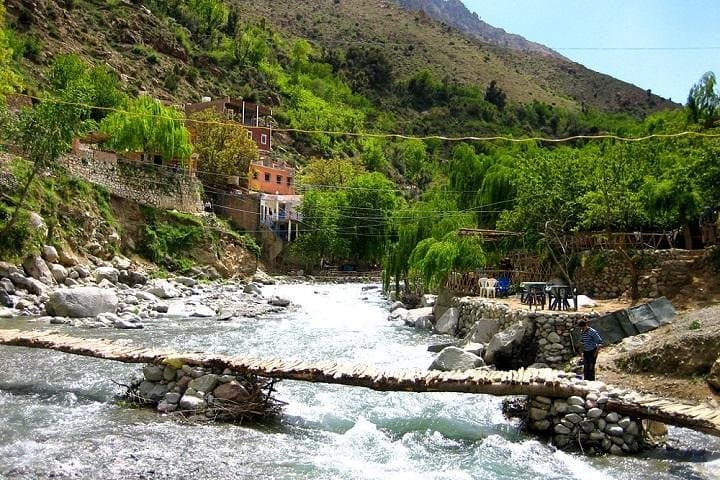
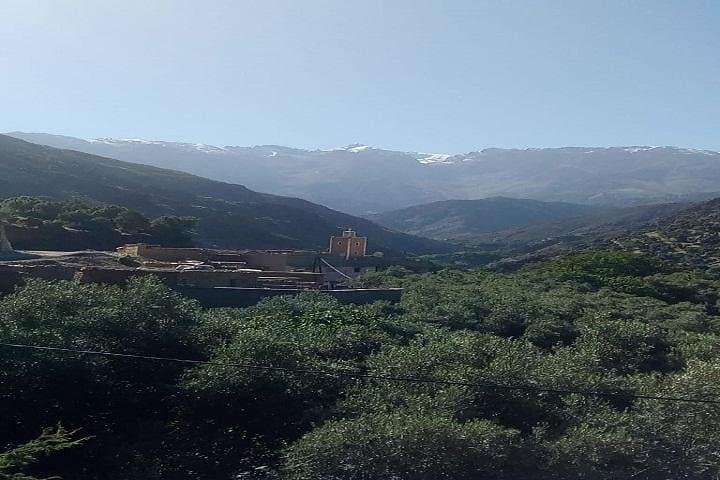


The road drops out of Marrakech and the red city recedes; olive groves and terraced fields slide past the van’s windows, and the High Atlas frames the horizon like a low, patient wall. Arriving in the Ourika Valley, the air sharpens with river mist and the steady clack of village life — goats moving, pottery at the wheel, tea steaming in shaded courtyards.
The road drops out of Marrakech and the red city recedes; olive groves and terraced fields slide past the van’s windows, and the High Atlas frames the horizon like a low, patient wall. Arriving in the Ourika Valley, the air sharpens with river mist and the steady clack of village life — goats moving, pottery at the wheel, tea steaming in shaded courtyards.
This day trip centers on Setti Fatma’s waterfalls, a chain of seven cascades carved into volcanic rock and layered alluvium from millennia of rain. The valley is historically Berber country, where mountain communities have traded herbs, pottery, and argan oil for generations; today women’s cooperatives blend traditional craft with tourism income.
Geology here is immediate: dark basalt and softer sediment create steps that concentrate the river into narrow falls, while terraces of cultivated plots cling to slopes. Cultural moments are compact — a pottery demonstration in Akhlij, a camel ride across a scrubby knoll, shared mint tea with a local family.
Practical guidance: plan for an eight-hour day round-trip from Marrakech, wear solid walking shoes for wet, rocky trails, and start mid-morning to avoid both the earliest chill and late-afternoon crowds. Hydrate and carry small cash for crafts and tea. The hike to higher cascades varies in steepness — bring sun protection and a lightweight layer for shading and sudden mountain breezes.
The Ourika excursion is straightforward but sensory: river sounds dare you up the trail, terraces pull the eye across the valley, and village hospitality makes the route as much cultural as scenic.