THE ADVENTURE COLLECTIVE® · Independent discovery and booking for outdoor travel

Escape Marrakech for a full-day trek into the Ourika Valley to see Setti Fatma’s waterfalls, meet Amazigh communities, and walk canyon trails beneath the High Atlas. This practical guide explains what to expect, what to bring, and how to make the most of the day trip.
Escape Marrakech for a full-day trek into the Ourika Valley to see Setti Fatma’s waterfalls, meet Amazigh communities, and walk canyon trails beneath the High Atlas. This practical guide explains what to expect, what to bring, and how to make the most of the day trip.
A cool mountain wind cuts through the bus's air conditioning as the city fades, and the High Atlas rises up like a wall of stone and scrub. Within an hour the traffic thins and terraces take over—olive and almond trees stacked into the slopes—leading to the canyon that channels the Ourika River. The day opens on a rhythm of small villages, a traditional Berber house offering mint tea, and the first view of waterfalls tumbling from ledges above Setti Fatma.
Verified experiences and guided adventures in the surrounding area.
Operated by lifetour · Marrakech, Marrakech-Safi
A cool mountain wind cuts through the bus's air conditioning as the city fades, and the High Atlas rises up like a wall of stone and scrub. Within an hour the traffic thins and terraces take over—olive and almond trees stacked into the slopes—leading to the canyon that channels the Ourika River. The day opens on a rhythm of small villages, a traditional Berber house offering mint tea, and the first view of waterfalls tumbling from ledges above Setti Fatma.
Geology here is plain to read: folded limestone and schist sculpted by seasonal flows, creating narrow gorges and stepped cascades. The valley has long been home to Amazigh (Berber) communities who irrigate terraces with age-old channels and host visitors in simple homes and organic gardens. Guides often point out surviving irrigation works and discuss seasonal farming rhythms.
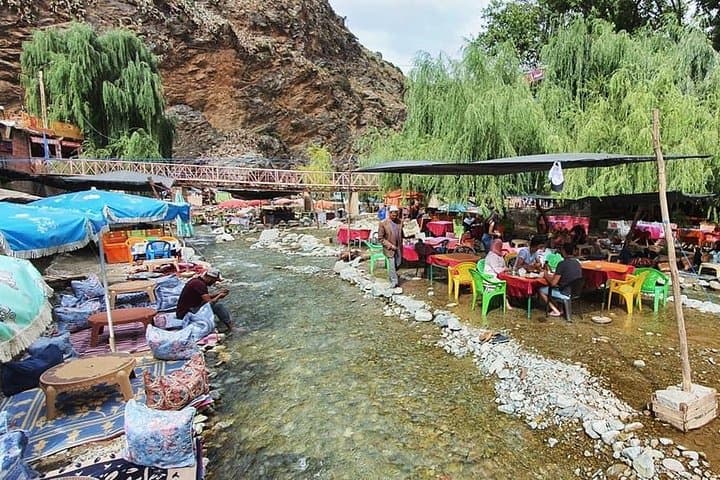
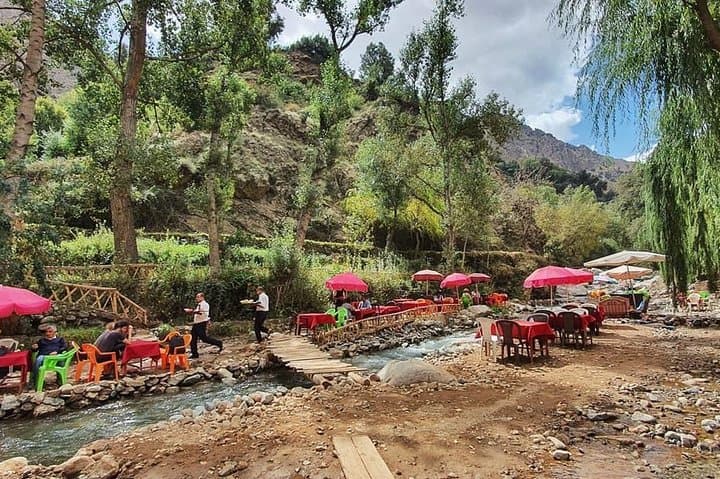
Expect a short, sometimes steep walk to the waterfall tiers on rocky, uneven trails—good footwear matters. The route alternates shaded riverbank walking, sunlit climbs above the canyon, and occasional stone steps carved by local hands. Cafés and small stands near the trailhead serve simple tagines and tea; lunch is usually not included.
Plan for an 8–9 hour outing from Marrakech with moderate fitness: bring layered clothing, at least 1–2 liters of water, sun protection, and cash for small purchases. Start early to avoid crowds and mid-afternoon heat, and follow your guide’s route to protect fragile trails. The Ourika Valley rewards visitors with clear mountain air, accessible hikes, and direct encounters with a living Atlas culture.
moderate.
8–9 hours.
Moderate cardiovascular fitness and the ability to walk on uneven ground with short steep sections.
The journey typically takes 45–60 minutes each way depending on traffic and the exact pickup location in Marrakech.
Some lower pools may be tempting, but water is cold and currents can be unpredictable; local cafés and guides will advise whether a short dip is safe.
Lunch is usually not included; there are cafés and small restaurants at Setti Fatma offering local dishes and snacks for purchase.
The route includes uneven terrain and some steep steps; children and older travelers can join with care, rest breaks, and sturdy footwear—consult the operator if mobility is limited.
The Ourika Valley has been inhabited for centuries by Amazigh (Berber) communities who farm terraced slopes and maintain traditional irrigation practices.
Increased day-trip traffic stresses fragile trails and local water resources—stick to marked paths, avoid littering, and buy locally to support small communities.
lifetour operates guided outdoor trips and adventures with an emphasis on safety, stewardship, and memorable experiences.
A cool mountain wind cuts through the bus's air conditioning as the city fades, and the High Atlas rises up like a wall of stone and scrub. Within an hour the traffic thins and terraces take over—olive and almond trees stacked into the slopes—leading to the canyon that channels the Ourika River. The day opens on a rhythm of small villages, a traditional Berber house offering mint tea, and the first view of waterfalls tumbling from ledges above Setti Fatma.
A cool mountain wind cuts through the bus's air conditioning as the city fades, and the High Atlas rises up like a wall of stone and scrub. Within an hour the traffic thins and terraces take over—olive and almond trees stacked into the slopes—leading to the canyon that channels the Ourika River. The day opens on a rhythm of small villages, a traditional Berber house offering mint tea, and the first view of waterfalls tumbling from ledges above Setti Fatma.
Geology here is plain to read: folded limestone and schist sculpted by seasonal flows, creating narrow gorges and stepped cascades. The valley has long been home to Amazigh (Berber) communities who irrigate terraces with age-old channels and host visitors in simple homes and organic gardens. Guides often point out surviving irrigation works and discuss seasonal farming rhythms.
Expect a short, sometimes steep walk to the waterfall tiers on rocky, uneven trails—good footwear matters. The route alternates shaded riverbank walking, sunlit climbs above the canyon, and occasional stone steps carved by local hands. Cafés and small stands near the trailhead serve simple tagines and tea; lunch is usually not included.
Plan for an 8–9 hour outing from Marrakech with moderate fitness: bring layered clothing, at least 1–2 liters of water, sun protection, and cash for small purchases. Start early to avoid crowds and mid-afternoon heat, and follow your guide’s route to protect fragile trails. The Ourika Valley rewards visitors with clear mountain air, accessible hikes, and direct encounters with a living Atlas culture.