THE ADVENTURE COLLECTIVE® · Independent discovery and booking for outdoor travel

A full-day excursion from Marrakech into the Ourika Valley that combines a guided hike to the Setti Fatma waterfalls, visits to a Berber house and argan cooperative, and a riverside lunch. Perfect for travelers seeking nature, culture and manageable hiking in the High Atlas.
A full-day excursion from Marrakech into the Ourika Valley that combines a guided hike to the Setti Fatma waterfalls, visits to a Berber house and argan cooperative, and a riverside lunch. Perfect for travelers seeking nature, culture and manageable hiking in the High Atlas.
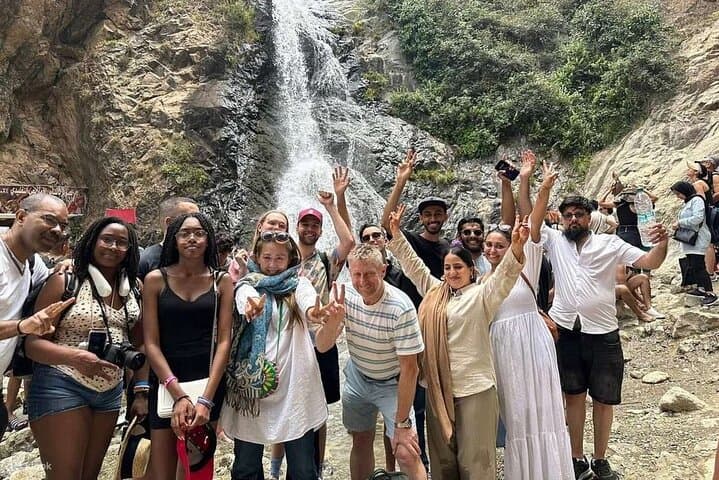
You leave Marrakech before the heat builds, the city’s ochre walls shrinking behind your air-conditioned vehicle as the High Atlas rises like a rough sea. The drive into the Ourika Valley eases you through terraced fields and clusters of adobe Berber homes; at the trailhead the river speaks first, pushing you upriver toward a string of falls where spray cools your face and natural pools dare you to wade.
Verified experiences and guided adventures in the surrounding area.
Operated by Morocco Tourism Travel · Marrakech, Marrakech-Safi
You leave Marrakech before the heat builds, the city’s ochre walls shrinking behind your air-conditioned vehicle as the High Atlas rises like a rough sea. The drive into the Ourika Valley eases you through terraced fields and clusters of adobe Berber homes; at the trailhead the river speaks first, pushing you upriver toward a string of falls where spray cools your face and natural pools dare you to wade.
The valley has long been shaped by farming and the seasonal flow of the Ourika River — irrigation lines carved into slopes that generations of Berber families still tend. Geologically, the canyon is cut from volcanic and metamorphic rock, creating narrow gorges, plunge pools and a stepped sequence of waterfalls at Setti Fatma. Cultural stops punctuate the day: a visit to an argan cooperative explains traditional oil extraction, and a local house serves a morning spread of mint tea, bread, olives and goat cheese.
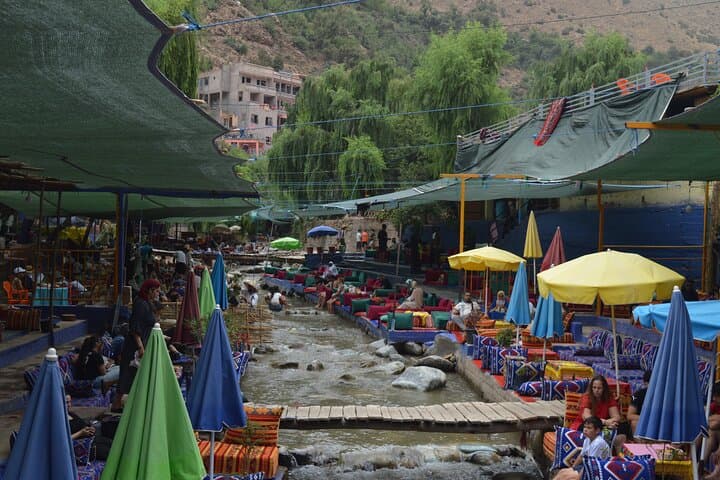
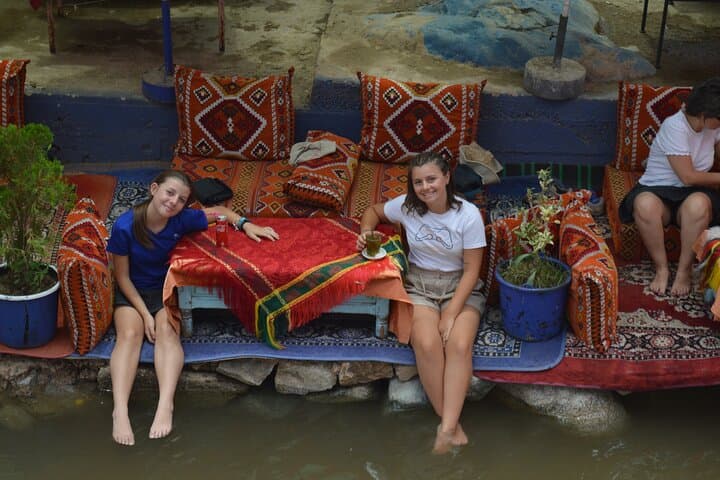
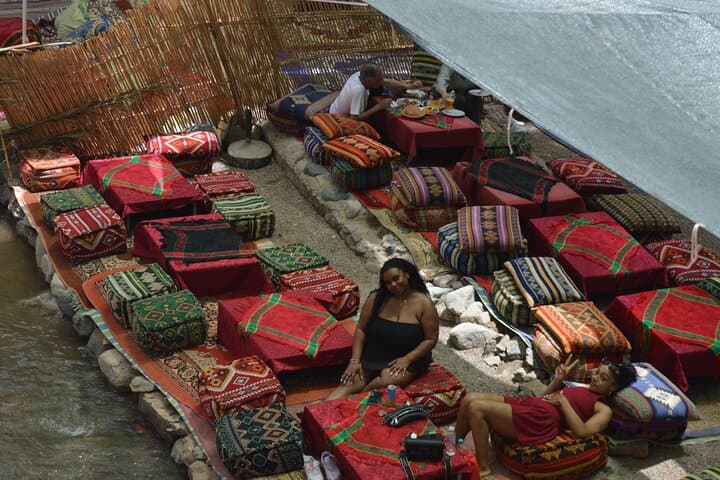
Expect a guided hike to multiple cascades on uneven, partly rocky trails with some stream crossings; total activity time fits within a 7–8 hour day. Practical guidance: wear sturdy shoes with grip, carry at least 1.5–2 L of water, and pace the ascent—shade is intermittent. Lunch by the river typically features tagine and couscous; bring a light swimsuit and quick-dry towel if you plan to swim. Cameras are essential, but so is respect: stay on marked paths, avoid trampling terraced plots, and support local cooperatives to help sustain the valley’s communities and trails.
moderate.
7–8 hours.
Suitable for travelers with moderate fitness who can handle 2–4 hours of walking on uneven terrain and brief climbs.
The guided hike portion is typically 1.5–3 hours round trip depending on pace and how many of the seven waterfalls you visit.
Yes for many, but the tour requires moderate fitness and includes uneven terrain; children should be supervised and those with mobility issues should check accessibility beforehand.
This tour includes entrance to Setti Fatma and usually a lunch option by the river; confirm specific inclusions at booking time.
Swimming is often possible in warm months, but always follow your guide’s advice about currents, water depth and safety.
The Ourika Valley has been inhabited by Berber communities for centuries; traditional agriculture and argan oil production remain central to local livelihoods.
Trail erosion and litter can impact fragile terraces and river habitats—support local cooperatives and follow Leave No Trace principles to minimize impact.
Morocco Tourism Travel operates guided outdoor trips and adventures with an emphasis on safety, stewardship, and memorable experiences.
You leave Marrakech before the heat builds, the city’s ochre walls shrinking behind your air-conditioned vehicle as the High Atlas rises like a rough sea. The drive into the Ourika Valley eases you through terraced fields and clusters of adobe Berber homes; at the trailhead the river speaks first, pushing you upriver toward a string of falls where spray cools your face and natural pools dare you to wade.
You leave Marrakech before the heat builds, the city’s ochre walls shrinking behind your air-conditioned vehicle as the High Atlas rises like a rough sea. The drive into the Ourika Valley eases you through terraced fields and clusters of adobe Berber homes; at the trailhead the river speaks first, pushing you upriver toward a string of falls where spray cools your face and natural pools dare you to wade.
The valley has long been shaped by farming and the seasonal flow of the Ourika River — irrigation lines carved into slopes that generations of Berber families still tend. Geologically, the canyon is cut from volcanic and metamorphic rock, creating narrow gorges, plunge pools and a stepped sequence of waterfalls at Setti Fatma. Cultural stops punctuate the day: a visit to an argan cooperative explains traditional oil extraction, and a local house serves a morning spread of mint tea, bread, olives and goat cheese.
Expect a guided hike to multiple cascades on uneven, partly rocky trails with some stream crossings; total activity time fits within a 7–8 hour day. Practical guidance: wear sturdy shoes with grip, carry at least 1.5–2 L of water, and pace the ascent—shade is intermittent. Lunch by the river typically features tagine and couscous; bring a light swimsuit and quick-dry towel if you plan to swim. Cameras are essential, but so is respect: stay on marked paths, avoid trampling terraced plots, and support local cooperatives to help sustain the valley’s communities and trails.